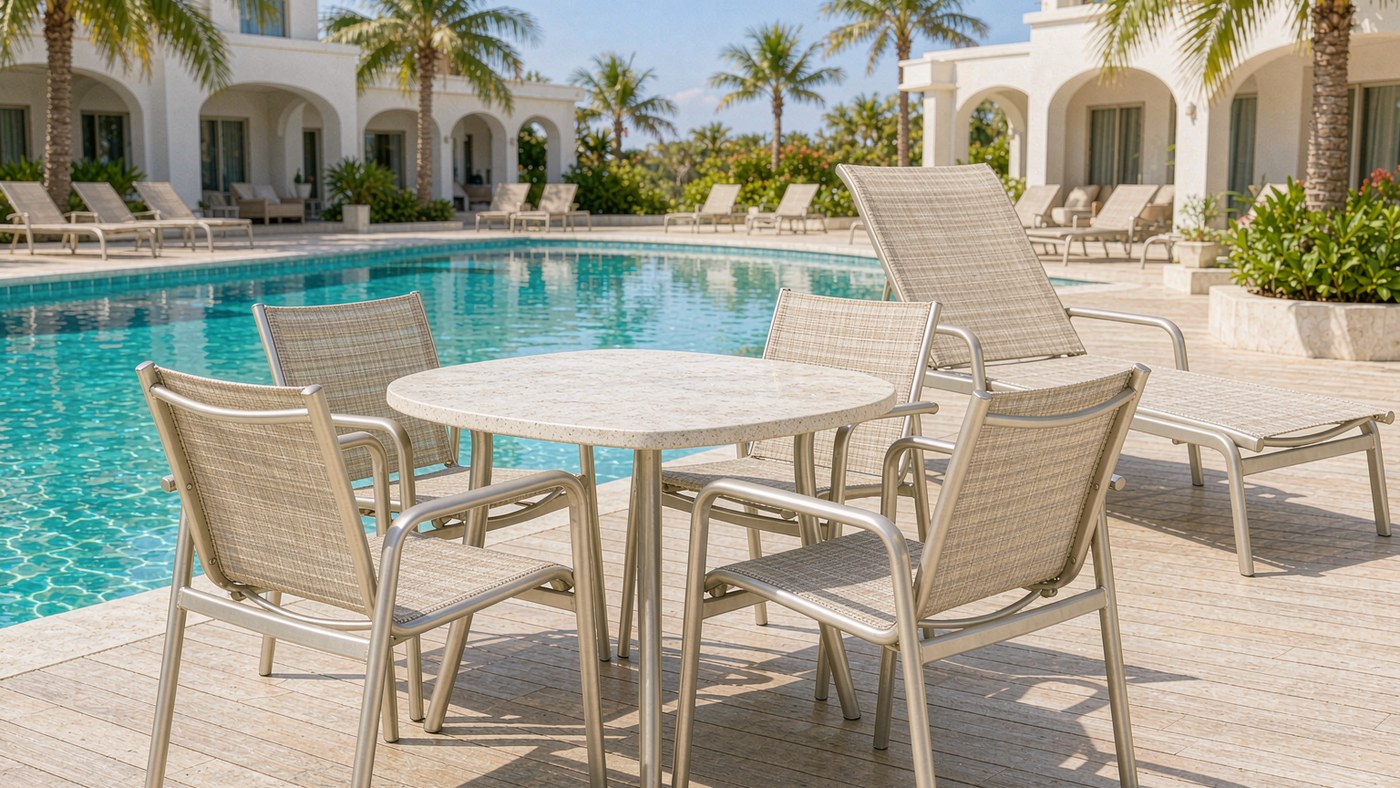
Textilene Sling Outdoor Furniture: Material Guide, Spec and Care
If your furniture lives at the poolside, on a rooftop terrace or in a busy hotel garden, cushions are a liability: they hold water, they fade, they walk off. That is where textilene fabric outdoor furniture earns its keep. This guide explains what textilene is, why sling seating beats cushioned seating for contract use, how to specify the mesh and frame, and the five-minute cleaning routine that adds years of life. It is written for wholesale and commercial buyers who need to specify, not just browse.
What textilene actually is (and what it isn't)
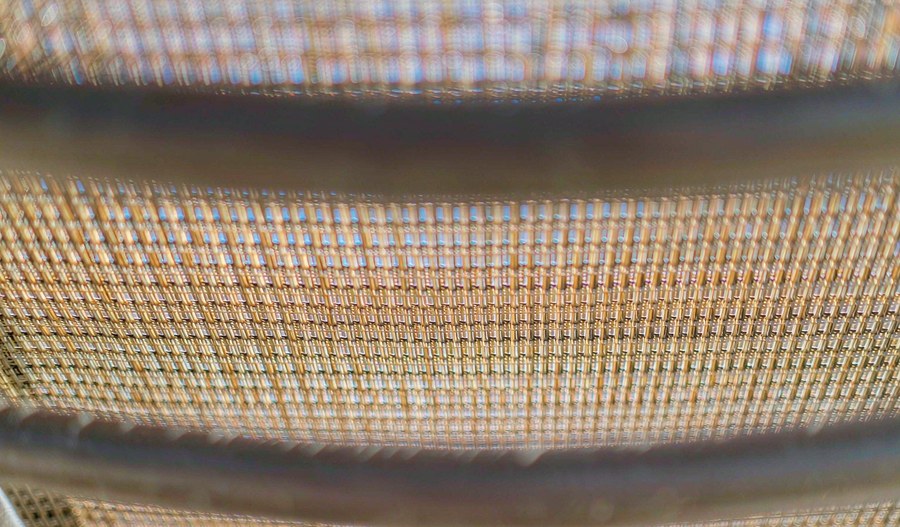
Textilene is a brand name that has become the generic term for a PVC-coated polyester weave used as a seating sling. Think of a tightly woven, breathable mesh stretched across a frame: it supports the body on a single taut surface, with no cushion, no foam, no ticking. On textilene vs mesh netting, the cheap alternative is an uncoated polyethylene mesh that stretches and frays; textilene is not the same as PE rattan wicker (a weave wrapped on a frame for looks) and it is not a sunbrella-style cushion fabric. The value is in the combination: a UV-stabilised, mildew-resistant, quick-drying surface that shrugs off chlorine and salt. For a resort pool deck that is exactly the spec you want.
Why sling furniture beats cushions for poolside and contract use
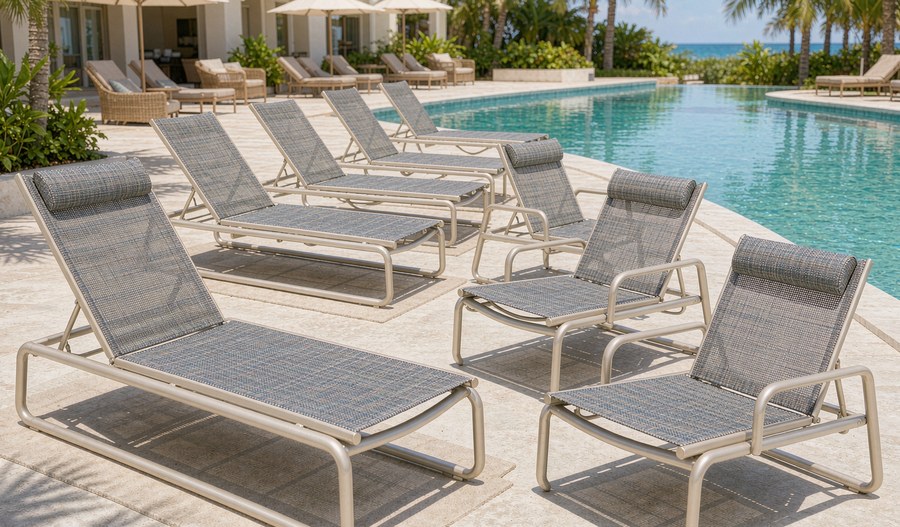
A sling chair outdoor model or a sun lounger with textilene dries in minutes after a guest climbs out of the water, where a cushioned lounger stays damp for hours and grows mildew. Sling seating is also lighter and stacks flatter, which matters for rooftop load limits and for venues that store furniture through the off-season. For a restaurant terrace that turns tables, a sling chair you can hose down between services is a labour saving you feel every week.
| Need | Textilene sling | Cushioned seating |
|---|---|---|
| Dries after pool use | Minutes | Hours, may mildew |
| Stack height | Low, flat stacks | Bulky with cushions |
| Off-season storage | Hose, dry, stack | Cushions must be removed & stored |
| Chlorine / salt | Resistant surface | Fabric & foam degrade |
| Comfort tweak | Tension + slight give | Thick padding |
Frame matters: powder-coated aluminium and the sling connection
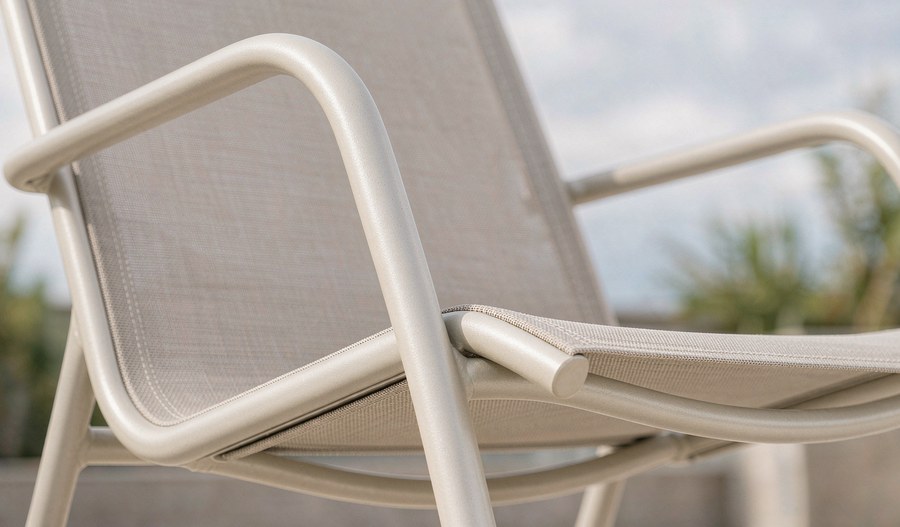
The sling is only as good as the frame it stretches across, and that frame should be a fully welded one-piece aluminium structure with a quality powder-coated finish — seamless smooth joints, no bolt-together sections that work loose. The critical detail buyers miss is the sling attachment: the mesh should be locked into a concealed channel or crimped rail at both ends so tension stays even and the edge never rolls. A bench or chair where the sling is simply tied or clamped is the one that sags within a season. Ask the manufacturer how the sling is terminated and look for a clean, covered edge rather than visible fixings.
Specifying textilene: mesh grade, UV rating and weight tolerance
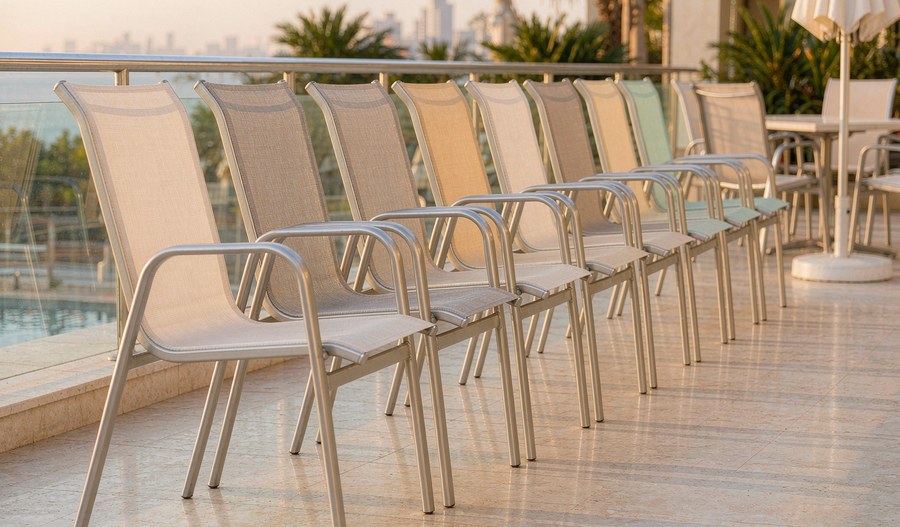
Not all textilene is equal. For contract use specify a heavyweight weave (around 500–700 g/m²) rather than the lightweight garden-centre grade, because it holds tension and resists puncture; ask whether the weave is a double layer at the sitting area, since that is where single-layer mesh thins first. Ask for a stated UV stabiliser level and a colourfastness rating (look for 1,000+ hours UV exposure with minimal fade). Weight tolerance matters for loungers and dining chairs: a good sling supports 120–160 kg without noticeable stretch. If you are buying for the Middle East or tropical markets, push the UV and heat numbers harder, because constant 40°C sun is where cheap mesh cracks first.
Care and cleaning: a 5-minute routine that adds years
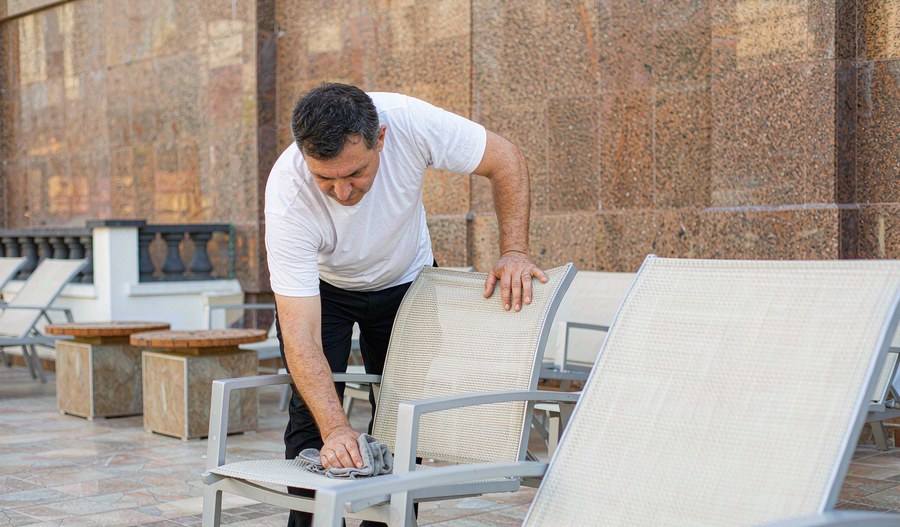
Textilene care is the part that protects your investment. Weekly in season, brush off loose grit, then wipe the sling with a soft cloth and mild soapy water; for chlorine or salt residue rinse with fresh water. Once or twice a year use a dilute vinegar or specialised vinyl cleaner on any stubborn marks, and never use solvent cleaners, bleach or a pressure washer set close — they strip the PVC coating. Inspect the frame's powder coat at the same time; a small chip touched up early stops corrosion before it spreads. That is the whole routine. No oiling, no foam replacement, no cushion storage, which is why maintenance teams prefer sling furniture across a large resort.
One comfort note for hot markets: a taut textilene sling can warm in direct noon sun but cools within minutes once shaded, and the open weave breathes where a foam cushion holds heat and stays hot. Specifying a lighter mesh colour for Middle East or tropical sites is a small choice that noticeably improves guest comfort at lunch service.
Procurement: MOQ, mixed containers and lead times
Sling seating is an easy category to enter because MOQ is low and units are light. Outdoor sling chair wholesale typically starts around 100–200 units per style, and because they stack and weigh little they fill a 40HQ with far more pieces than teak or padded suites, so you can mix several colours and styles in one container loading plan. Lead time runs 25–40 days after deposit; confirm the sample lead time first so the bulk mesh colour matches the approved swatch, and ask the factory to keep the exact mesh code on file so a 200-unit top-up a year later still matches the original deck. If you are a distributor, ask about private label carton and sling-tag branding at the quotation stage.
Common sling defects to reject at inspection
Most sling failures show up in the first month if you know what to look for, so inspect on arrival, not after a season. Reject any unit where the mesh sags more than a finger's depth under body weight, where the edge roll is uneven, or where the PVC coating shows streaks or thin patches — that is a sign of under-weight weave or a bad batch. On the frame, look for bare aluminium at weld points (a missed coat there is where white corrosion starts) and for any sharp edge where the sling meets the rail, because that is what snags swimmers' skin and costumes. A quick pre-loading inspection of a few units per carton catches all of these before they reach your deck.
Colour, pattern and branding options
Textilene is available in a wide range of woven colours and a few patterns — from slate greys and sands that disappear into a poolside scheme to brighter weaves that carry a brand colour. For a beach club or resort the sling colour is part of the identity, so specify the exact mesh colour code and keep a swatch with the contract. If you are a distributor, the sling is also a natural place for private label branding: a woven tag or a printed sling edge carries your name at zero extra assembly cost. Just confirm the colour holds across reorders, because a sling that fades two shades between batches is the kind of detail guests notice.
Buyer checklist for textilene sling orders
Before you confirm a sling furniture order with a factory, check:
- 1. Mesh weight grade stated in g/m², not just "textilene".
- 2. UV exposure hours and colourfastness rating in writing.
- 3. Sling termination method — concealed channel or crimped rail, not tied.
- 4. Frame is a fully welded one-piece aluminium frame, seamless joints.
- 5. Powder-coat micron thickness and salt-spray hours for coastal sites.
- 6. Stated weight tolerance (target 120–160 kg).
- 7. Approved physical sample with the exact mesh and frame colour.
- 8. Stack height and carton dimensions for your container math.
- 9. Lead time locked with a slippage penalty.
- 10. Care instructions supplied so your maintenance team uses the right cleaners.
Specify those ten and textilene sling furniture will outlast the cushioned alternatives on your busiest deck. Send your target volumes and mesh colour to the supplier for a trade quotation before you commit the container.