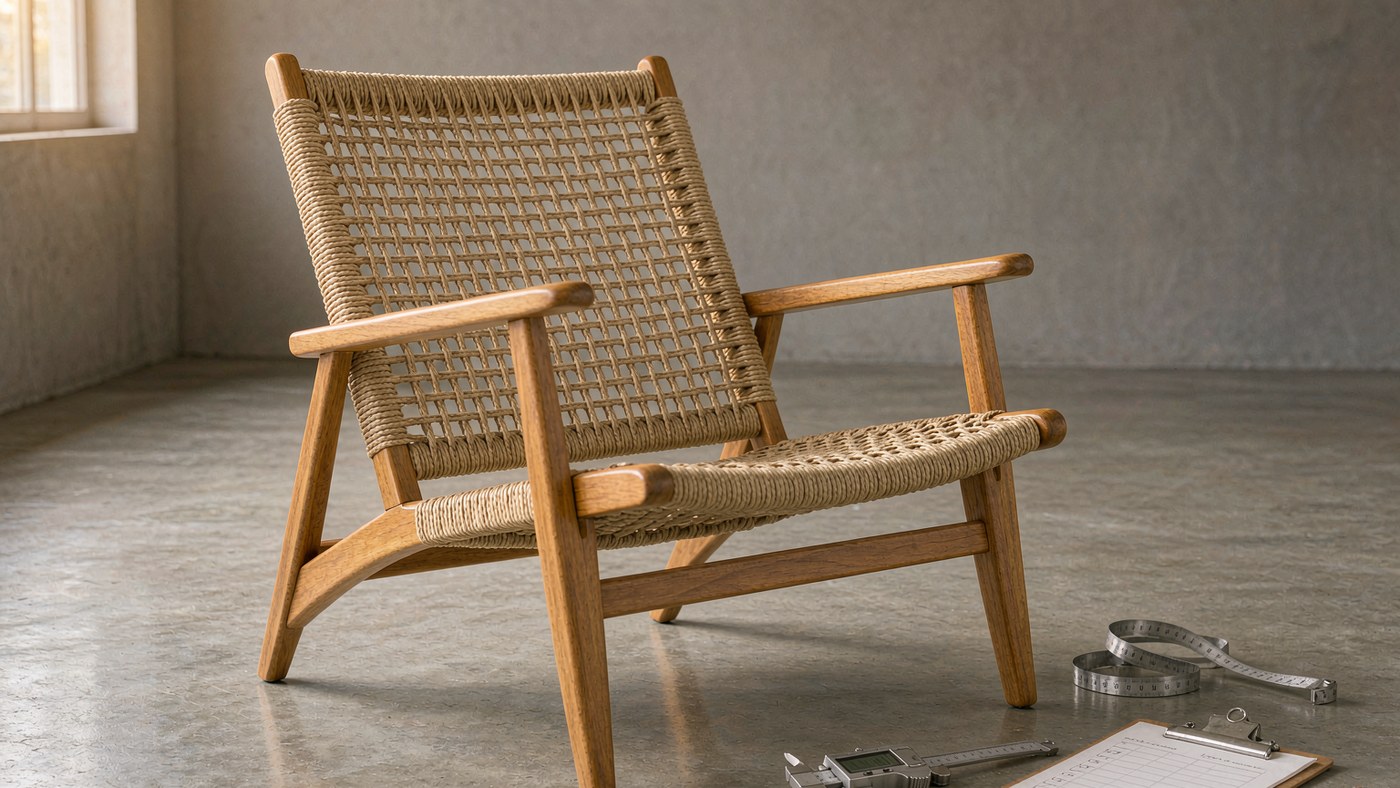
Why the sample matters more than the catalogue

A catalogue tells you what a factory wants to sell. A sample tells you what they can actually make. Every serious outdoor furniture order — a hotel terrace, a distributor's first container, a project's FF&E package — should be preceded by a physical sample that has been specified, tested and signed off, because the sample is the only moment in the transaction when you hold the exact product your money is buying. Everything after it is paper: drawings, tolerances, inspection reports and promises.
The mistake buyers make is treating the sample as a formality — a piece to photograph and file. Used properly, a sample is a test article: it answers questions about materials, construction and finish that no quotation can answer, and it becomes the reference the production run is judged against at pre-shipment inspection. This guide covers what to ask for before the sample ships, what to test when it arrives, what a sample genuinely cannot prove, and the checklist to run before you release a deposit.
What to ask for before the sample ships
A sample that arrives without a specification is nearly useless, because you have nothing to compare it against. Before production starts, request the document set the sample should conform to: dimensioned drawings with tolerances, the material declaration (teak grade and moisture content, or aluminium alloy and temper), the finish specification (for powder coating, the AAMA tier; for anodising, the AAMA 611 class), the hardware list with grades, and the cushion specification — foam density, fabric or rope type, and drainage detail. Ask which production line the sample will run on and whether it is a genuine pre-production piece or a hand-finished showroom piece; the first predicts the container, the second predicts nothing.
Also agree the retention rule in writing: the signed sample stays with the factory as the master reference, and a second identical piece comes to you. Without a retained master, "it matched the sample" becomes an argument nobody can win.
What to test when the sample arrives
Test the sample against the specification, not against your impressions. The table below is the working checklist we would run on any teak or aluminium sample; adapt it to your product and keep the completed copy in the order file.
| Check | How to test it | What a failure looks like |
|---|---|---|
| Dimensions and squareness | Measure against the drawing with a steel tape and calipers; check diagonals on frames and table tops | More than a few millimetres of drift on any dimension; rocking on a flat floor |
| Solid wood species and grade | Inspect end grain for heartwood content and growth-ring density; confirm moisture content with a pin meter | Sapwood streaks in load-bearing members; readings well above kiln-dry range |
| Joint tightness | Load every joint by hand; look for movement, glue starved joints, or gaps at mortises | Any play in a structural joint; a chair that creaks under normal body weight |
| Finish grade | Ask for the mill certificates for stainless fasteners; check for magnetism on supposedly 304/316 parts | Unmarked fasteners, magnetic response on marine-grade claims, zinc plating in coastal specs |
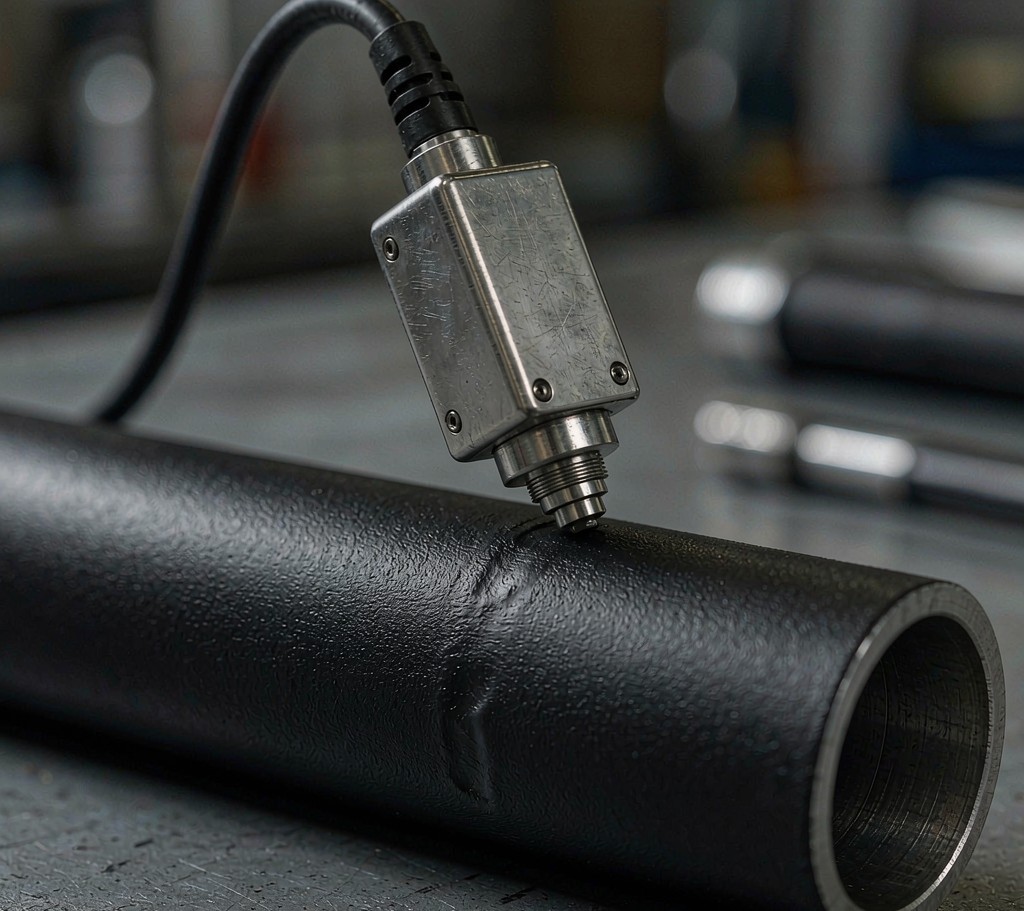
| Coating thickness (aluminium) | Eddy-current gauge on the frame — target the 50–90 µm band for architectural powder | Readings below ~50 µm at edges and welds; visible thin spots over welds |
| Weld and rope quality | Inspect weld penetration and smoothing; pull firmly on rope weave at multiple points | Porous or unwelded-looking welds; rope that shifts, gaps or frays under hand tension |
| Cushion construction | Unzip and inspect foam density grade and drainage; sit-test recovery | Low-density foam that flattens and stays flat; no drainage path in seat cushions |
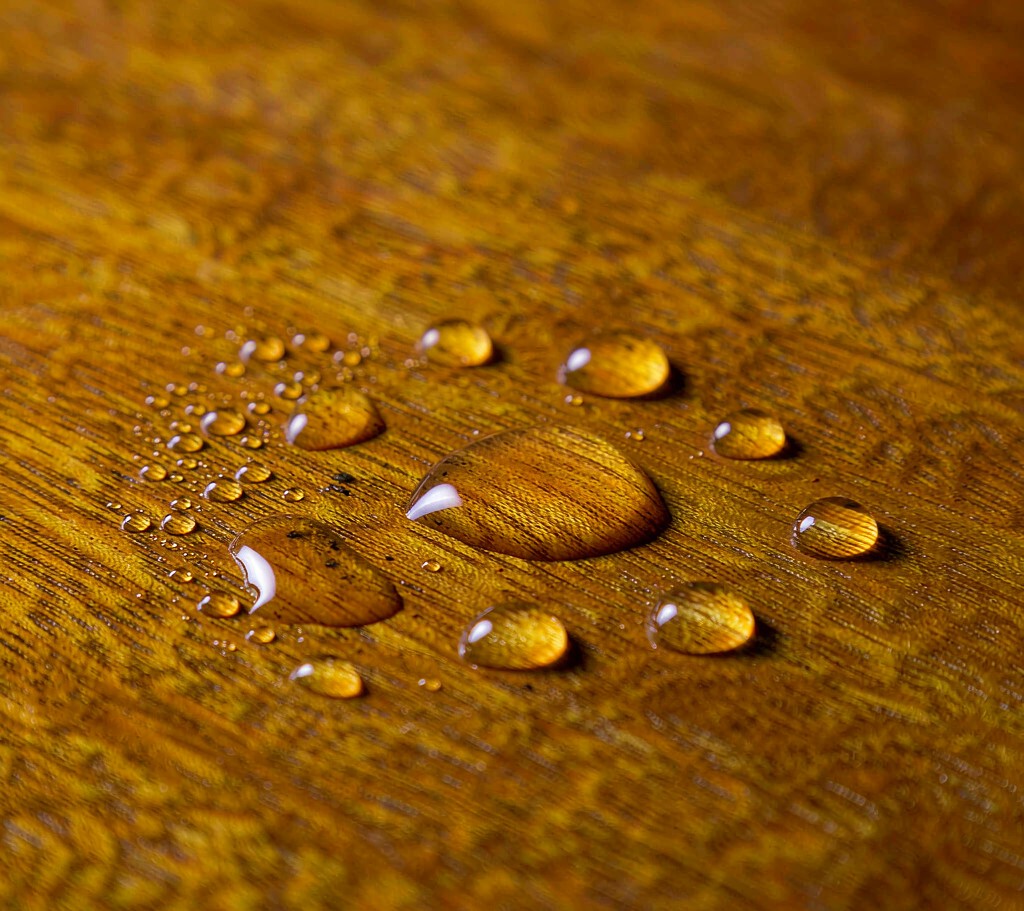
| Finish behaviour on wood | Water-drop test on the teak surface; watch beading and penetration | Water soaking in within minutes instead of beading — the oil content or finish is wrong |
| Stability and function | Operate every mechanism — recline, fold, swivel, stack — through its full range | Mechanisms that bind, need two hands, or cannot be operated by staff in gloves |
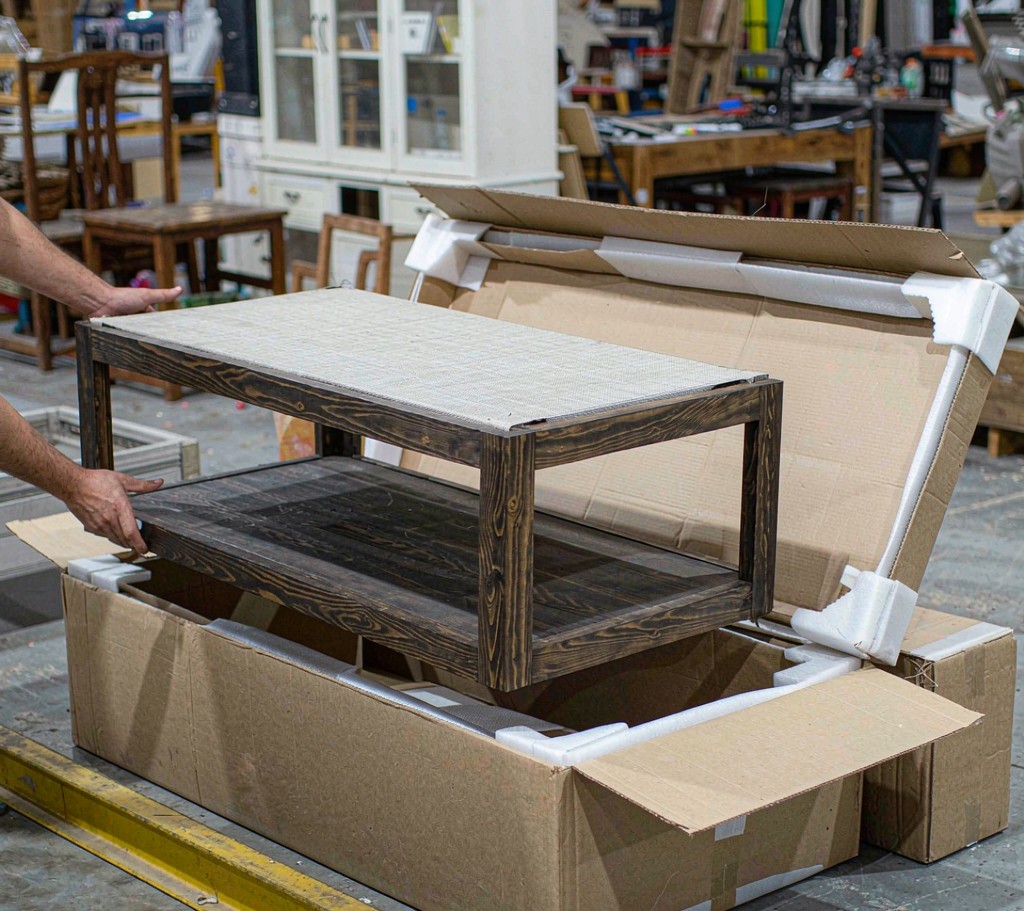
| Packaging | Inspect the sample's own carton: corner protection, strapping, moisture barrier | Bare cartons with no protection — the container will look worse, not better |
Photograph every step and keep the images with the order file. If a dispute reaches inspection stage, dated photographs of the signed sample are the most useful evidence you can hold.
What a sample cannot prove
Be clear about the limits. A sample proves one piece, made once, under attention. It does not prove batch consistency across a container, colour matching on a reorder eighteen months later, or how the finish behaves after a season of real weather. It also proves nothing about the loading plan — a perfectly made sofa can still arrive crushed by bad packing.
That is why the sample is one control in a chain, not the whole chain. Retain the signed master, require pre-shipment inspection against it, and keep a small set of retained samples from each production batch so colour and construction drift is caught in year three, not in year eight. A factory that resists retaining masters or third-party inspection is telling you something useful about the container you are about to receive.
Sample logistics, cost and the honest questions
Expect samples to travel by courier in purpose-built cartons, not by sea freight — a sample that has survived a container tells you less than one that arrived as the customer will receive it, which is the point. Frame samples typically take a few weeks to produce once drawings are approved; ask for a dated sample schedule the same way you would ask for a production schedule, because a factory that is vague about sample timing is usually vague about container timing.
On cost, do not chase the cheapest sample. Ask the structural questions instead: is the sample fee credited against the first order, does the price include the specification documents, and what happens if the sample fails your tests — is it re-run at the factory's cost? Those three answers separate a supplier investing in your business from one selling you a showroom piece and hoping you reorder anyway.
From passed sample to repeatable container
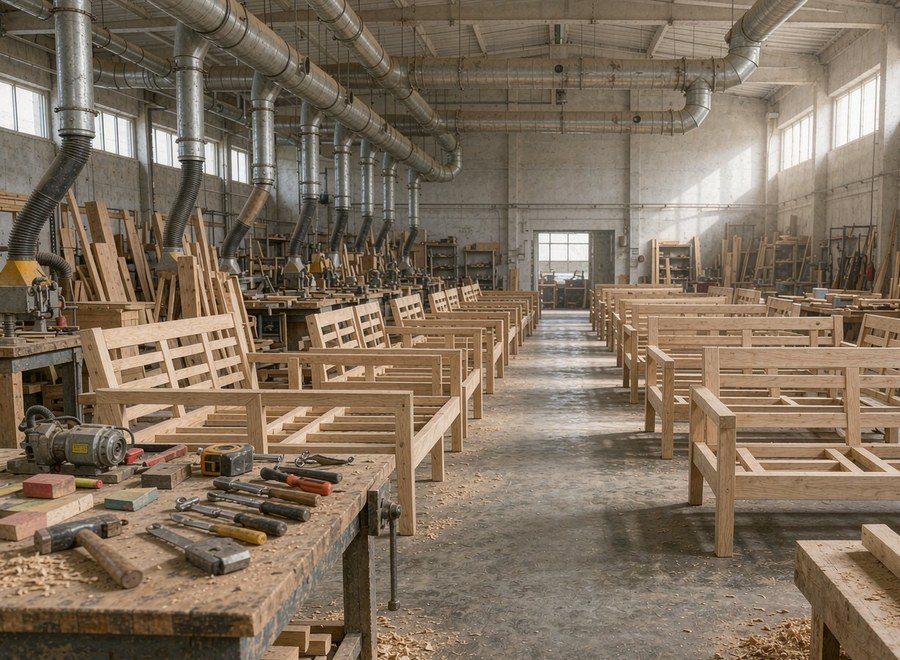
A passed sample has a shelf life, and it is shorter than most buyers assume. Store the retained master properly — labelled with the order number and date, kept dry and out of direct sun, because a faded master settles arguments in the wrong direction. Keep one piece from each production batch as well: three years from now, when a reorder arrives a shade warmer than the original terrace, the batch samples are what let you prove drift and enforce a remedy instead of accepting a new colour as normal.
Use the master actively. Quote reorders against it, require the factory to quote against it, and re-inspect against it whenever drawings change — because drawings do get revised, teak sources do change, and powder suppliers do discontinue colours. The factory that welcomes this discipline is the one whose second container matches their first. The one that treats the master as an inconvenience has just told you how the reorder will look.
The pre-deposit checklist
- Signed dimensioned drawings and material declarations on file
- Retained master sample at the factory, identical second piece in your hands
- Every row of the test table above completed, photographed and dated
- Finish spec named in writing (AAMA 2604/2605 for powder; AAMA 611 Class I for anodise)
- Pre-shipment inspection agreed against the retained master, with the report as a payment milestone
- Sample fee treatment confirmed — credited against the first container, or not
Run this list before the deposit, not after. A sample evaluated properly costs a few weeks; a container evaluated properly costs nothing extra. The difference between the two outcomes is almost always the paperwork you did — or skipped — at the sample stage.