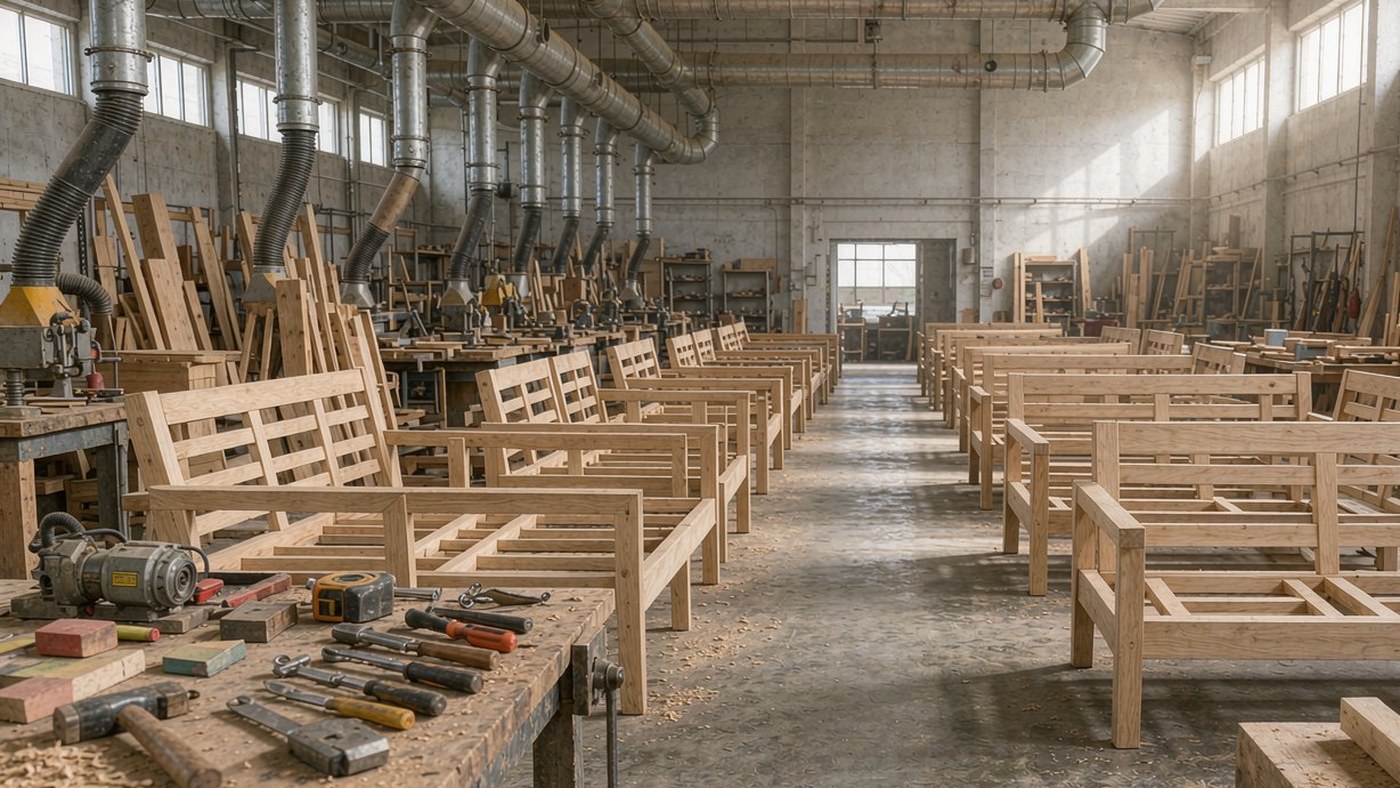
Most disputes about outdoor furniture quality are not really about quality. They are about when the defect was found. A loose joint caught on the workshop bench costs a hammer and ten minutes. The same joint found after the container is sealed costs a de-consolidation, a rework, a re-stuff and two weeks. Found by a hotel guest in month three, it costs the account.
This is the checklist we use on our own orders before a container leaves Foshan, written out for the buyer's side. It is built for importers and procurement teams who will never stand in the factory — the point is to know what to ask for, what to verify remotely, and which findings should stop a shipment.
The three inspection windows — and what each one catches
| Window | What it catches | Cost to fix | Who can do it |
|---|---|---|---|
| 1. During production (frame stage, before assembly) | Joint fit, timber grade, weld quality, hardware spec | Almost nothing — parts are still on the bench | Factory QC; buyer via photo report |
| 2. After assembly, before packing | Function, stability, finish, cushion fit, dimension drift | Low — rework in-house | Factory QC + third-party inspector |
| 3. Before loading (cartons staged, container open) | Quantity, carton condition, labels, mixed-load errors | Moderate — re-packing at the dock | Buyer's agent, loading supervisor |
The mistake first-time importers make is treating inspection as one event on loading day. By then, everything that matters about the product itself is already sealed inside cartons. Push your inspection earlier: ask for a photo report at the frame stage and again after assembly, and reserve loading day for counting and paperwork.
Inspecting solid teak: what actually matters
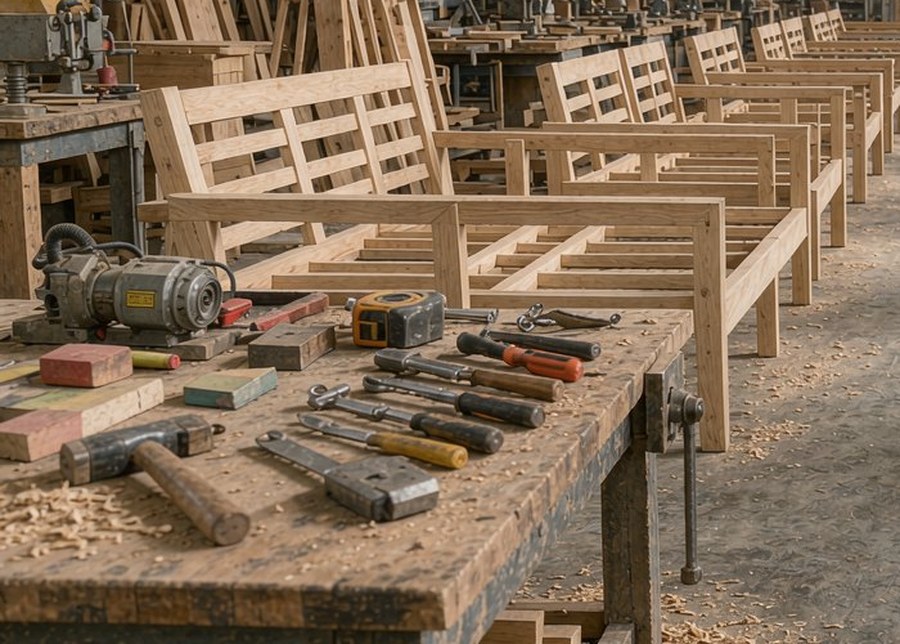
Teak is a natural material, so "defect" needs a definition before anyone inspects anything. Agree with the factory, in writing, what is acceptable before the first piece is built — typically: sound knots, no through-cracks, no wane (bark edge), consistent colour band within a set.
- Moisture content. Properly dried teak sits at 12–14% MC. Above ~16% the wood will move after delivery: slats shrink, joints open, screws loosen. A pin-type moisture meter reading on three random slats per batch takes two minutes and is the single most informative test on the list.
- Joint construction. Mortise-and-tenon joints, dowelled and glued, are repairable and hold for a decade. Screws straight into end grain — common on rushed production — strip out under load. Ask the factory to photograph one joint per model, cut away if necessary, before your order enters production.
- Fastener grade. 304 stainless is the minimum for outdoor; 316 for coastal or poolside. Ask for the grade in the quotation, not the box label — mismatched fasteners are the classic hidden downgrade.
- Sanding and edges. Run a cotton glove over every accessible surface. It should not snag. Sharp or unsanded edges are the defect guests touch first and photograph first.
- Set consistency. Lay three chairs from the same batch side by side. Colour and grain will vary in teak, but the pattern of variation should be random. Two visibly different wood tones in one set of six means the batch was mixed.
Inspecting aluminium frames: the four checks
Powder-coated aluminium is more consistent than timber, which makes inspection easier — and makes the few things that go wrong more systematic.
- Weld continuity. Look at the underside of joints and the inside of tubing. Gaps, pinholes or a "cold" bead that flakes under a pick are failure points. Welds at load-bearing joints should be ground smooth, not just dressed on the visible face.
- Coating thickness. A coating gauge reading of 60–80 µm is the normal specification. Below 40 µm the finish will chalk and blister in two to three seasons. Inspectors carry a gauge; if you are remote, ask the factory for readings on three frames per batch.
- Extrusion vs. casting. Extruded profiles bend; cast fittings crack. Check corners and feet — if the quotation says cast, verify it, because casting is where cost is quietly trimmed.
- Drainage holes. On tube frames, uncapped open ends let water in and rust the inside out from a pinhole. Every open tube end should be capped.
Function tests: five minutes that prevent a season of complaints
| Test | Method | Pass criterion |
|---|---|---|
| Backrest ratchet | Click through every position, loaded with a hand on the backrest | Every position holds; no slippage under 80 kg lean |
| Wheels | Roll 10 m on rough concrete, then check deck contact rings | Bearings quiet; no flat spots; wheels swivel freely |
| Stack / fold | Stack to maximum rated count, then push the stack at chest height | Stable without a strap; no rack or wobble |
| Cushion fit | Seat cushions on the frame; sit and stand five times | Cushion stays put; no gap at the backrest |
| Drainage | Pour 500 ml water on the cushion | Water leaves within ~60 seconds; no pooling on the base panel |
Packaging: the last chance to catch anything

Furniture rarely fails in transit because the truck was bad. It fails because a cushion sat unwrapped against a teak arm, or a carton was under-specified for a 40-day voyage in humidity. Check:
- Carton spec. Five-ply (or heavier) for anything over 25 kg; export-grade, not recycled single-wall.
- Protection at contact points. Foam or corner protectors wherever hard meets hard — frame against cushion, glass against frame, slat ends against carton walls.
- Waterproofing. Plastic-wrapped inner packs for fabric and cushions. Sea freight humidities sit near 100% for weeks; a damp carton is a mildew claim waiting to happen.
- Labels. Carton marks match the packing list: model, quantity, colour, destination. Mixed-load errors are the most common cause of "missing" furniture that was actually loaded into the wrong container bay.
- Spares and hardware. Assembly bolts, hex keys and touch-up kits should be bagged and labelled inside a carton, listed on the packing list — not loose at the bottom of the box.
Before the doors close: the loading-day checklist
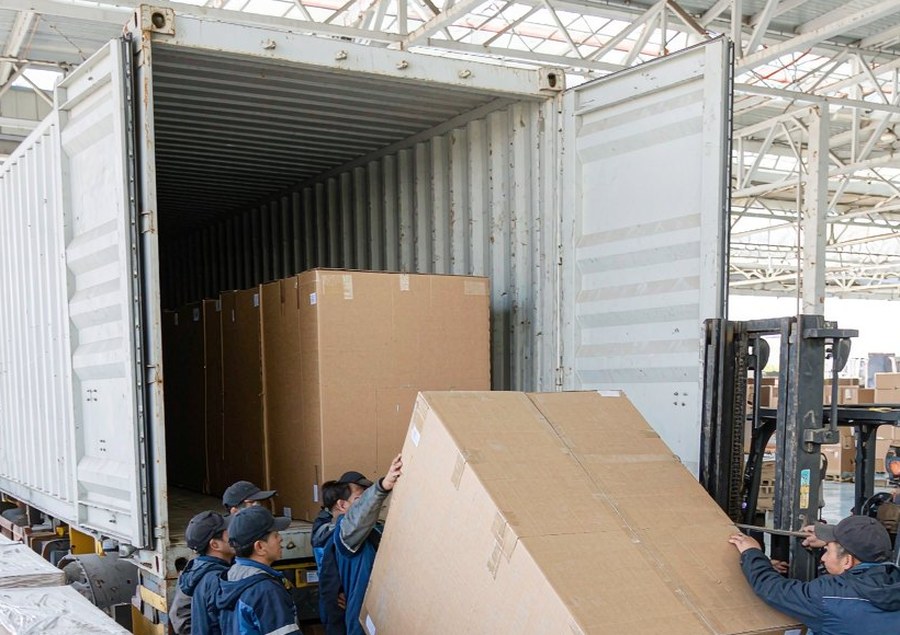
- Carton count matches the packing list — counted, not estimated.
- Ten random cartons opened and contents verified against the list.
- Photo report received: frame stage, post-assembly, packed, staged.
- Moisture readings and coating readings recorded for the batch.
- Seal number photographed and written on the bill of lading.
- Any rejected pieces documented before the balance payment is released — not after.
One habit separates smooth importers from stressed ones: they never release the final balance against a promise. The payment term is the inspection leverage. Structure the deal — deposit, balance against inspection photos, remainder against B/L copy — and every item on this checklist gets taken seriously by everyone in the chain.
If you want a reference point for what a documented inspection report looks like, we send ours with every shipment: frame-stage photos, post-assembly function tests, moisture and coating readings, and the loading-day count with the seal number. Ask us for a sample report with your quotation request and we will send the real one from a recent order — see how we plan a container load or browse the full range.