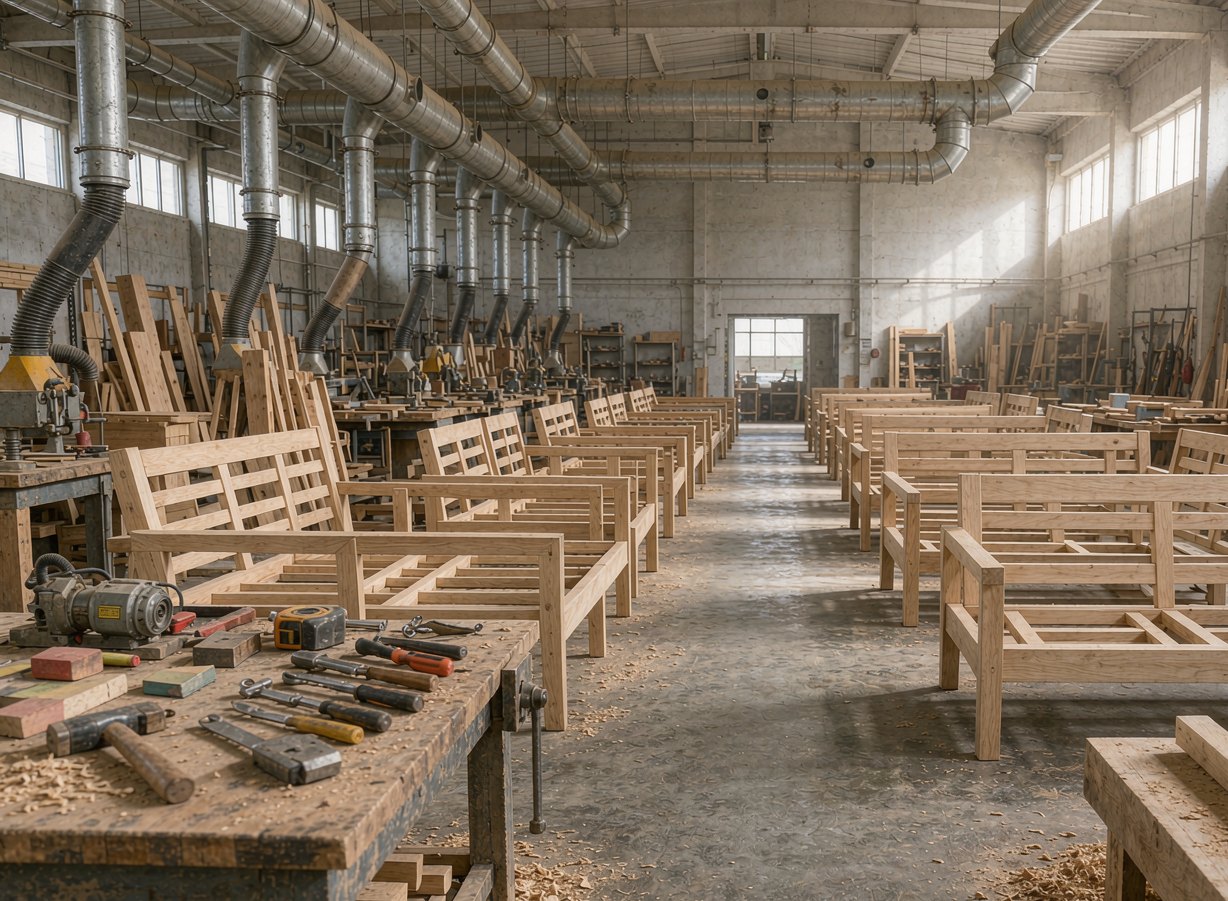
Solid teak and powder-coated aluminium built in the same 20,000 m² workshop — so your sample and your production order come from the same hands.
Outdoor furniture either lasts or fails on its material, so material is the one thing we do not buy through anyone else. Teak logs are bought directly, cut and kiln dried to 8–12% moisture in our own kiln before a single joint is made. Aluminium tube is bought to a specified wall thickness rather than to a price, because a thin section is where a woven frame starts to work loose.
Everything after that happens on the same site: cutting, welding and powder coating for metal, mortise-and-tenon joinery and hand sanding for timber, then weaving, upholstery and packing. Nothing is subcontracted out when volumes get tight, which is why a repeat order two years later still matches the first one.
Teak is graded and kiln dried to 8–12% moisture. Aluminium tube is checked for wall thickness. Anything that will not take a fixing properly is rejected here rather than discovered later.
Timber is cut and jointed mortise-and-tenon; metal is cut and jig-welded to keep frames square, then degreased and chromate pre-treated before powder coating.
Rope or strap is woven by hand over the finished frame, timber is hand-sanded to 180–240 grit and oiled or sealed, and cushions are cut and sewn in-house to the pattern for that model.
Every piece is wiped, checked against the specification and photographed. Cartons are drop-tested and corners protected, and a loading plan is issued before the container is sealed.
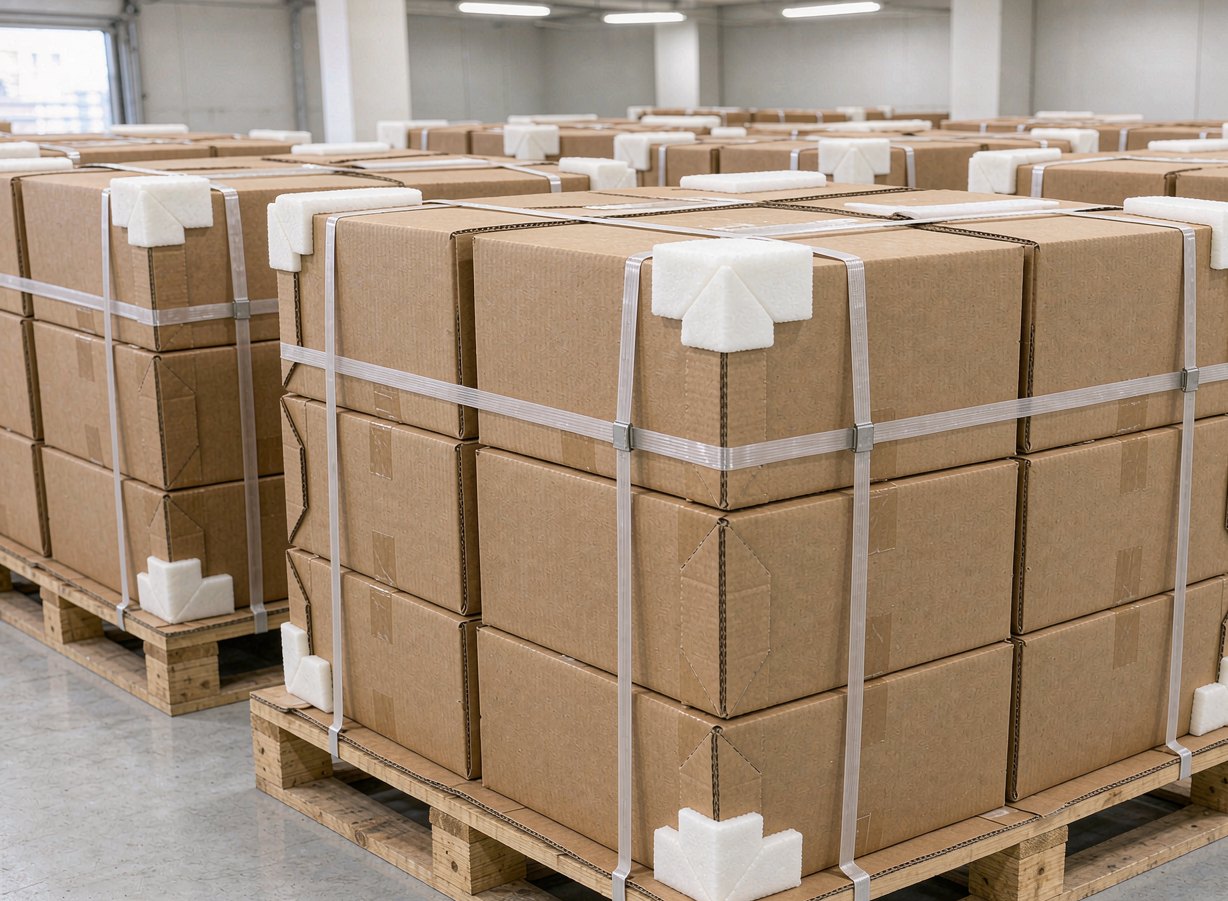
Furniture travels further and is handled more times than most cargo, which is why packing is specified rather than left to whoever is on the line that day. Frames are wrapped in foam sheet, corners get protectors, glass and stone tops travel in their own crates, and cartons are strapped to pallets so nothing shifts in a container swell.
Knocked-down options are available on most models and can trim 25–35% off the shipped cube compared with fully assembled frames. Every model page states the carton count, so you can work out how many sets fit a 40HC before you commit to a freight booking.
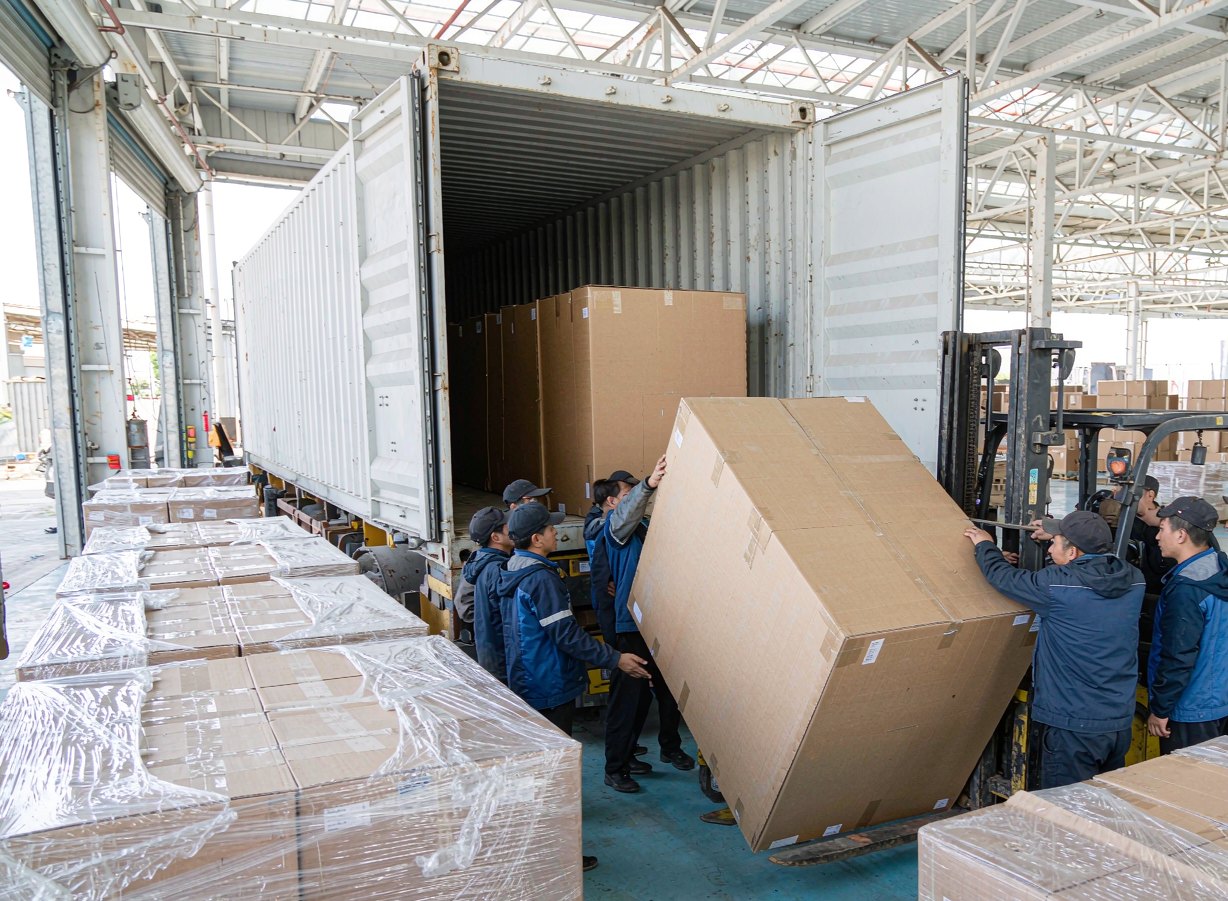
You get a carton-by-carton loading plan before the container is sealed: how many cartons, what is in each one, total cube and container utilisation. It means you can book freight against real numbers instead of an estimate, and it gives you a document to check against what actually arrives.
Mixed containers across teak and aluminium are normal, since many buyers want the statement pieces in timber and the high-traffic seating in aluminium. One order, one loading plan, one set of documents. Loading is FOB Shenzhen or Nansha, and we work with your forwarder or ours.
Buyers are welcome to visit us in Foshan — we are about 40 minutes from Guangzhou Baiyun Airport — or we can run a live video walkthrough of your production line instead.
Tell us the models and quantities and we will come back with carton counts, total cube and a loading plan for your container size.