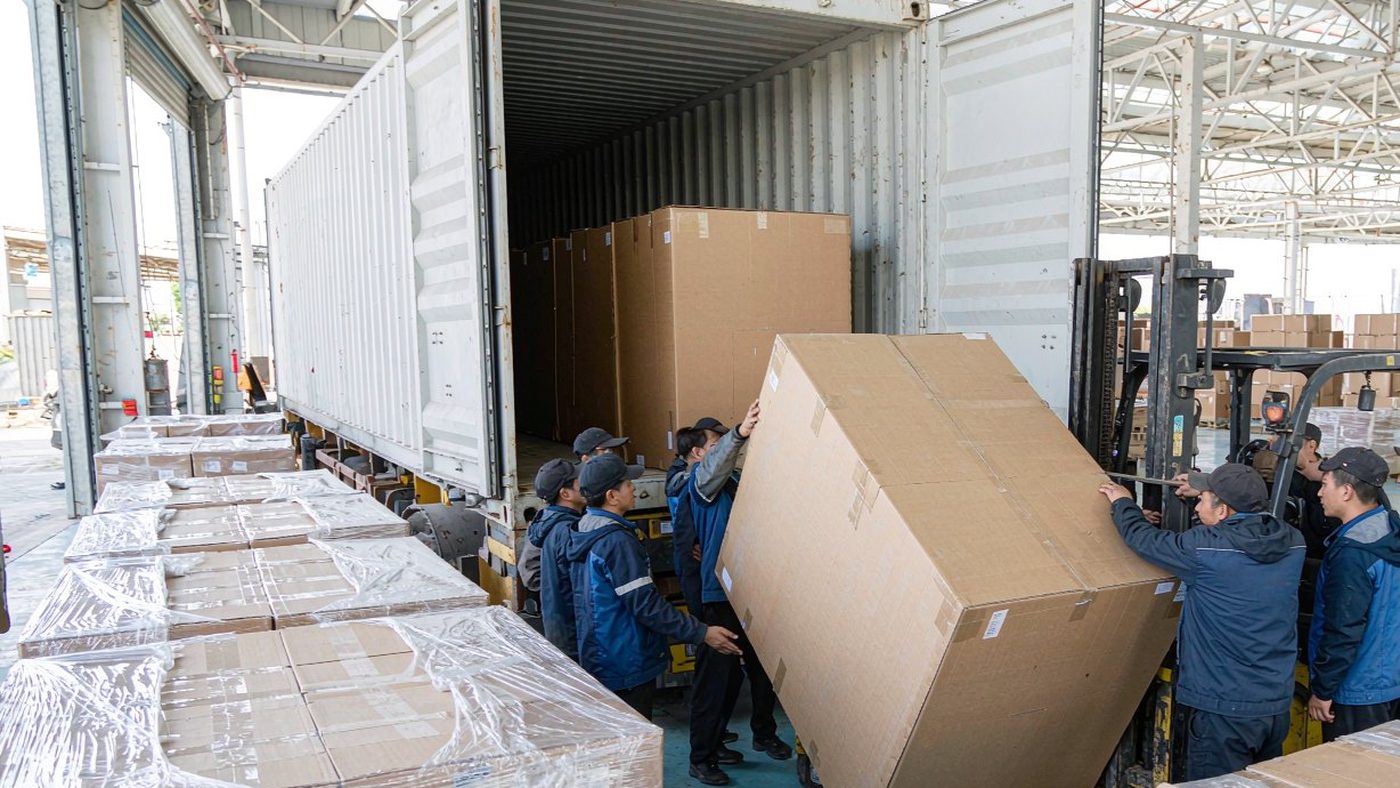
"How many sets fit in a container?" is the first question every importer asks a furniture factory, and it is the question most often answered with a number that turns out to mean nothing. The honest answer is that it depends on the models, the packing method and whether the container fills on cube or on weight — and all three are knowable before you commit. This guide gives you the arithmetic to sanity-check any quote, the ranges to plan with, and the one document to demand before a container is sealed.
Start with the container, not the catalogue
Before counting furniture, count steel. The three containers that matter for outdoor furniture are:
| Container | Internal capacity | Typical payload | Best for |
|---|---|---|---|
| 20ft GP (20GP) | ~33 CBM | ~28 tonnes | Trial orders, tight destinations, LCL alternatives |
| 40ft GP (40GP) | ~67 CBM | ~26–28 tonnes | Standard full loads where height is not the constraint |
| 40ft HQ (40HC) | ~76 CBM | ~26–28 tonnes | Most full-container furniture orders — the default choice |
Two things follow from this table. First, the 40HQ is the workhorse: roughly 13% more cube than a 40GP for a similar freight cost, which is why almost every full-container furniture order ships in one. Second, payload is not your problem. Outdoor furniture is a cube-limited cargo — even a full 40HQ of teak and aluminium seating typically weighs far less than its rated payload. The number that decides your per-unit freight cost is CBM per set, not kilos.
Cube vs weight: which one fills first?

Teak is a dense timber and aluminium is not, but furniture of either material is mostly air. A dining chair is perhaps 15% material by volume; a sofa is less. That is why a container of outdoor furniture almost always fills on cube long before it fills on weight — and why the packing method changes the economics so much.
The exceptions are worth knowing. Table tops in stone, ceramic or concrete, and solid teak slab tables, can push a load toward its weight limit. If your order is top-heavy in that sense, ask for the gross weight per carton alongside the cube — a forwarder will charge on whichever limit you hit first, and on dense cargo that can be weight.
Worked examples: what a container actually holds
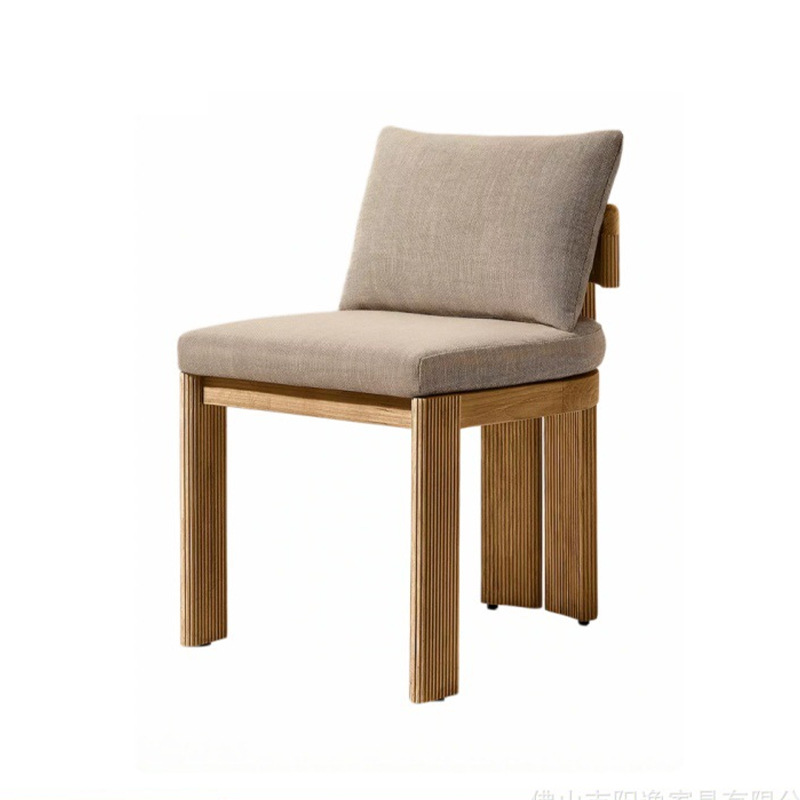
The ranges below are planning figures for typical commercial models, packed knocked-down with standard export cartons. They are not a quotation — the only number worth quoting from is the factory's loading plan with real carton dimensions. But they will tell you instantly whether a supplier's claim is plausible.
| Product type | Typical cube per unit (KD) | Approx. units per 40HQ |
|---|---|---|
| Dining set (table + 4–6 chairs) | ~1.5–2.5 CBM | ~25–40 sets |
| Sofa set (3-seat + 2 chairs + table) | ~3–5 CBM | ~12–20 sets |
| Sun lounger (single) | ~0.8–1.5 CBM | ~40–60+ units |
| Modular sectional (large) | ~4–7 CBM | ~8–14 sets |
Read those ranges the way a procurement director should: as a filter, not a promise. If a supplier claims 60 dining sets in a 40HQ, either the sets are unusually compact, the packing is unusually efficient, or the number is invented. Any of the three is worth a follow-up question.
Why the same model ships in different quantities
Two factories quoting the same model can legitimately produce different container counts. Carton design is the usual reason: a frame nested with its cushions inside a purpose-built carton can use 30% less cube than the same frame in a generic box. This is why "how many fit" is really a question about engineering and packing, not about the furniture alone.
Mixed loading: why one container usually carries several models

Full-container orders rarely ship a single model, and they should not. Mixed loading is normal practice for three reasons. It fills the awkward gaps that uniform cartons leave — loungers and parasols slot into spaces a stack of dining cartons cannot. It lets a first-time buyer trial a range instead of betting the whole container on one model. And it reduces risk: if one model underperforms at destination, the rest of the order still sells.
What matters with mixed loads is discipline. Specify carton labelling by model and carton number, require a packing list that matches the labels exactly, and ask for photographs of the loaded container before the doors are sealed. On a mixed load, a mislabelled carton is a customs problem at destination, not just an inconvenience in the warehouse.
What "utilisation" really means
Utilisation is the share of the container's cube that is actually filled. Anything above 90% on a mixed load is excellent; 85–90% is good; below 80% usually means the loading plan was not engineered. A supplier quoting 95%+ on a mixed order of odd-shaped furniture is either exceptional or guessing — ask how the figure was calculated, and whether it is gross cube or loaded cube after dunnage and bracing.
Dunnage matters more than buyers expect. Air bags, bracing and edge protection consume real cube, and they are what stands between your furniture and a damage claim. A loading plan that shows 98% utilisation with no allowance for dunnage is a plan that will be reworked at the dock — usually by leaving your cartons behind.
The loading plan: what to ask for before the container is sealed
This is the single most useful document in the whole shipping process, and it costs the factory nothing if their systems are in order. Ask for it at quotation stage, not at loading stage:
- Carton dimensions per model — length, width, height, and gross weight per carton.
- CBM per carton and carton count per model — so the total can be checked line by line.
- Total CBM and stated utilisation for the proposed container type, with the dunnage allowance shown.
- A loading diagram or photographs of comparable previous loads, ideally mixed.
- The packing list format that will ship with the container, so your customs broker sees it before the goods arrive.
A factory that ships containers weekly produces this in a day. A factory that cannot produce it at all is telling you something important about how often they actually ship.
Common mistakes importers make
Ordering to "fill" a container
The temptation is real: freight per unit drops as the container fills, so the logic says buy more. But inventory risk dwarfs freight savings. A half-container of models that sell through beats a full container of models that sit in a warehouse for a year, every time. Fill the container with demand, not with cube.
Assuming brochure counts apply to your packing
Knocked-down packing typically trims 25–35% off the cube compared with fully assembled frames — a difference large enough to change the container count on a mid-sized order. If you are comparing a delivered-and-installed cost, read our guide on fully assembled vs flat-pack shipping before assuming the cheaper freight option is the cheaper option overall.
Forgetting the destination end of the journey
A 40HQ needs a dock, a forklift and a road that can take it. If the delivery address is a resort under construction with none of those, the container that saved you money at sea will cost you a week at destination. Match the container to the receiving site, not just to the order size — and where access is genuinely constrained, a 20ft or an LCL consolidation can be the smarter buy despite the higher unit freight.
Ignoring weight on dense cargo
As noted above, stone, ceramic and solid slab tops can make weight the binding constraint. On those orders, ask for gross weight per carton and check it against the container's rated payload before the booking is made. Overweight containers get fined, delayed or devanned at the port — all three land on your account, not the factory's.
Getting a loading plan for your order
Send us the models you are considering, the quantities and the delivery port. We will come back with a loading plan showing carton dimensions, CBM per model, total cube, container utilisation and carton counts — the same document we use to plan the load itself. It usually takes a day, and it turns "how many fit in a container" from a sales question into an arithmetic one.