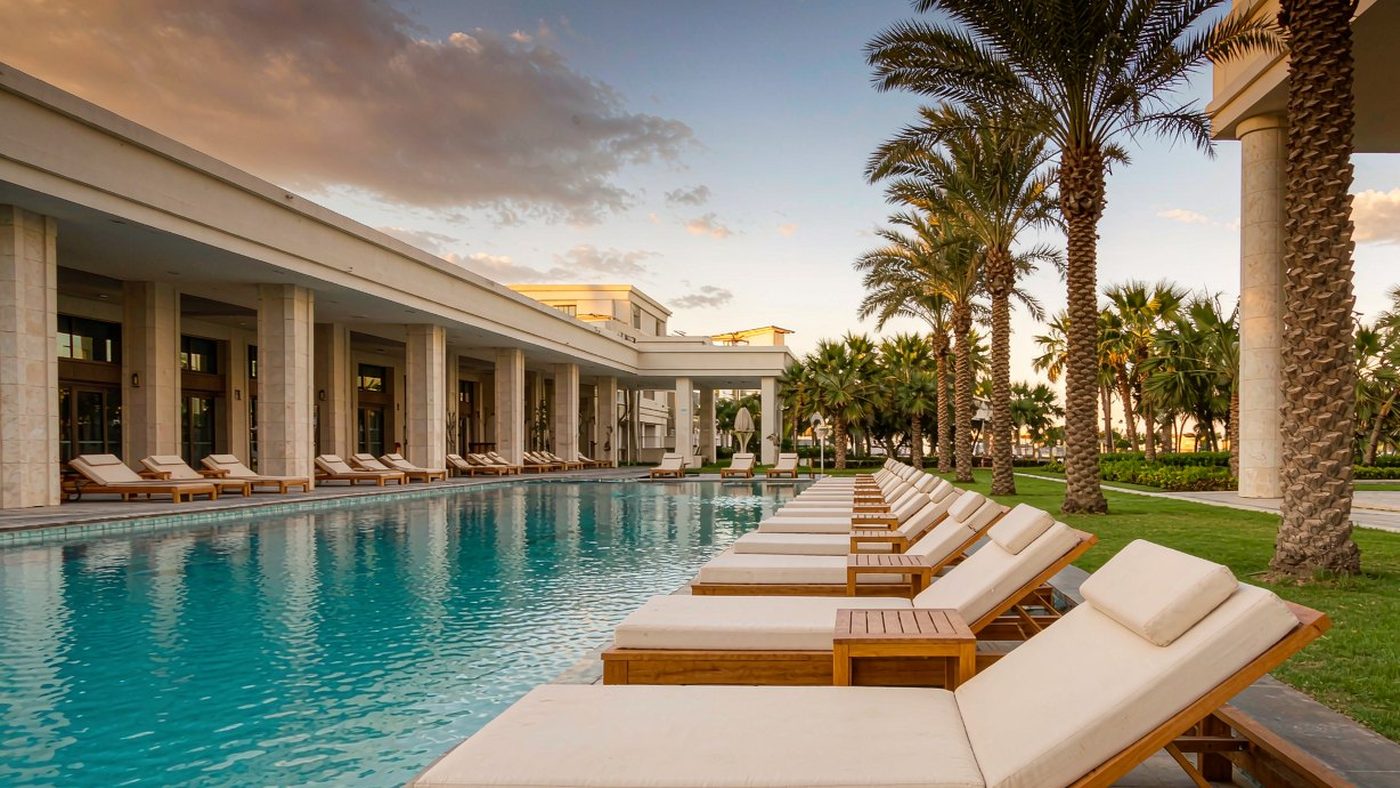
A sun lounger is the most used and most replaced item on a hotel pool deck. It is also the piece guests photograph most, and the one that quietly decides whether a terrace reads as premium or budget within the first three seconds. Yet it is usually specified last, from a catalogue, after the paving and the planting have already been signed off.
This guide is written for procurement directors, FF&E buyers and landscape architects fitting out pool decks, beach clubs, spa gardens and villa terraces. It covers the five components that decide whether a lounger survives its first season, how to choose between single, double and cabana shapes, and the questions to put to any factory before you commit a container.
Start with the deck, not the catalogue
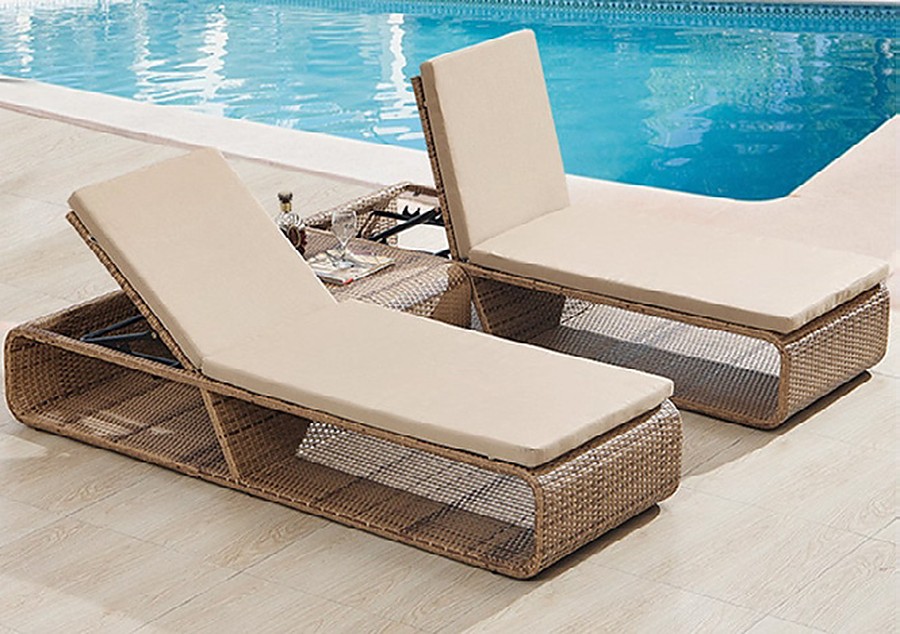
Before a single model is shortlisted, measure three things: the available run length per row, the circulation gap behind each row, and the slab loading limit if the deck is elevated. A standard single lounger needs roughly 1.9–2.1 m of length and 70–80 cm of width; a double daybed needs 1.6–1.8 m of width and a clear 1 m behind it so guests can walk past without stepping over legs.
The circulation gap is where most layouts fail. A row that looks generous on a plan becomes a shuffle at 10 am when every bed is occupied. As a rule, leave at least 90 cm between the back of a lounger and the next obstruction, and more where staff will move beds daily.
On a roof terrace or a suspended slab, weight is a structural question rather than a preference. Solid teak loungers are heavy; aluminium is roughly a third of the weight. If the structural engineer has not been asked, ask before the specification is fixed — retrofitting a lighter frame after the slab is poured is expensive.
The five parts that decide whether a lounger survives
Two loungers can look identical in a photograph and differ completely in service life. These are the components that matter:
- The backrest mechanism. A ratchet in solid teak or stainless steel outlasts plastic clips, which fail quietly in the second season. Ask what the pivot and the catch are made of, not just how many positions there are.
- The cushion core. Quick-dry reticulated foam over a mesh base drains after rain. Closed-cell foam or a solid board base holds water and turns a lounger into a puddle that guests avoid.
- The frame joint. Mortise-and-tenon and welded joints are repairable; glued dowels and self-tapping screws are not. On aluminium, check that the frame is welded, not bolted, at the load points.
- The wheels. Rubber or PU tyres roll quietly and protect decking; hard nylon is cheaper but marks pale stone and skids on wet tiles.
- The fasteners. 304 stainless is adequate inland; 316 stainless is the specification for coastal and chlorinated environments. Anything else will show rust within a season.
None of these are visible in a catalogue image, which is why a sample matters. A factory that will not send a production sample — not a showroom dummy — is telling you something.
Single, double or cabana
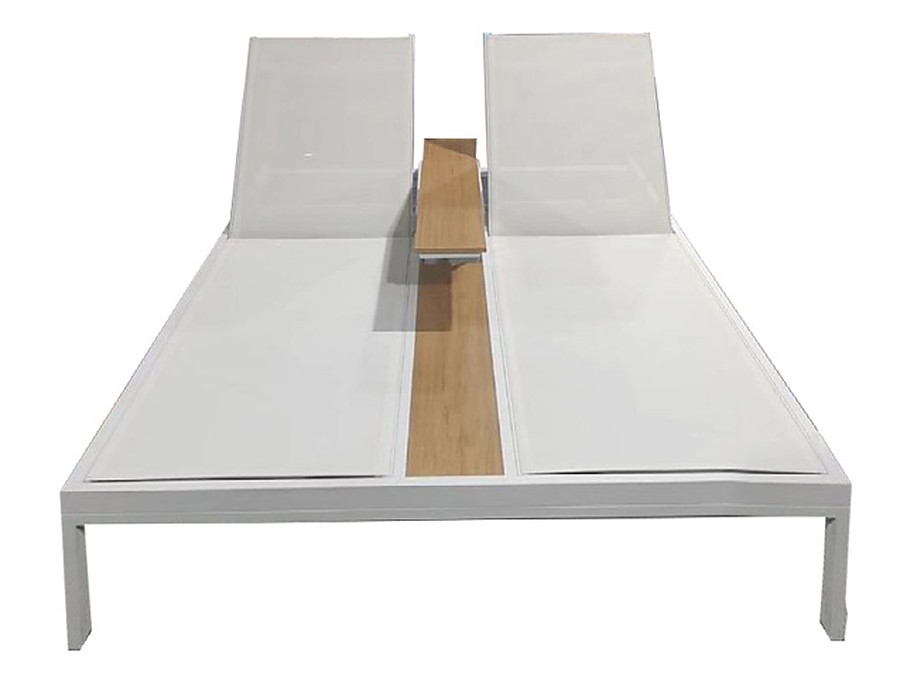
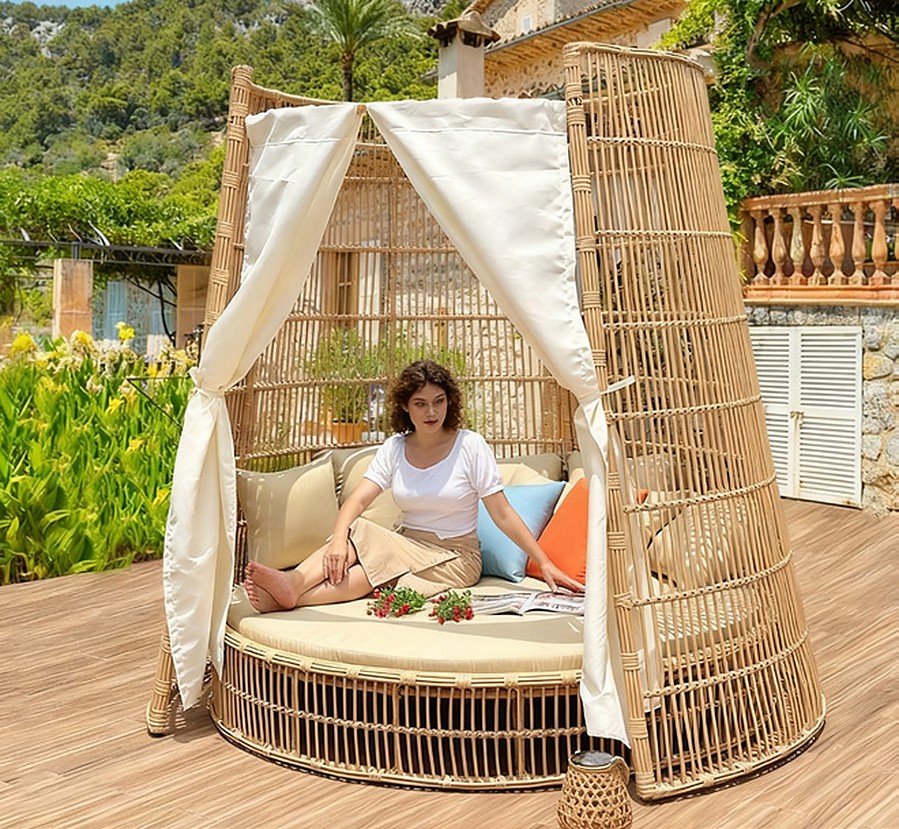
Shape is a layout decision as much as a style decision. Single loungers give the highest bed count per metre and suit rows along a pool edge. Double daybeds suit couples, cabana bookings and honeymoon villas, and they anchor a terrace visually. Cabana daybeds — four-poster frames with curtains — create a private shaded retreat and are usually the signature piece on a spa lawn or in a resort garden.
A useful mix for a resort pool deck is roughly 70% singles, 20% doubles and 10% cabanas, adjusted by the property's guest profile. Family resorts skew singles; couples and wellness resorts skew doubles and cabanas. A beach club with a high day-bed minimum spend may invert the ratio entirely.
Cushions: where cheap loungers fail first
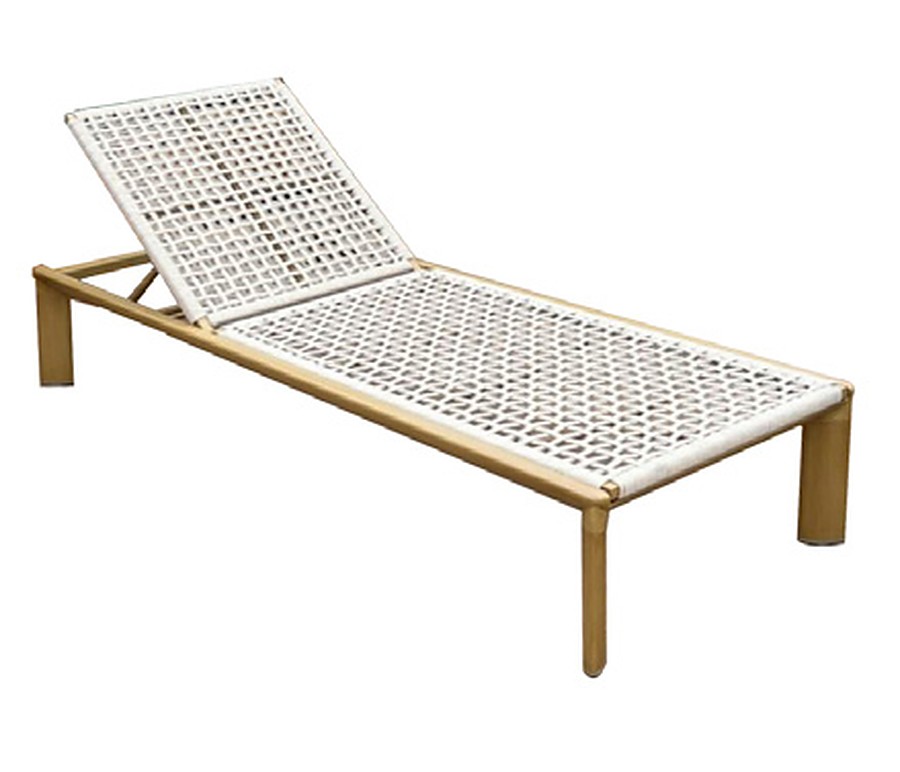
The cushion is the first thing to fail and the first thing guests judge. Specify solution-dyed acrylic covers rather than piece-dyed polyester: the colour is in the fibre, so chlorine, sunscreen and UV do not bleach it out in a season. Specify quick-dry foam with a mesh base so water drains through instead of sitting in the core.
Ask for the cushion's density and the cover's warranty in writing. A 10 cm cushion that compresses to 4 cm after a month is not a cushion; it is a cost saving that the guest feels. On commercial decks, a removable, washable cover with a hidden zip is worth more than a decorative piping detail.
Material: one design, two climates
Most of our lounger designs can be built in either solid teak or powder-coated aluminium to the same shape, so material is a specification decision rather than a different product. Teak suits guest-contact areas and design-led terraces where warmth and grain matter; aluminium suits high-turnover decks, coastal humidity and properties that will not run a maintenance programme. The full comparison is in our teak vs aluminium sun lounger guide.
Stacking, storage and the off-season
If the property closes for winter, or if the deck is re-set for events, stacking matters. Stackable and folding frames can cut the storage footprint by half. Ask for the stacked height per unit and the maximum stack count — and check that the stack is stable without a strap, because staff will not always use one.
For beach clubs that move beds daily, folding or wheeled frames reduce handling time and damage. For villas, a small number of non-stacking loungers is usually fine; storage is a spare room, not a warehouse.
Spare parts and the true cost of ownership
A lounger you cannot repair is replaced, not fixed. Slats, wheels, catches, bolsters and cushion covers should all be available as spares for at least five years after the order. Ask for the spare-parts list and the lead time at quotation stage, not after the first failure.
Price the lounger against its service life, not against the unit cost. A cheaper frame that fails in year two costs more than a heavier frame that lasts eight years — especially when replacement means a new container, new freight and a new import clearance.
A specification checklist for procurement
- Deck length, width and circulation gap per row, measured on site.
- Slab loading limit if the deck is elevated.
- Backrest mechanism material — teak, stainless or plastic.
- Cushion core and cover specification, with warranty in writing.
- Frame joint type and fastener grade (304 vs 316 stainless).
- Wheel type and deck protection.
- Stacking height and maximum stack count.
- Spare-parts list and availability period.
- Production sample before the container is confirmed.
Send us the deck plan and the quantity per area and we will come back with a layout, a material allocation and trade pricing — usually within one working day. You can see the full range on the sun loungers and daybeds page.