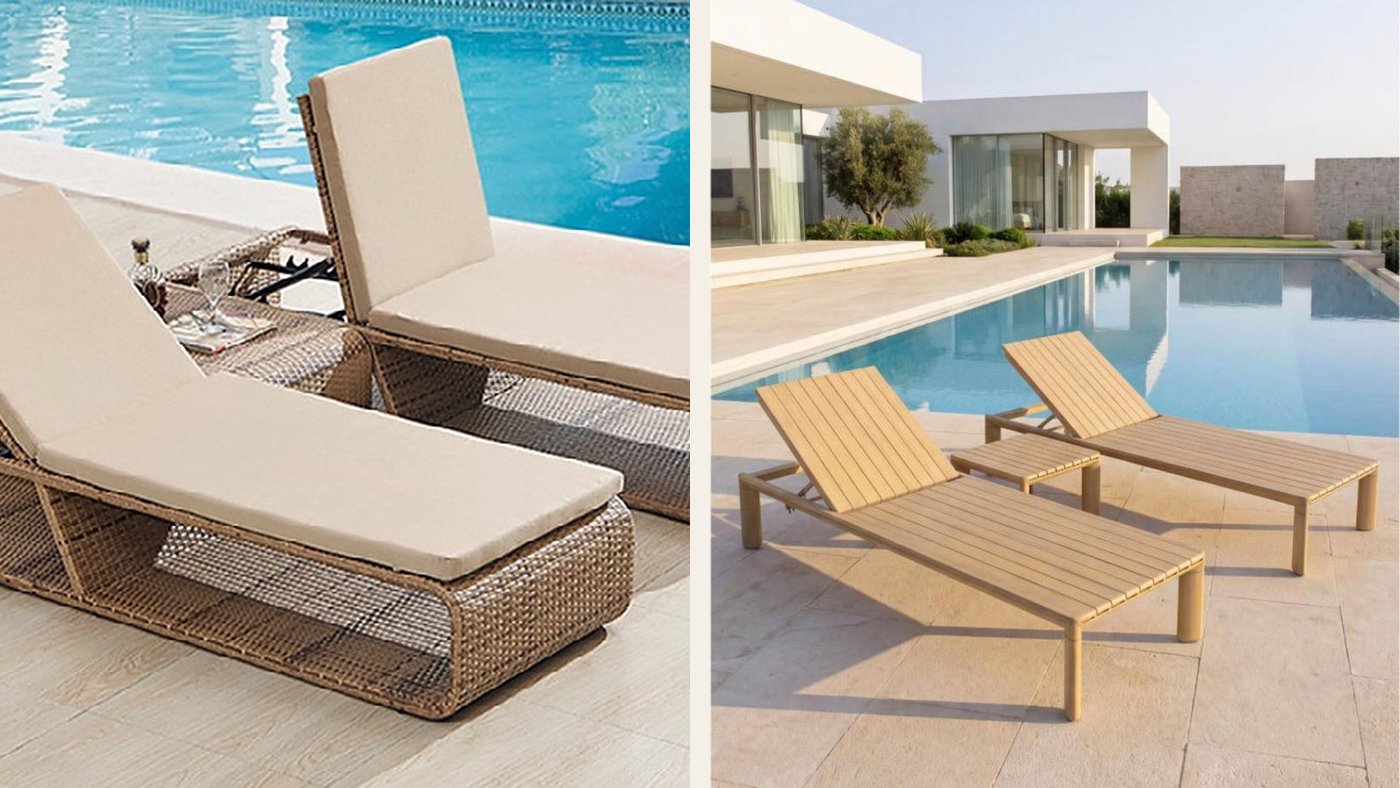
Almost every lounger specification eventually reaches the same fork: solid teak or powder-coated aluminium. The question is usually framed as a matter of taste, and it is not. It is a decision about salt exposure, slab loading, how often staff move the furniture, and whether a reorder three years later has to match the original exactly.
This guide is for procurement teams, FF&E buyers and landscape architects specifying sun loungers for resorts, beach clubs, hotels and private villas. It ends with a recommendation to use both — because on most properties, the right answer is a split, not a single material.
The short answer
Choose solid teak where guests touch the furniture, where the natural warmth is part of the design intent, and where the property will accept a cosmetic colour change over time. Choose powder-coated aluminium where the loungers are moved daily, where weight matters structurally, where there is no maintenance programme, and where a reorder must match the original exactly.
What teak actually gives you
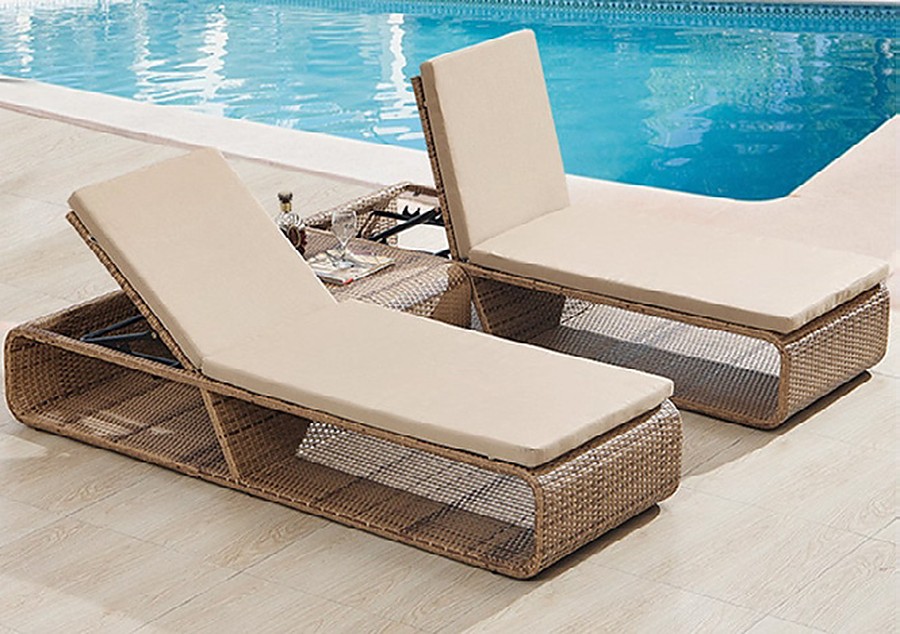
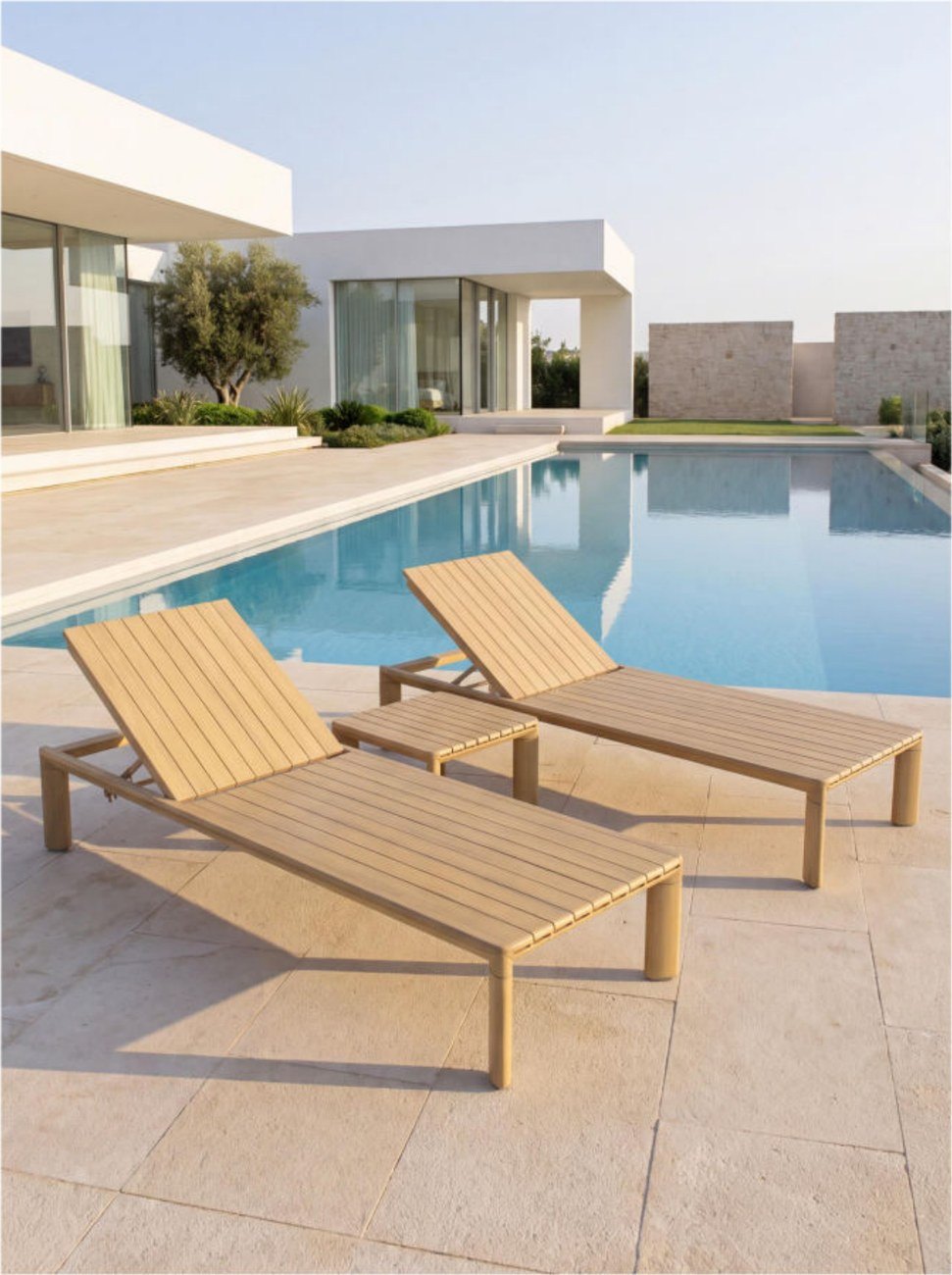
Teak carries a high natural oil and silica content. The oil resists moisture ingress and fungal growth; the silica makes the surface hard-wearing and gives it the slightly abrasive feel that makes it comfortable when wet. It is one of very few timbers that can be left outside, unfinished, for decades and remain structurally sound.
Left alone, teak weathers from honey to an even silver-grey over roughly nine to eighteen months depending on UV exposure. This is a surface change only and does not affect strength. If the design intent requires the original tone, budget for a water-based teak sealer once or twice a year. Never use bleach or a high-pressure washer — both destroy the surface fibres and accelerate greying.
Teak is also heavy. On a roof terrace or a suspended slab, weight may be a structural constraint rather than a preference, and this is often the deciding factor that has nothing to do with appearance.
What powder-coated aluminium actually gives you
With aluminium, the frame is only as good as its pre-treatment and coating. Frames should be degreased and chromate pre-treated before the powder is applied and cured, so the coating keys into the metal chemically. Done properly, a finish survives scratch-and-salt exposure for years; done poorly, it starts lifting at the weld edges after two seasons.
Aluminium is roughly a third of the weight of an equivalent teak frame, which matters for any area that gets re-set daily — pool decks, rooftop bars, event lawns and beach clubs that flip between layouts. It needs no oiling, sealing, sanding or varnishing: a freshwater rinse a few times a season and a mild soap wash is the entire maintenance list.
It is also uniquely repeatable. Because a RAL number is a number, a reorder in year three matches the year-one delivery without the natural variation you get when specifying timber. For properties phasing a purchase across multiple budget cycles, that consistency is worth more than it appears on a spreadsheet.
Side-by-side comparison
| Consideration | Solid teak | Powder-coated aluminium |
|---|---|---|
| Weight | Heavy — check slab loading on roofs | About one third of teak |
| Maintenance | Optional sealing for colour; no structural need | Rinse and mild soap wash only |
| Appearance over time | Weathers to silver-grey (cosmetic) | Stable; no colour change |
| Colour consistency on reorder | Natural variation between batches | Exact match via RAL number |
| Coastal / salt air | Excellent — natural oil content | Excellent with 316 stainless fixings |
| Best for | Villa terraces, guest-contact loungers, statement daybeds | High-turnover decks, beach clubs, rooftops |
Where each material belongs
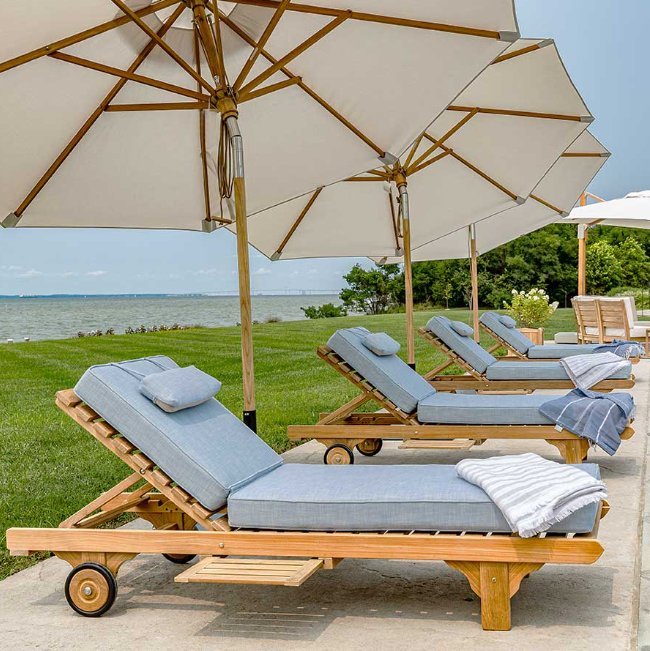
A useful way to allocate is by turnover rather than by aesthetics. Teak belongs where guests linger and touch: the villa terrace, the sunset deck, the poolside daybed that appears in every photograph. Aluminium belongs wherever staff move furniture daily: the beach club deck, the rooftop bar, the event lawn, the poolside row that is stacked and re-set every evening.
On a typical resort this produces a split of roughly 40/60 in favour of aluminium by piece count, and closer to 60/40 in favour of teak by visual impact — because the teak sits exactly where the photographs are taken.
Weight, slab loading and staff handling
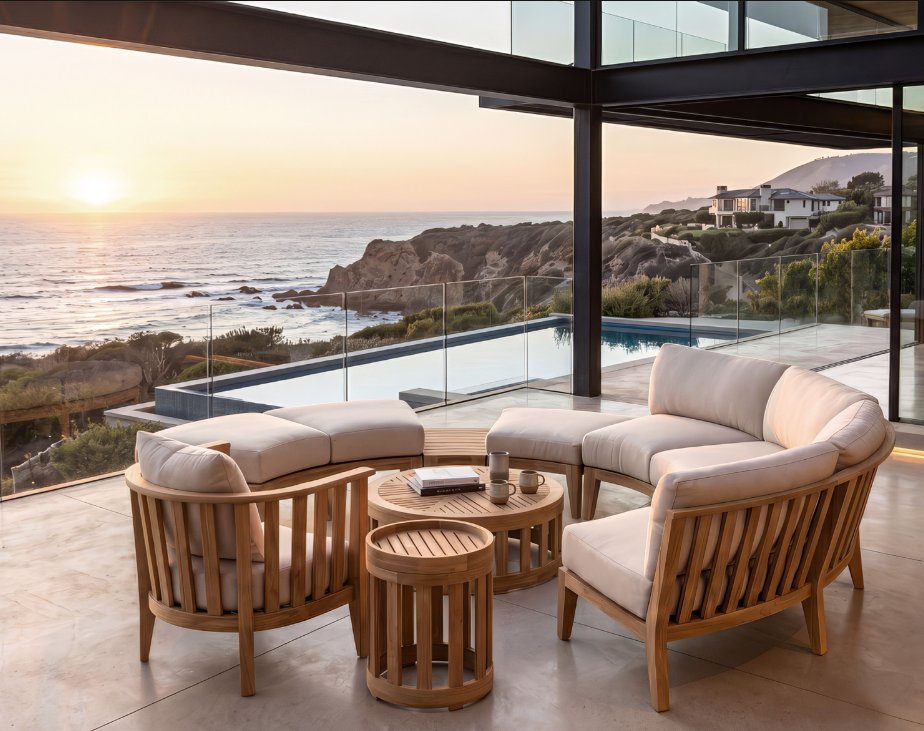
Weight is the constraint buyers underestimate. A solid teak daybed can weigh two to three times an equivalent aluminium frame. On grade-level paving this is irrelevant; on a roof terrace, a suspended slab or a timber deck over a basement, it can decide the specification before aesthetics are discussed.
Handling matters too. If one person has to move a lounger twice a day, a lighter frame reduces fatigue and damage. If the furniture stays put for the season, weight is an asset — it stays where it is put in wind.
Colour matching on reorder
Timber varies. Two teak loungers from the same container will differ slightly in grain and tone; a reorder in year three may differ more. If the property is phasing a purchase, or if the loungers sit in one continuous row, this variation is either part of the character or a problem — decide which before you specify.
Powder coat is repeatable. A RAL number is a specification, and a competent factory will match it across orders. For phased projects and for brands with a strict colour standard, that repeatability is often the deciding factor.
Specifying both into one container
Using both materials on one property is more common than buyers expect, and it is not administratively difficult when both come from the same factory. We issue one loading plan and one set of documents for a mixed shipment, and we can weight the packing so the heavy teak and the lighter aluminium balance correctly in the container.
Mixing also lets you test a material on a small area before committing the whole property — run a handful of aluminium loungers alongside the teak ones for a season, and let the maintenance team tell you which they prefer before the second container.
Questions to ask before you choose
- Is there a slab loading limit on any terrace or roof in scope?
- Who owns furniture maintenance after handover — and will they actually do it?
- Will this purchase be phased over more than one budget cycle?
- Is the site coastal, and if so how exposed to salt spray?
- How often will staff move each lounger?
- Does the lounger sit in the photographs, or in the service background?
Answer those six and the material decision usually makes itself. If you would like us to work through them against your drawings, send the areas and quantities and we will come back with a material allocation, trade pricing and 3D files for each position — usually within one working day. The full range is on the sun loungers and daybeds page.