
Private label is the quiet half of the outdoor furniture trade. Most of the teak and aluminium furniture hanging in garden centres, hotel-group catalogues and online storefronts was made by a factory whose name never appears on the label — and a growing share of it carries a buyer's brand on models the factory already builds. This guide covers that route: what a private label programme actually includes, what the law makes you print in each market, and how to run one without losing the consistency your brand depends on.
The short version: private label puts your brand on a factory's existing range. It is faster and cheaper than custom development, and the risk sits in branding, compliance and reorder discipline rather than in design.
Private label, OEM and trading-company sourcing compared
Buyers use "private label", "OEM" and "custom" almost interchangeably. They are three different structures, and the differences decide your MOQ, your lead time and who owns the design:
| Dimension | Private label | Custom OEM | Trading company |
|---|---|---|---|
| Design | Factory's models, your brand | Your drawings and specifications | Factory's models via a middleman |
| Tooling | Usually none | Moulds, fixtures, first-article approval | None |
| MOQ | Per SKU — typically the lowest | Per project; one container is the honest unit | Varies, often flexible |
| Lead time | Shortest — production, not development | Longest — sampling and tooling first | Adds a relay step |
| Design ownership | Factory keeps it; you keep the brand | Negotiable — get it in writing | Factory keeps it |
| Best for | Distributors, retailers, e-commerce brands | Developers, hotel groups, flagship projects | Small first orders, market testing |
If your business is a brand — a catalogue, a storefront, a customer list — private label is the structure that matches it. The trade-off is honest: you do not own the design, so the same model can appear under another brand unless exclusivity is negotiated up front.
What actually gets branded
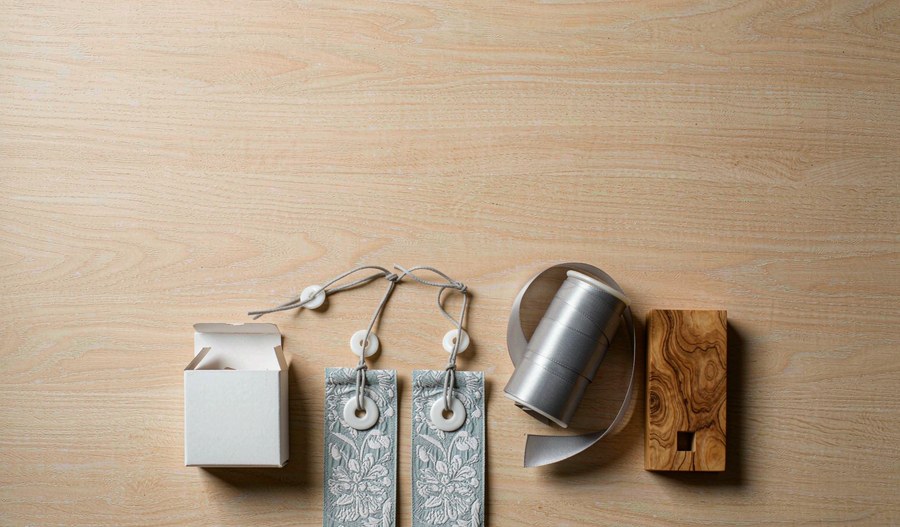
Branding in outdoor furniture works on two layers, and confusing them is the classic first-programme mistake. The product layer is permanent; the packaging layer is revisable:
| Layer | Typical elements | Revision cost |
|---|---|---|
| Product (permanent) | Etched frame logo, embroidered cushion logo, woven brand label | High — a mis-etched frame is scrap, not a reprint |
| Compliance (fixed by law) | Care label, fire label where required, EU responsible-person marking | None — the content is prescribed |
| Packaging (revisable) | Printed carton, hang tag, assembly manual, warranty card, barcode | Low — a new print run per revision |
Start with the packaging layer. A printed carton and a hang tag deliver most of the brand presence at a fraction of the risk of anything permanent, and they can be corrected between production runs. Etched logos and embroidery are the second-programme decision, made after the range has proven itself in your market.
Label compliance: what your brand must carry by market
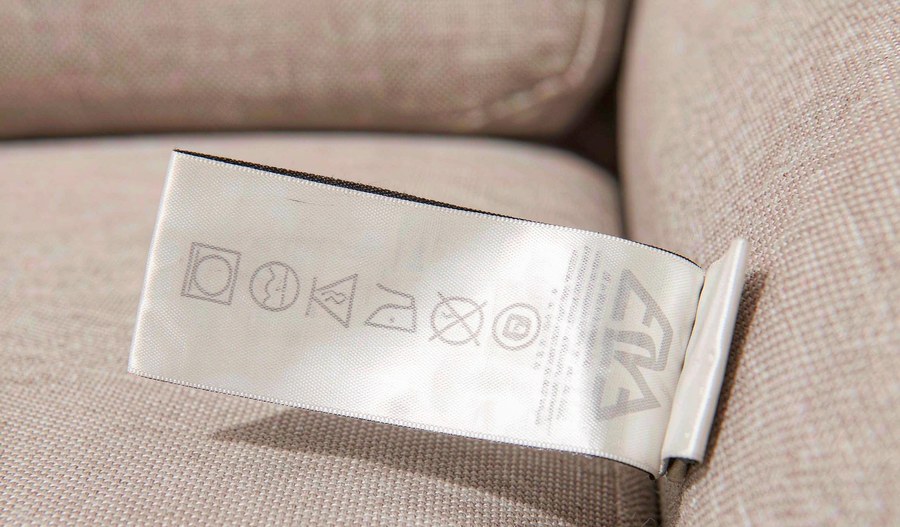
This is where private label stops being a marketing exercise. The moment your brand goes on the product, your company — not the factory — is the importer or brand owner in the destination market, and the label becomes a legal document:
| Market | What must appear | Basis |
|---|---|---|
| European Union | Name and contact address of an EU responsible person on the product, packaging or accompanying documents, plus traceability information such as a batch or serial number | General Product Safety Regulation (EU) 2023/988, in force since 13 December 2024 |
| United Kingdom | Permanent "CARELESSNESS CAUSES FIRE" label on upholstered furniture — including garden furniture suitable for indoor use — plus a retail display label | Furniture and Furnishings (Fire) (Safety) Regulations 1988, as amended 2025 |
| United States | Conspicuous English country-of-origin marking; TB 117-2013 flammability compliance for upholstered pieces | 19 U.S.C. §1304; 16 CFR Part 1640 |
| Australia | General product-safety obligations; care information by market practice | Australian Consumer Law |
Two practical notes. First, the EU responsible person must be someone established in the EU — you, your importer or a service provider. A factory in Foshan cannot fill the role, and no quotation can quietly include it. Second, goods made for export sit outside the UK fire regulations until they are supplied in the UK — so the same production run is compliant in transit and non-compliant on your shop floor unless the labels are right. Agree in writing who produces each label, in which language, and who keeps the test evidence behind it.
Structuring the program: SKUs, samples and the first container
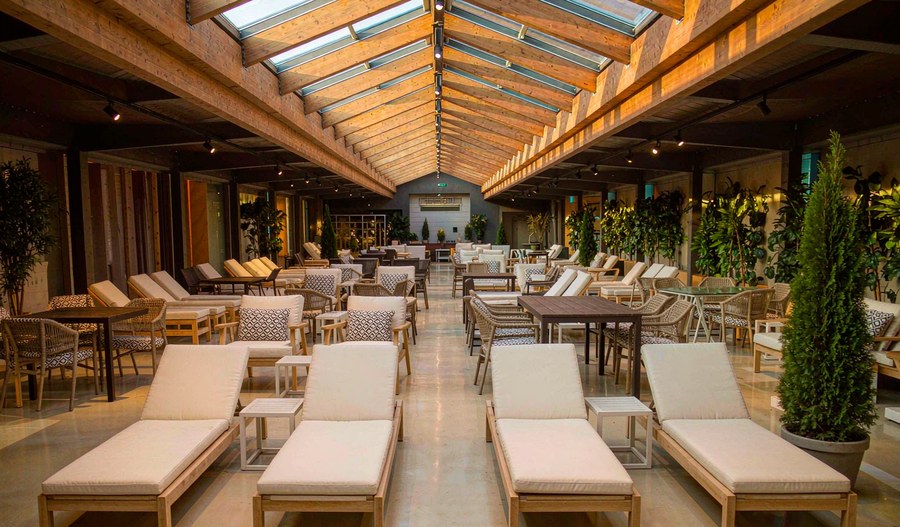
A programme lives or dies on SKU discipline. Retailers routinely launch with fifteen models and reorder three; the other twelve become discontinued stock at full cost. The structure that works:
- Three to six hero SKUs. A lounge set, a dining set, a lounger, a bistro set — broad appeal first. Resist branding the whole catalogue on day one.
- One branded sample per SKU. The sample is the approval artefact: logo placement, embroidery colour, tag stock, carton print. Nothing enters production until you have signed off a physical branded sample — our sample evaluation guide covers what to test.
- Artwork approved in one pass. Send vector artwork, Pantone references and placement diagrams together; late artwork is the most common cause of private label delays.
- MOQ per SKU, not per programme. Ask for the minimum by individual model and by container — our MOQ guide explains how mixed containers clear per-SKU minimums.
Lead time for a private label container is production time plus label production — not development time. That is the structural advantage: the factory is making a known product on a known process, and your brand is a print-and-stitch step inside an existing schedule.
Packaging and printing: the brand's first physical impression
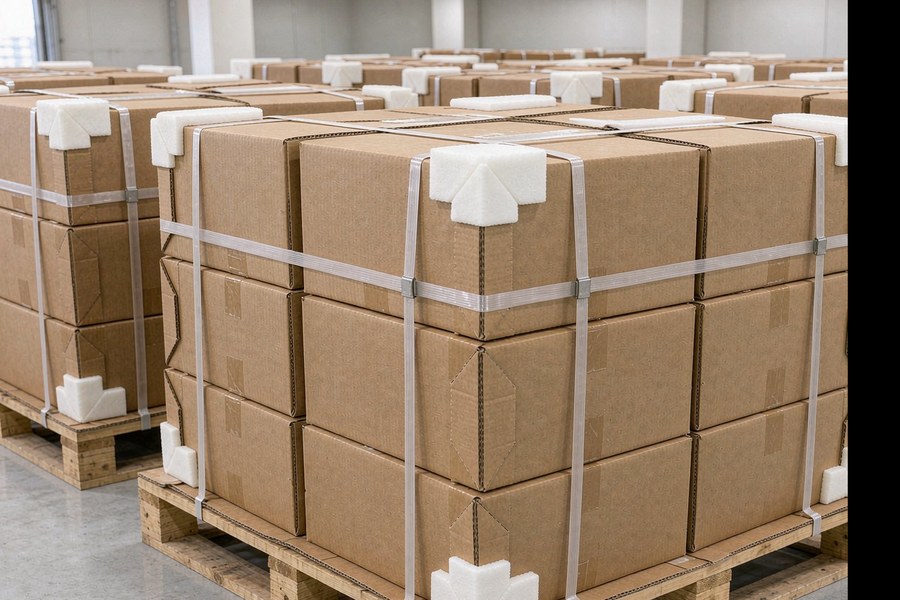
The carton is the first thing your customer touches, and for an e-commerce brand it is the only brand surface a repeat buyer sees between orders. Specify it like a product: board grade, Pantone print colours, handling symbols, and the label positions your warehouse scans at receiving. Ask for a printed carton sample before the run, and photograph the first pallet of printed cartons at the factory — that photo is your evidence if a carton revision silently reverts to an old print on a later batch, which happens more often than anyone admits.
The reorder problem: keeping a brand consistent across batches
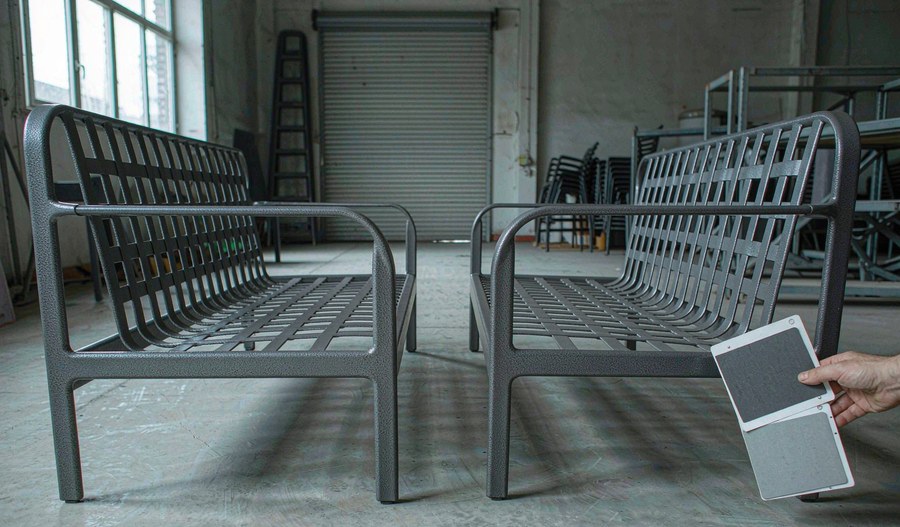
The hardest part of a private label programme is not the first container; it is the fifth. Outdoor furniture is made from batch materials — kiln-dried teak lots, powder-coating colour lots, rope dye lots, cushion fabric lots — and two containers ordered eight months apart will not match perfectly unless someone manages it. A repeat customer who receives a visibly different "same" sofa experiences it as a brand failure, not a factory issue. Three controls make reorders boring, which is the goal:
- A retained master sample. One signed branded sample stays with the factory as the reference for every future batch — get the retention rule in writing.
- Lot-matched materials on reorder. Where colour match matters, the factory should hold or re-order the same material lot — or tell you it cannot, before you place the reorder.
- Label and artwork stock control. Keep approved artwork versioned, ask the factory to confirm the print revision on each production, and put one version number per shipment on the packing list.
What private label does not change
Honesty about the limits of the model:
- Test reports stay in the factory's name. Material and finish testing — coating thickness, salt-spray hours, fabric performance — is issued against the manufacturer. Your brand is the importer; the evidence base is still the factory's, so keep the reports on file and re-check them at reorder.
- Legal responsibility moves to you. As brand owner you carry the product-safety obligations in your market, including recalls. That is the real reason label compliance is not negotiable.
- Quality systems do not transfer with the label. A brand printed on a carton changes nothing about how the furniture was made — the pre-loading inspection checklist matters more under private label, not less.
- Lead time and pricing follow the product. Branding adds print and stitch steps, not weeks.
Questions to ask a factory before you commit
- Which models can carry private label today, and what is the MOQ per SKU versus per container?
- What branding is possible on the product itself — etching, embroidery, woven labels — and what artwork does each require?
- Can you produce the compliance labels for the EU, UK and US, and in which languages?
- How do you hold the master sample and match material lots on reorder?
- Who owns the design if we later want exclusivity or a custom derivative — and what does that cost?
The buyer's checklist
- Structure chosen deliberately: private label, custom OEM or trading-company route
- Three to six hero SKUs, with per-SKU and per-container MOQs confirmed in writing
- Branded sample approved physically before production; master-sample retention agreed
- Label compliance assigned by market — EU responsible person named, UK fire labels, US origin marking
- Artwork versioned, print revision confirmed on every packing list, first printed pallet photographed
- Reorder controls written down: lot matching, master sample, label stock
A private label programme is the lowest-risk way into a branded outdoor furniture business: the product risk stays with a factory that already makes it well, and the brand risk — labels, lots, artwork versions — stays within your control. We run private label programmes on our teak and aluminium ranges from Foshan, from a single branded sample through to repeat containers. Send us the models and the markets and we will come back with the branding specification and the MOQ by model.