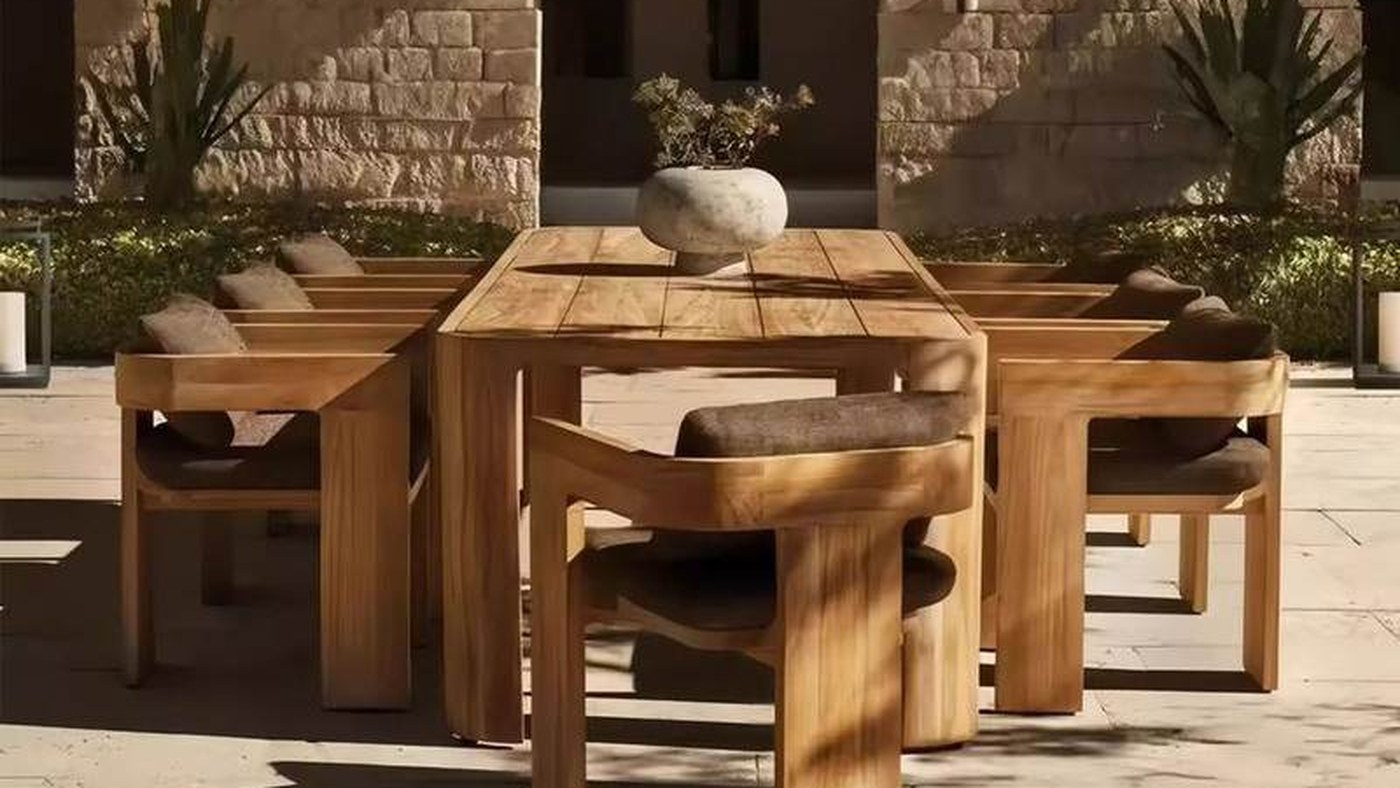
Why the MOQ exists at all
An outdoor furniture MOQ — minimum order quantity — is not a sales tactic. It is a batch-economics boundary, and understanding where it comes from is the difference between negotiating well and simply asking for a discount. Outdoor furniture is not produced in a continuous flow like injection-moulded plastic chairs; it is made in batches, and almost every material in the product carries its own minimum economic batch size. A wholesale programme that ignores those boundaries gets rescheduled, surcharged or quietly downgraded.
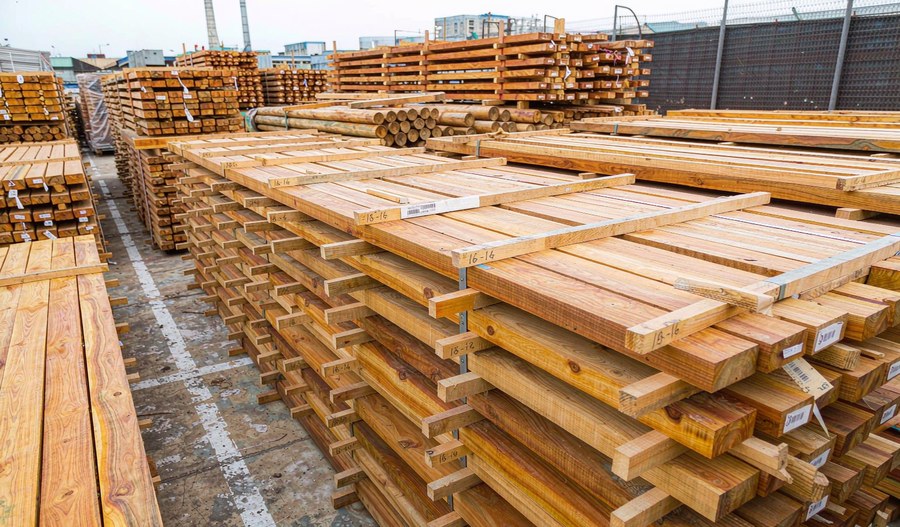
For solid teak, the constraint starts in the kiln. A drying charge costs the same in energy and floor space whether it holds twenty boards or two hundred, and only a fraction of every log yields the clear heartwood a commercial specification demands. A factory that runs a half-empty kiln for a small order either charges for the empty space or hides the cost elsewhere. Teak also has a calendar: boards that leave the kiln below target moisture content fail at the destination, so drying time — not workshop time — often sets the earliest possible ship date.
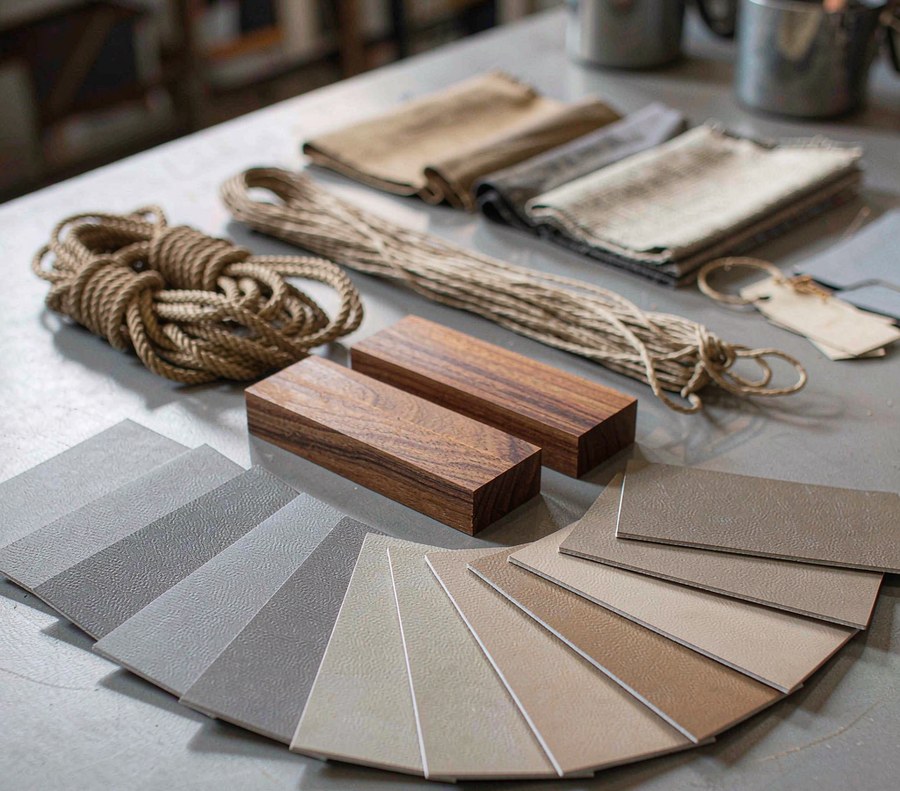
Aluminium has its own version of the same economics. Extrusion profiles are cut on shared dies, and a powder-coating line is scheduled by colour: every colour change is a purge of powder, and a half-full batch of a custom bronze is paid for by whoever ordered it. Rope and textilene are dyed in lots, cushion foam is cut from blocks with real offcut waste, and every one of those lots has a floor. When a factory quotes an MOQ, it is usually protecting changeovers, not materials.
What the MOQ is actually made of
The first question is not "how much" but "of what". Factories quote MOQ in three ways that are not interchangeable: per model (a piece count for one SKU), per order (a total across all models in the order), and per container (a full 20GP or 40HQ regardless of piece count). A 50-piece MOQ per model and a 50-piece MOQ per order are different businesses — the first forces consolidation onto few SKUs, the second lets you spread quantity across a range.
Then ask what the number is measured in — pieces, sets, cartons, CBM or order value — and whether it applies per colour. Mixed colours inside one powder batch or one rope dye lot are often impossible or expensive, so a "100-piece MOQ" that quietly means "100 pieces in one colour" is a different commitment from 100 pieces in four finishes. Finally, ask what happens below the line: some factories accept small orders at a surcharge, some route them through a trading arm, and some simply decline. All three answers are useful; only the vague one is a warning.
The table below is how a typical outdoor furniture MOQ ladder reads. Treat the tiers as the shape of the negotiation, not as any factory's price list — the numbers themselves are the part you confirm in writing.
| Order tier | What it actually tests | What changes as you move up |
|---|---|---|
| Sample order (1–2 pieces) | Specification, finish quality and the factory's paperwork discipline | No volume pricing; courier freight; longest lead time per piece; every drawing question gets asked here |
| Trial order (a mixed pallet) | Logistics, packing quality and whether the batch matches the sample | Usually ships LCL; models and colours narrow; first real inspection against the retained master |
| First container (mixed FCL) | Container economics and loading-plan accuracy | Volume pricing begins; colour options widen; light customisation opens within catalogue limits |
| Annual programme (repeat containers) | Consistency across batches and reorder windows | Colour-match guarantees, retained masters, planned spares, priority scheduling in the kiln and on the line |
Why the number differs by material
Expect a teak programme to carry the highest MOQ and an aluminium catalogue programme the lowest, and read any factory's numbers against the constraints below. A supplier quoting an unusually low teak MOQ is not necessarily generous — they may be buying kiln space from someone else, or grading looser than your specification assumes.
| Material | What sets the floor | What it means for a first order |
|---|---|---|
| Solid teak | Kiln charge size, heartwood yield, drying calendar | Consolidate onto fewer SKUs, accept one grade spec, and plan the reorder around the drying queue |
| Powder-coated aluminium | Extrusion profile amortisation, colour-batch purge | Catalogue profiles start cheapest; keep the first order to one or two colours |
| Rope and textilene | Dye-lot minimums | One rope colour across models; reorder against retained samples while the lot window is open |
| Cushions and covers | Foam block cutting, fabric roll widths | Standard sizes clear the floor; custom fabric raises it and adds a roll to the inventory risk |
Mixed containers: the standard way to meet an MOQ
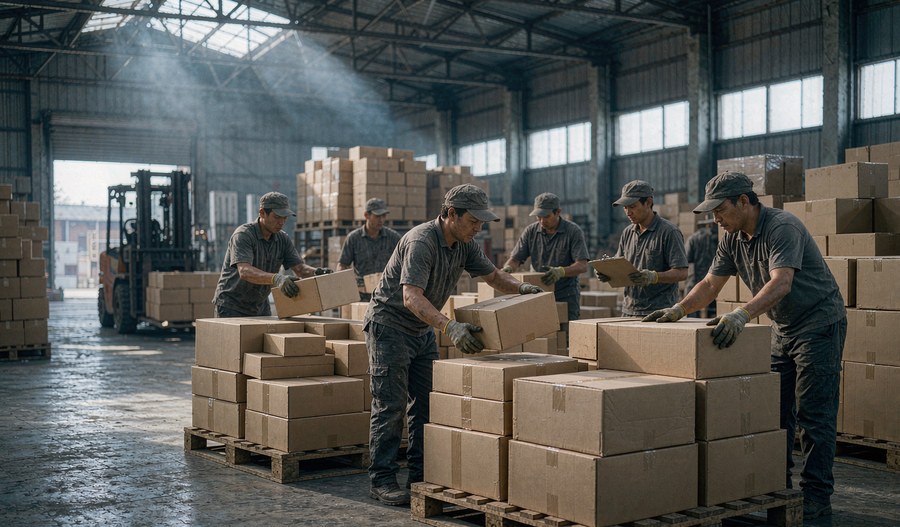
Almost every importer's first large order is a mixed container, and the arithmetic is the reason. A 40HQ holds roughly 76 CBM and outdoor furniture is a cube-limited cargo — the binding constraint is volume, not weight — so a 1.5–2.5 CBM dining set and a 3–5 CBM sofa set fill the same box differently. Mixing models is how you reach a per-order MOQ without over-committing to one SKU, and the loading plan is the document that makes it real: carton dimensions, CBM per model and carton counts per line, totalled and checked against the container's rated cube.
Two habits protect the mixed order. First, give the factory the model mix early — a loading plan produced after production is scheduled is a rationalisation, not a plan. Second, keep a copy of the carton list with the order file; when the reorder comes eighteen months later, the same list is what proves whether the new batch matches the old. The cube-versus-weight maths behind all of this is covered in our container loading guide.
Structuring a first order that clears the MOQ

Choose anchor models that earn their place in the container. Pieces that flat-pack tightly or stack — dining sets, loungers, bistro-scale seating — deliver more sellable units per CBM than bulky single-purpose items, and a first container built from efficient shapes clears the MOQ with less capital at risk. Add one or two statement pieces for the showroom, not for the freight math.
Phase the programme rather than inflate the first order. Two containers three months apart usually beat one oversized container held in stock: the first clears the MOQ and establishes the colour batch, and the reorder — quoted against the same retained master sample — tests whether the factory can actually repeat what they just sold you. That reorder window is worth confirming in writing, because powder suppliers discontinue colours and teak sources change tone between batches.
When the MOQ is genuinely out of reach, negotiate with structure instead of pressure. Offer to consolidate colours (one powder batch, one rope lot), accept a flexible delivery window that lets the factory slot your order into a scheduled run, or ask whether a partial container can be consolidated with another buyer's shipment. A factory that offers a surcharge structure for small orders is being honest about its economics; one that waives the MOQ without explanation may be solving a different problem.
The questions that separate a real factory MOQ from a trading number
A trading company can quote any MOQ it likes because it is not carrying the kiln charge or the colour batch. The questions below are the ones a factory answers comfortably and a reseller answers vaguely — ask them of every supplier, including us.
- Is the MOQ per model, per order or per container — and what is it measured in?
- Which constraint sets the number: kiln capacity, extrusion profile, dye lot or line time?
- What happens below the MOQ — surcharge, decline, or consolidation with other orders?
- Does the order mix colours, and what does mixing cost in lead time or price?
- Does the sample fee credit against the first order, and does the sample count toward the MOQ?
- How long is the reorder window for colour matching against the retained master?
The custom OEM process behind a factory programme — drawings, master samples, and the 50/50 payment structure that puts inspection between the two payments — is the machinery these numbers live inside. And if you are still at the sample stage, the sample evaluation guide covers what to test before the MOQ conversation even starts.
When the MOQ is a container
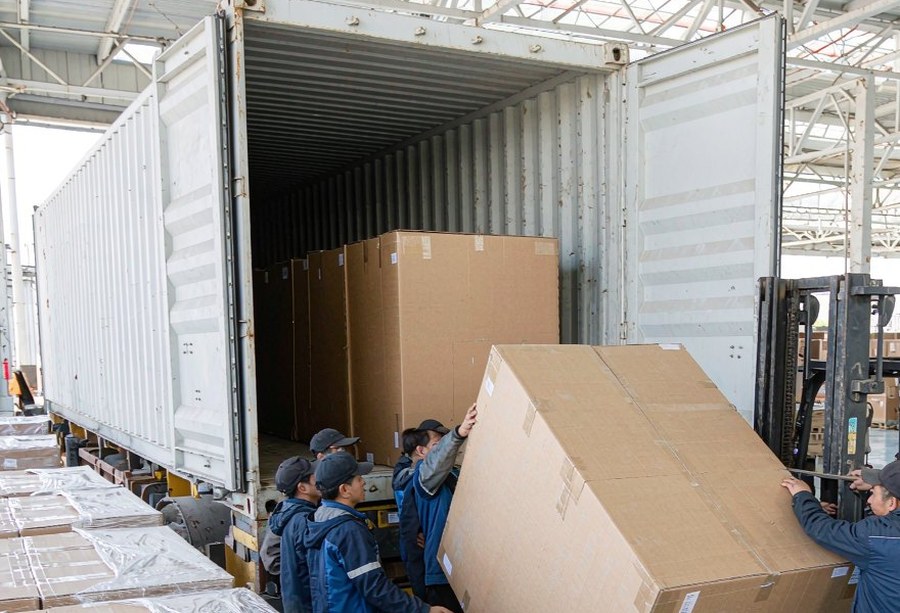
Some factories — ours included, for fully custom programmes — quote MOQ as "one container", and for custom work that is the honest number rather than an evasion. A custom profile, a bespoke colour and a new rope specification each amortise across a run, and a container is simply the smallest run that carries them. If your project is smaller, the alternatives are real: LCL consolidation for trial volumes, catalogue models in standard finishes for the first shipment, or a phased programme where the custom development is paid for in the first container and repeated from stock afterwards.
Whichever route you take, get the MOQ basis in writing before the deposit. "Minimum order quantity" means nothing until it names the unit — per model, per order, per colour or per container — and the factories worth buying from will put that sentence in the quotation without being asked twice.
The pre-order checklist
- MOQ basis confirmed in writing: per model, per order, per colour or per container
- The constraint behind the number identified — kiln, extrusion, dye lot or line time
- Mixed-model loading plan with carton dimensions, CBM per model and utilisation
- Colour and dye-lot policy for mixed orders, plus the reorder window for matching
- Sample fee treatment and whether samples count toward the MOQ
- Lead time quoted against the whole order, not per model, with the reorder slot named
An MOQ is the factory telling you how it makes money. Read it as information rather than an obstacle, structure the order around it, and the first container stops being a risk calculation and becomes the start of a programme. When you are ready to test the numbers, send us the models, the quantities and the destination — we will come back with the loading plan and an honest answer on what the MOQ is made of.