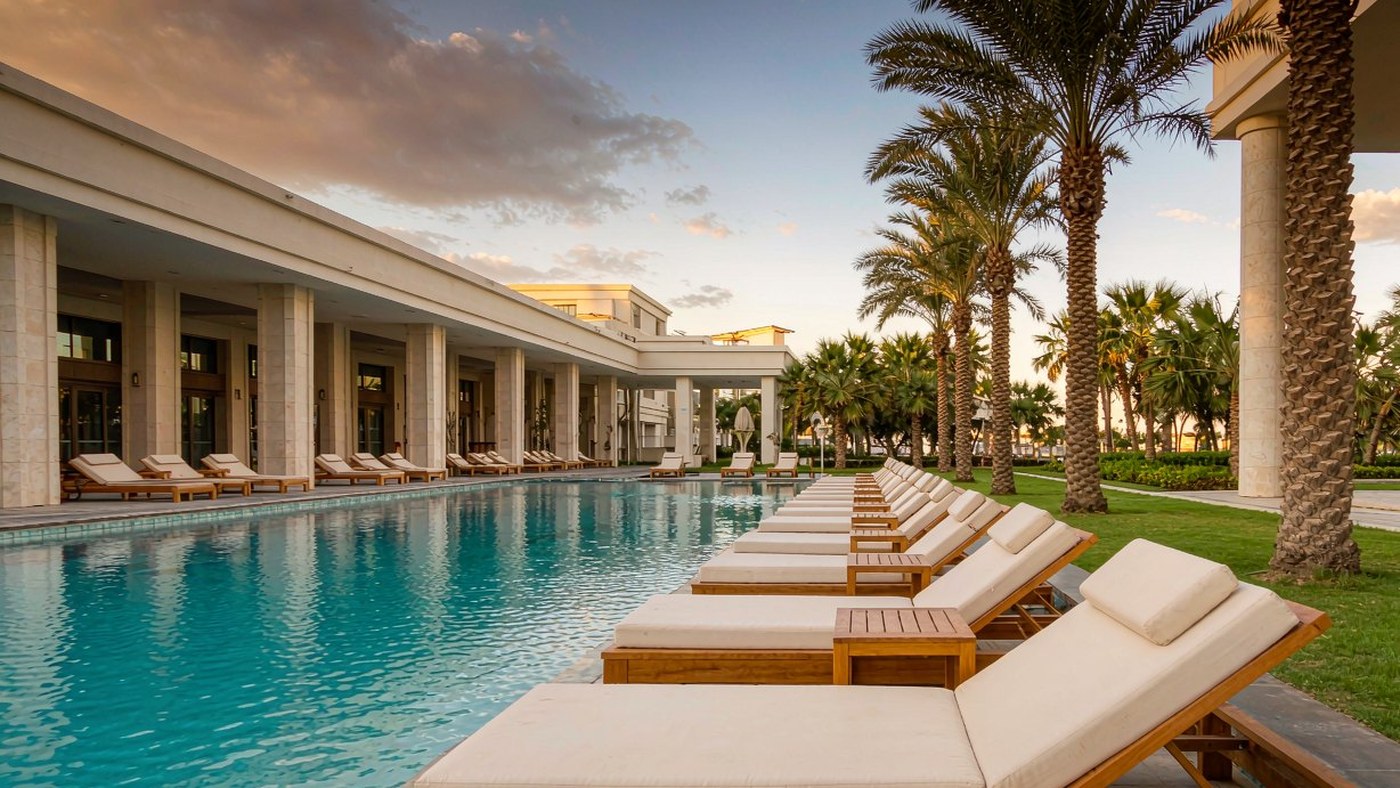
Most outdoor furniture is engineered for the assumptions of a temperate market: four distinct seasons, moderate humidity, and a winter that gives furniture a rest. None of that holds in the tropics. In Lagos, Cotonou, Accra or Mombasa, furniture works year-round through humidity that never drops below the mould threshold, UV that never takes a season off, and — along the coast — salt carried on every breeze. A specification that performs perfectly in Provence can fail in eighteen months on a West African pool deck. This guide covers what the tropical climate actually does to each material, what to write into the purchase order, and how to plan maintenance and spares for hotel, resort and villa projects across the region.
What the tropical climate actually does to outdoor furniture
Three stressors do the damage, and they attack different components. Understanding which is which is the difference between a specification and a guess.
| Stressor | What it attacks | The design response |
|---|---|---|
| Persistent humidity (70–90%+ RH) | Untreated or poorly finished timber, natural fibres, foam that stays wet, ferrous hardware | Oily hardwoods, drainage everywhere, quick-dry cores, stainless fasteners, air gaps under cushions |
| Intense, year-round UV | Natural rattan and cheap synthetics (chalking, embrittlement), ordinary paints, some sling fabrics | UV-stabilised PE rope, marine-grade powder coat, solution-dyed fabrics |
| Coastal salt air | Ferrous fixings, hinges, welded joints at coating breaks, aluminium at scratch points | 316 stainless hardware, full-envelope coating, sacrificial glides and caps |
Add a fourth factor that buyers rarely price in: wet-season / dry-season cycling. Timber and joints swell and shrink across the year, which is what loosens chair joints and opens coating cracks in the first place — the same cracks that salt then widens. And in the Sahelian belt, the dry season brings dust storms that turn every textured surface into an abrasive filter.
Choosing materials for heat, humidity and salt
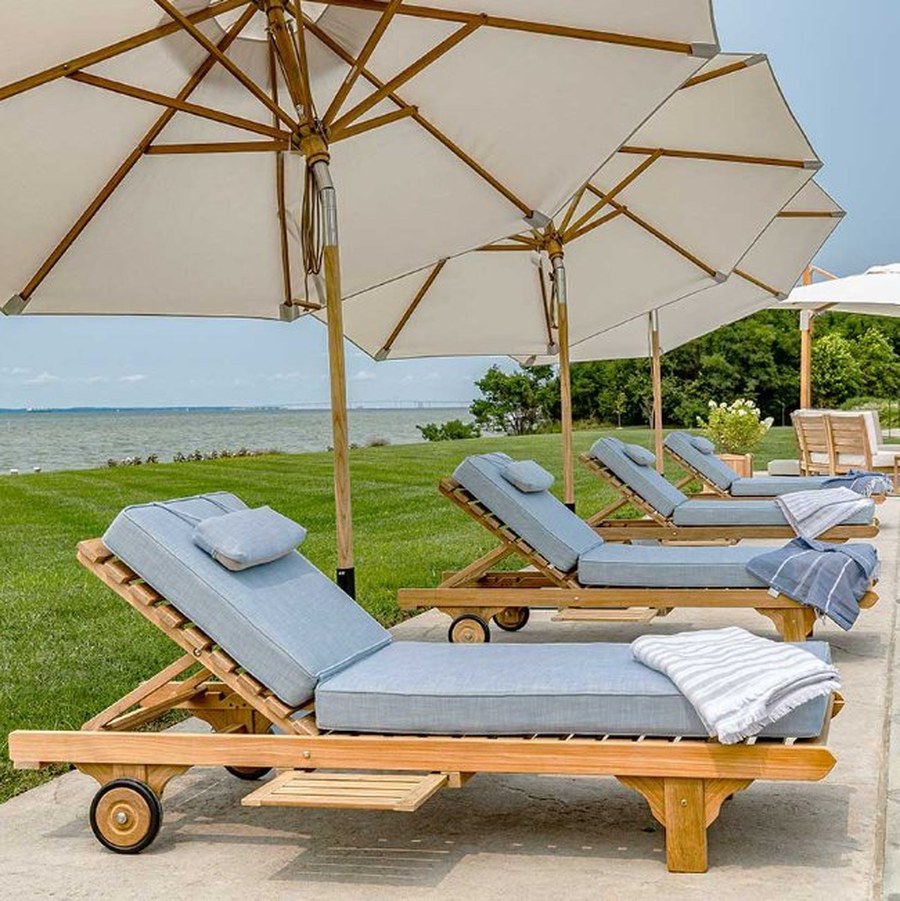
Solid teak. Teak remains the default specification for tropical projects, and for good reason: its natural oil content and tight grain give it dimensional stability that few timbers match, so it moves less through the wet/dry cycle than almost any alternative. Two things to know before you commit. First, teak will silver — that is a surface patina, not degradation, and buyers who were promised "golden teak forever" were mis-sold. Second, teak still needs design help: specify drained seat frames, no ground-contact feet without glides, and stainless hardware. Teak tolerates the tropics; careless teak joinery does not.
Powder-coated aluminium. The strongest choice for beachfront and poolside positions. It does not swell, it does not rust in the ordinary sense, and its light weight matters more than buyers expect — staff who move loungers daily will move lightweight loungers properly and heavy ones badly. The specification that matters is the coating: ask for marine-grade powder coat applied over proper surface preparation, with welded joints dressed and coated, not left raw. On exposed coastal projects, insist on 316 stainless fasteners throughout; 304 is fine inland.
PE rope and synthetic wicker. Modern PE rope is UV-stabilised and dries fast, which makes it excellent in the tropics — but the stabiliser package is exactly where cheap product is cheap. Ask what UV additives the rope carries and how the weave is finished at the frame junctions. Natural rattan, by contrast, has no place outdoors in a humid climate: it absorbs moisture, grows mildew and becomes brittle under tropical UV.
Textilene and sling mesh. The most underrated tropical material. Sling fabrics shed water in minutes, do not hold mildew, and keep seating usable through the wet season when padded furniture is stored. For poolside and beach-club positions, specify breathable mesh over sealed foam wherever the design allows.
Cushions: where tropical projects fail first
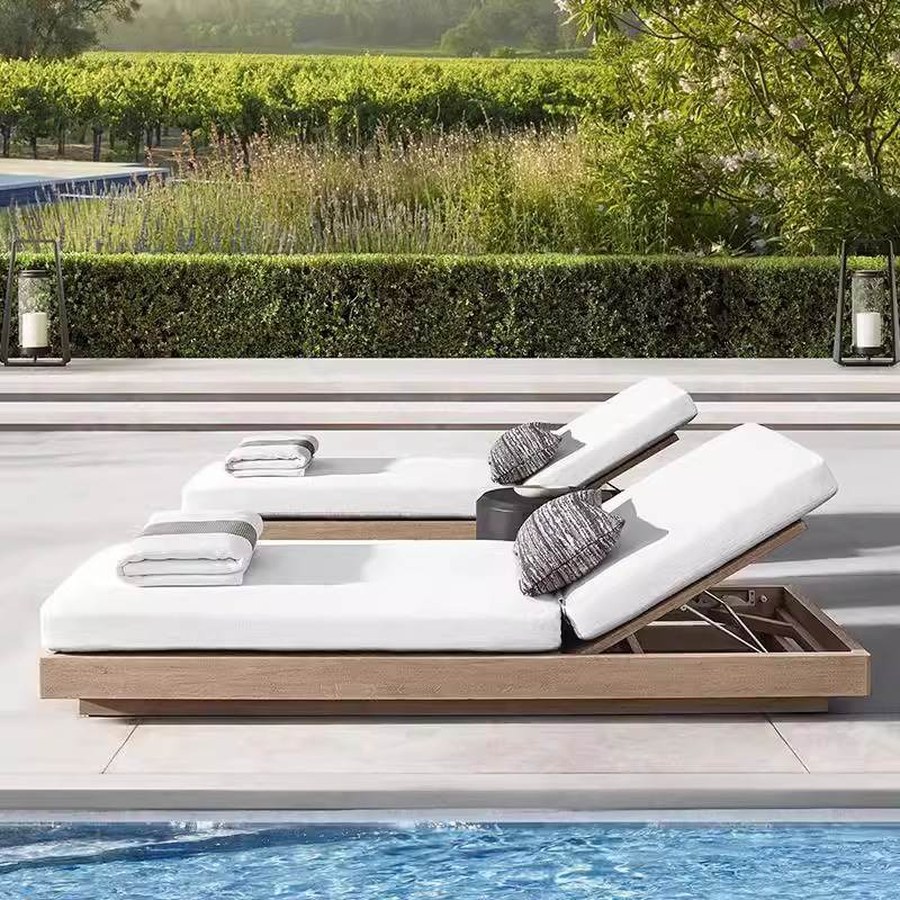
Frames rarely kill a tropical project; cushions do. Standard foam absorbs water, stays wet for days in high humidity, and becomes a mould farm. Specify the stack, not just the fabric: quick-dry reticulated foam core (or an open-cell core with drainage holes through the pan), solution-dyed acrylic or olefin covers (the pigment is in the fibre, so UV fades it slowly rather than bleaching it), and removable, washable covers with zips that will not seize with salt. Then specify the housekeeping routine that keeps them alive — more on that below.
The specification checklist: what to write into the purchase order
Turn the climate logic above into lines a factory can quote against. The more of these that appear in the PO, the fewer arguments at delivery.
| Item | What to specify | Why it matters in the tropics |
|---|---|---|
| Drainage | Drain holes in seat pans and frame ledges; no water-trapping cavities | Standing water is the root cause of mould, staining and corrosion |
| Hardware grade | 316 stainless fasteners for coastal projects, 304 minimum inland | Salt plus humidity corrodes ferrous fixings within a season |
| Coating | Marine-grade powder coat, welded joints dressed and coated | Coating breaks at welds are where salt starts |
| Rope / weave | UV-stabilised PE rope; sealed junctions at the frame | Unstabilised synthetics chalk and embrittle under tropical UV |
| Cushion build | Quick-dry core, solution-dyed cover, removable and washable | Cushions are the first component to fail and the cheapest to replace |
| Feet and glides | Raised, non-marking, replaceable glides | Direct deck contact wicks water and stains terraces |
| Covers | Breathable furniture covers, vented, with tie points — never plastic sheeting | Planic covers trap condensation and cook the finish underneath |
| Spares kit | Spare cushions, rope, touch-up paint, spare fasteners per 20 units | A warranty claim across the ocean costs more than the spare part |
Maintenance in the tropics: a different rhythm
Temperate-market maintenance schedules assume the furniture gets a rest. In the tropics it does not, so the rhythm changes from seasonal to continuous. The core discipline is simple: keep it clean, keep it dry, keep it off the ground.
| Frequency | Task | Notes |
|---|---|---|
| Weekly (in season) | Rinse cushions and frames; stand cushions on edge to dry | Salt, sunscreen, food and bird droppings all attack finishes |
| Monthly | Wash with mild soap; check fasteners and glides; inspect rope junctions | Catching one loose fastener prevents a cracked joint |
| Quarterly | Deep clean cushions; treat any mildew spots immediately | Mildew in month one is a wipe; in month six it is a replacement |
| Annually / pre-season | Teak oiling (optional — silvering is acceptable); touch-up coating; hardware swap | Do this before the wet season, not after |
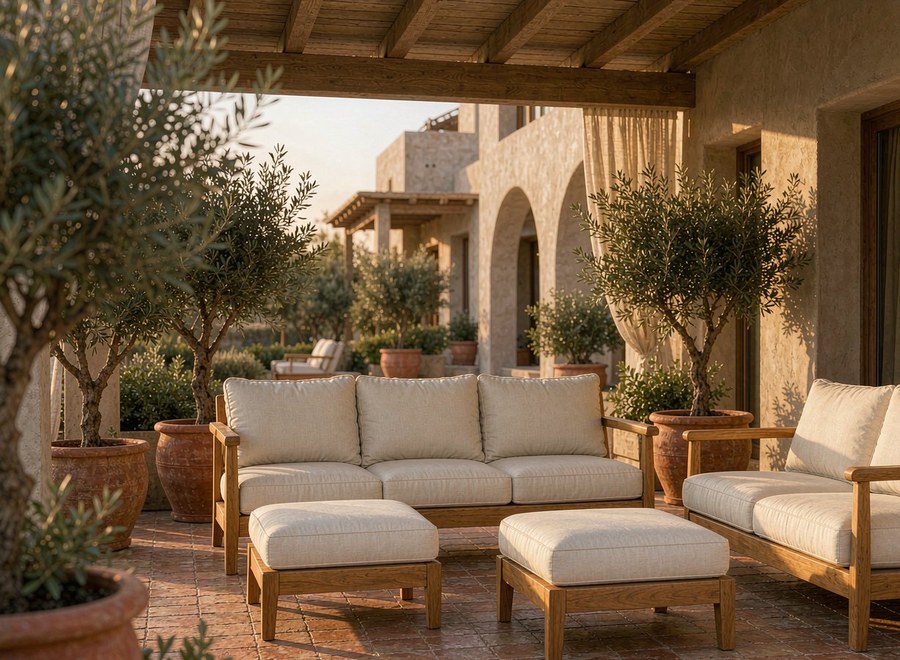
One positioning note that no material can compensate for: shade is free performance. Furniture under a pergola, awning or mature tree sees a fraction of the UV and none of the standing rain of exposed furniture. Where the layout allows, put the valuable pieces under cover and the replaceable pieces in the sun.
Shipping, inspection and spares for African destinations
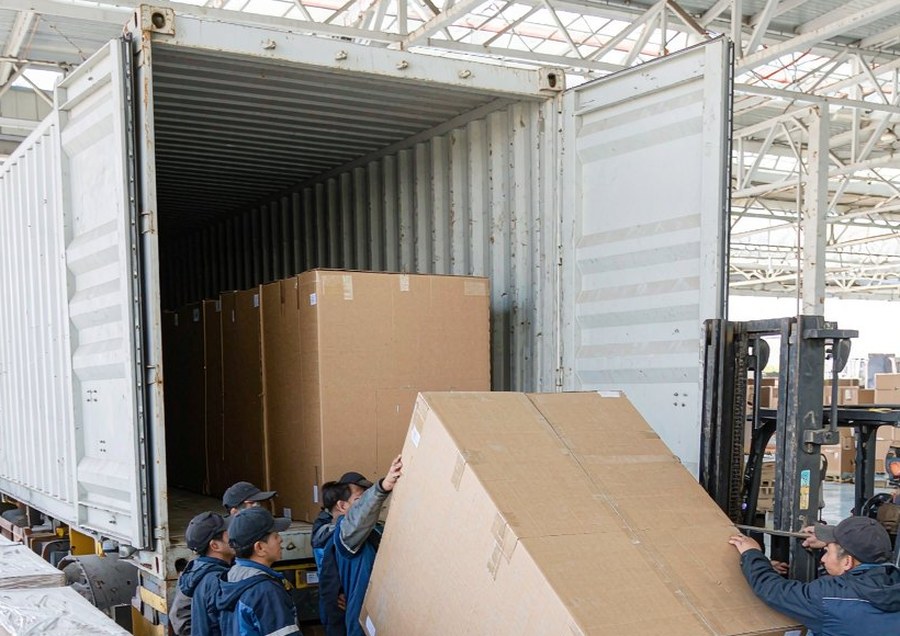
The logistics for West and East Africa are more standard than buyers often fear. Full-container loads (40HQ) from Foshan reach the major ports — Cotonou, Lagos, Abidjan, Tema, Dakar, Mombasa — on established services. The real planning points are different:
- Inspect before the container is sealed. A warranty claim across the ocean is slower and costlier than almost any defect. A pre-loading inspection (or third-party check) is cheap insurance — our inspection checklist is a good template if your supplier does not have one.
- Ship the spares kit inside the same container. Two spare cushion sets, a coil of rope, a tin of touch-up paint and a bag of fasteners cost almost nothing in freight and turn a six-week stoppage into a same-day fix.
- Think about site labour when choosing packing. Where skilled assembly labour is scarce, fully assembled (non-KD) seating can be the cheaper delivered option despite higher freight cube — the trade-off is covered in our non-KD vs flat-pack guide.
- Ask for a loading plan, not a promise. Carton dimensions, CBM per model and utilisation numbers let your forwarder plan the destination leg before the goods leave China — see the container loading guide for what to ask.
- Confirm duties and standards with your own broker. Import duty and any product standards vary by country and change often — get current figures locally rather than from a factory quote.
Questions to ask any supplier before you order
- Which hardware grade do you use as standard, and what does the coastal upgrade cost?
- Is the rope UV-stabilised, and can you show the weave junction detail?
- What foam core and fabric do the cushions use — and are the covers removable?
- Can you provide a container loading plan with carton dimensions and CBM per model?
- Do you ship a spares kit with the container, and what does it contain?
- Can you supply 3D or DWG files for the project drawings?
A factory that answers all six in one email is telling you it has shipped to your climate before.
Getting a specification for your project
PatioHue is a Foshan factory-direct manufacturer of teak and aluminium outdoor furniture, exporting to Europe, the Middle East and North America, with West Africa an active and growing market for us. If you send the project type, the quantities, the destination port and a note on how coastal the site is, we will come back with a model recommendation, the specification points above applied to your order, and a container loading plan — usually within one working day.