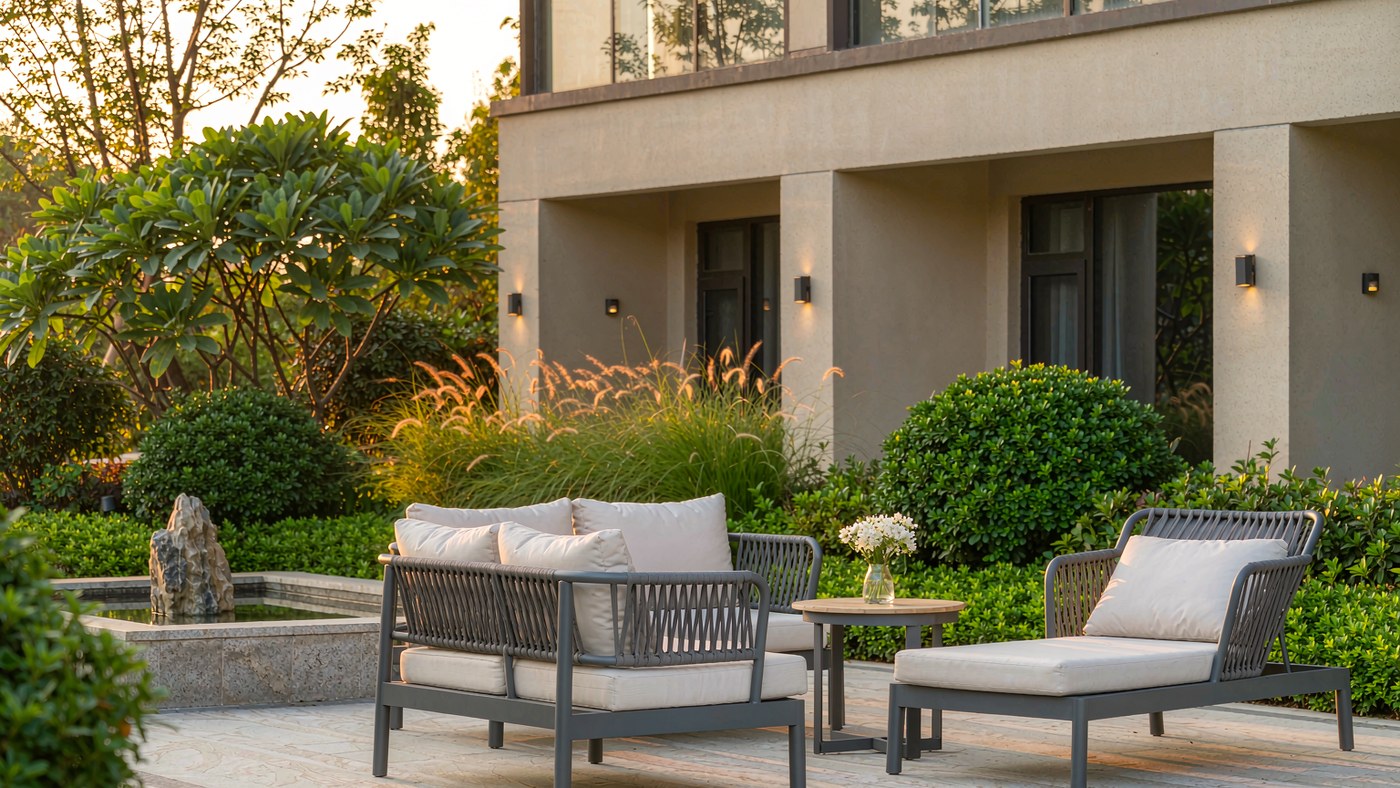
Why the finish decides the service life
The aluminium profile under an outdoor sofa is almost never the part that fails. Given a 6063-grade extrusion and sensible wall thickness, the metal itself will outlast the building it sits on. What fails — what chalks, fades, blisters at a fastener hole and starts the corrosion that lifts the whole finish — is the coating on top. Yet finish is the single line item most buyers leave out of the specification, and the one most likely to be silently downgraded to hit a price.
Two finishes dominate contract outdoor furniture: powder coating, a baked organic film applied over a conversion-coated surface, and anodising, an electrochemical conversion of the aluminium surface itself into a hard, translucent oxide. They are not two grades of the same thing. They fail differently, age differently, and are repaired differently — so the choice belongs in the specification, not in the showroom conversation.
How each finish is actually made
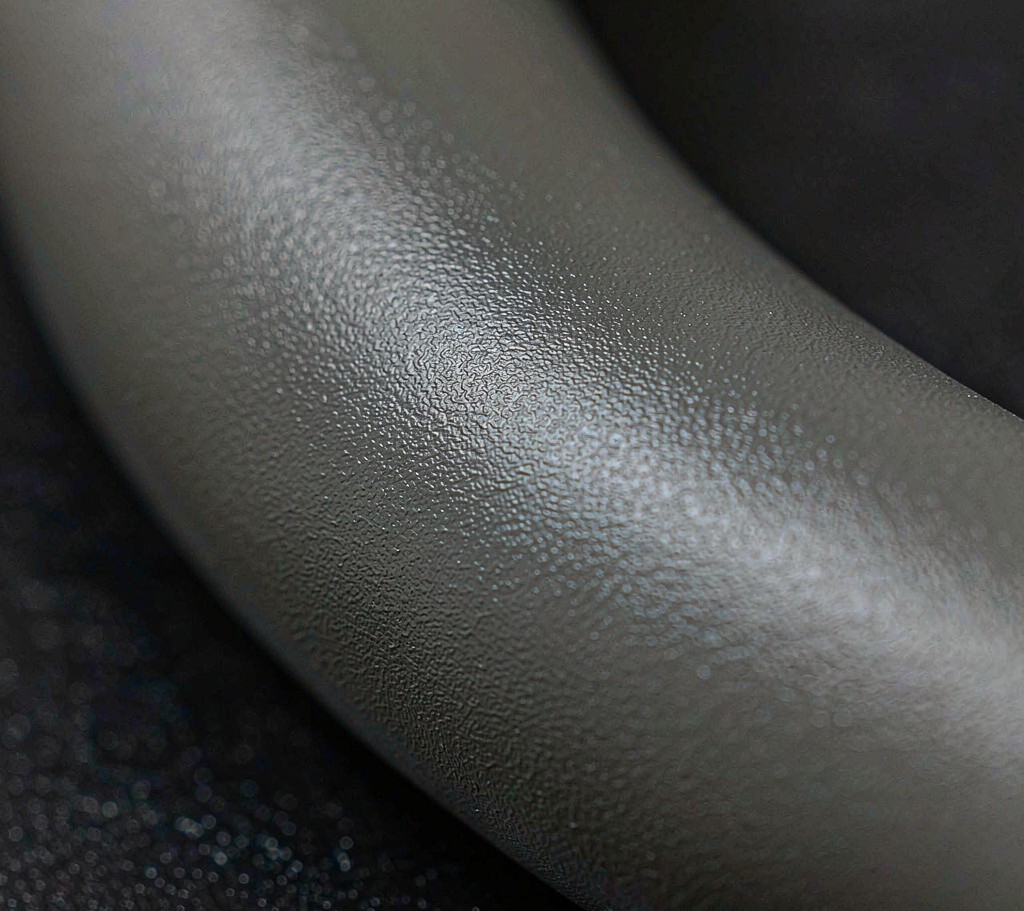
Powder coating is a dry process. The cleaned, pretreated frame is electrostatically sprayed with pigmented polymer powder, then oven-cured so the powder melts into a continuous film that flows into every weld line and fastener hole. Two details matter commercially. First, the film sits on top of the metal, so it hides extrusion die lines and mill marks — which is why powder-coated furniture photographs evenly and reorders in any RAL colour. Second, everything depends on the pretreatment underneath: a properly applied chromate or chrome-free zirconium conversion coating is what stops moisture creeping under the film at cut edges and drilled holes. Skip a rinse stage or run a bath out of concentration and you get filiform corrosion — thin worm-like tracks under the coating, usually appearing first at machined edges, often within the first few years of service.
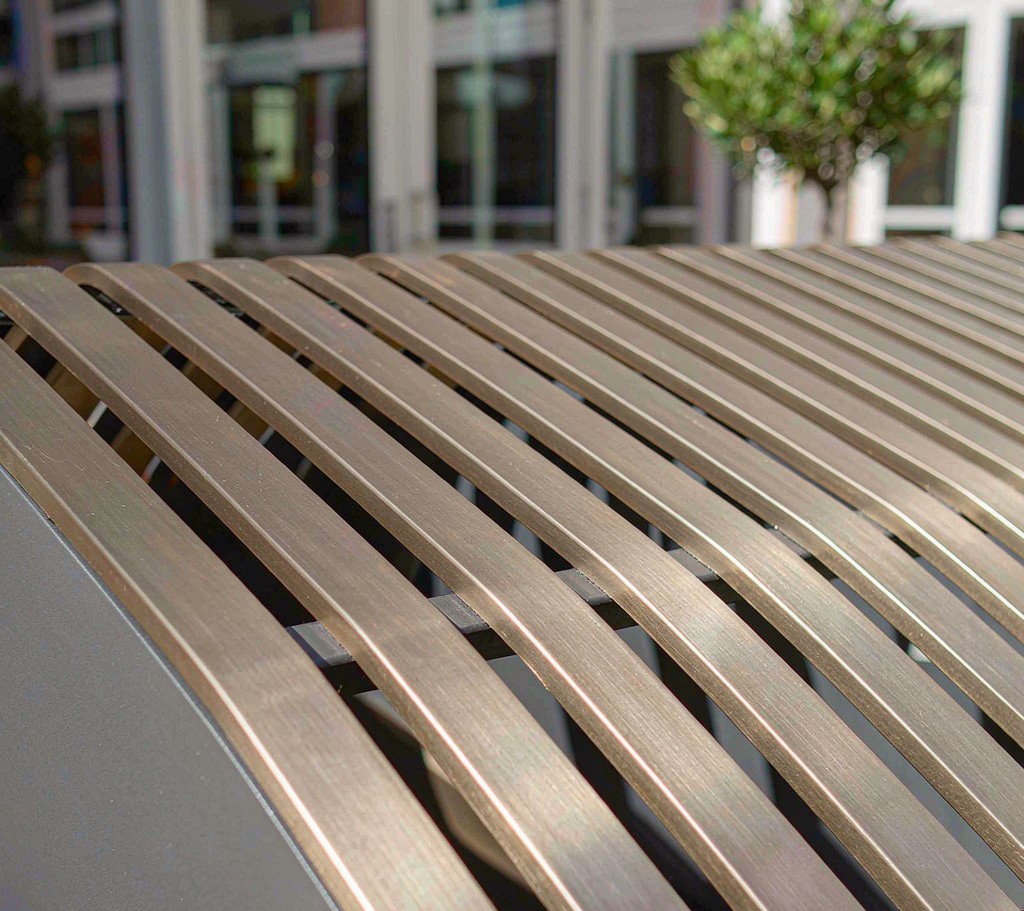
Anodising is the opposite philosophy. The part is immersed in a sulphuric acid bath and current is applied, converting the outer few microns of the aluminium itself into aluminium oxide — sapphire-hard, UV-stable and chemically inert. Colours are produced either electrolytically (champagne, bronze, black) or by dyeing the open oxide pores before the film is sealed in hot water. Because the oxide is integral to the metal it cannot chip or peel; because it is transparent, whatever the extrusion looked like before anodising is what you see afterwards.
Reading the specifications: AAMA 2604/2605 versus AAMA 611
Both finishes have voluntary performance specifications, and both are worth naming in your purchase order. For powder coating the reference points are the AAMA 2600 series. AAMA 2604 is the super-durable polyester tier: five years of unprotected South Florida exposure, gloss retention of at least 30 percent, colour change within 5 Delta-E units, and roughly 3,000 hours of neutral salt spray. AAMA 2605 is the fluoropolymer tier (PVDF or FEVE chemistry): ten years of Florida exposure, 50 percent gloss retention, and around 4,000 hours of salt spray. Standard polyester powder meets 2603 — an interior grade — and a standard polyester at double film build still breaks down under UV at a standard polyester rate. Thicker film protects against corrosion; only resin chemistry protects against weathering.
For anodised aluminium the reference is AAMA 611. Class I — a minimum film of 0.7 mil, about 18 microns — is the exterior architectural grade and carries a documented warranty; Class II at 0.4 mil is for interior or lightly exposed use. Architectural powder typically lands at 50–90 microns, so the powder film is several times thicker than the anodic film — but the anodic film is harder than the powder film, and it is part of the substrate rather than a layer over it.
| Specification question | Powder coating | Anodising |
|---|---|---|
| Film thickness | Typically 50–90 µm (below ~60 µm the barrier is marginal) | Class I ≥18 µm; Class II ≥10 µm |
| Standard to cite | AAMA 2604 (super-durable polyester) or 2605 (fluoropolymer) | AAMA 611 Class I (architectural exterior) |
| Salt spray, ASTM B117 | ~3,000 h at 2604; ~4,000 h at 2605 | 3,000 h at Class I |
| Colour retention | ΔE ≤ 5 after 5 years (2604) or 10 years (2605) Florida exposure | ΔE ≤ 5 after 10-year equivalent UV exposure |
| Colour range | Full RAL palette; matte, textured, metallic effects | Clear, champagne, bronze, black; metallic sheen only |
| Substrate defects | Film hides die lines and mill marks | Transparent film — die lines show through (etch finishes hide more) |
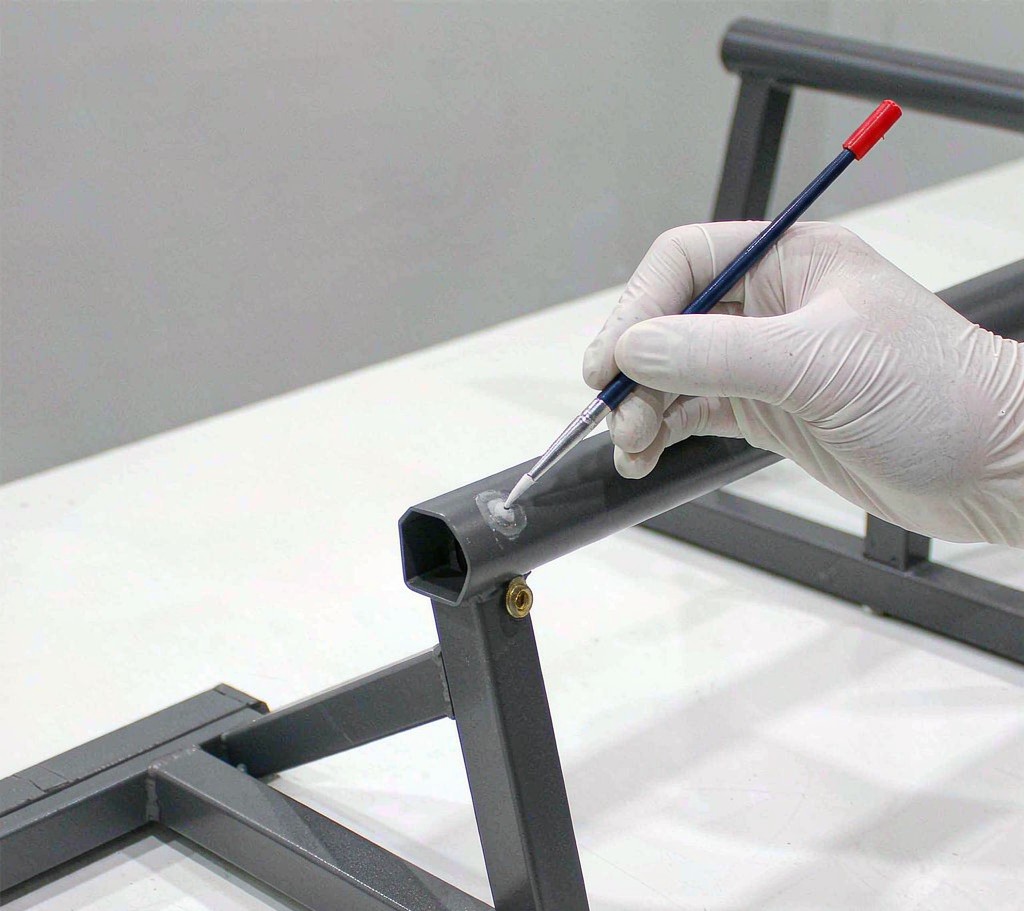
| Touch-up after damage | Matched touch-up pen or spray blends well on matte textures | Rarely blends; damaged part is usually replaced |
| Reorder colour match | RAL reference plus batch retention | Master samples and dye-lot control |
| Forming after finishing | Coating applied after fabrication | Form before anodising — bending after crazes the film |
Where each finish actually fails
Powder coating failures are almost always pretreatment failures. The topcoat resin is rarely the weak link; the corrosion that starts at an unsealed cut edge or a drilled fastener hole is. The second failure mode is film build: below roughly 50–60 microns the barrier is too thin to matter, and much beyond 120 microns internal stress builds fine cracks that eventually lift the film. When you audit a supplier, ask about the conversion coating line, not the powder brand.
Anodised finishes fail differently. The oxide is inert and stable across a wide pH range, but the seal can be broken down by strong alkalis — caustic cleaners, mortar and cement left to dry on the surface — after which contaminants penetrate the pores and stain. Mechanical damage is the other exposure: a deep gouge through the oxide exposes bare aluminium, and because the anodic film is translucent while touch-up paint is opaque, the repair is visible. On furniture, the practical consequence is that anodised frames should be specified where abrasion is low and handling is careful, and powder-coated frames where the finish will be knocked, scratched and repainted in service.
Matching the finish to the exposure
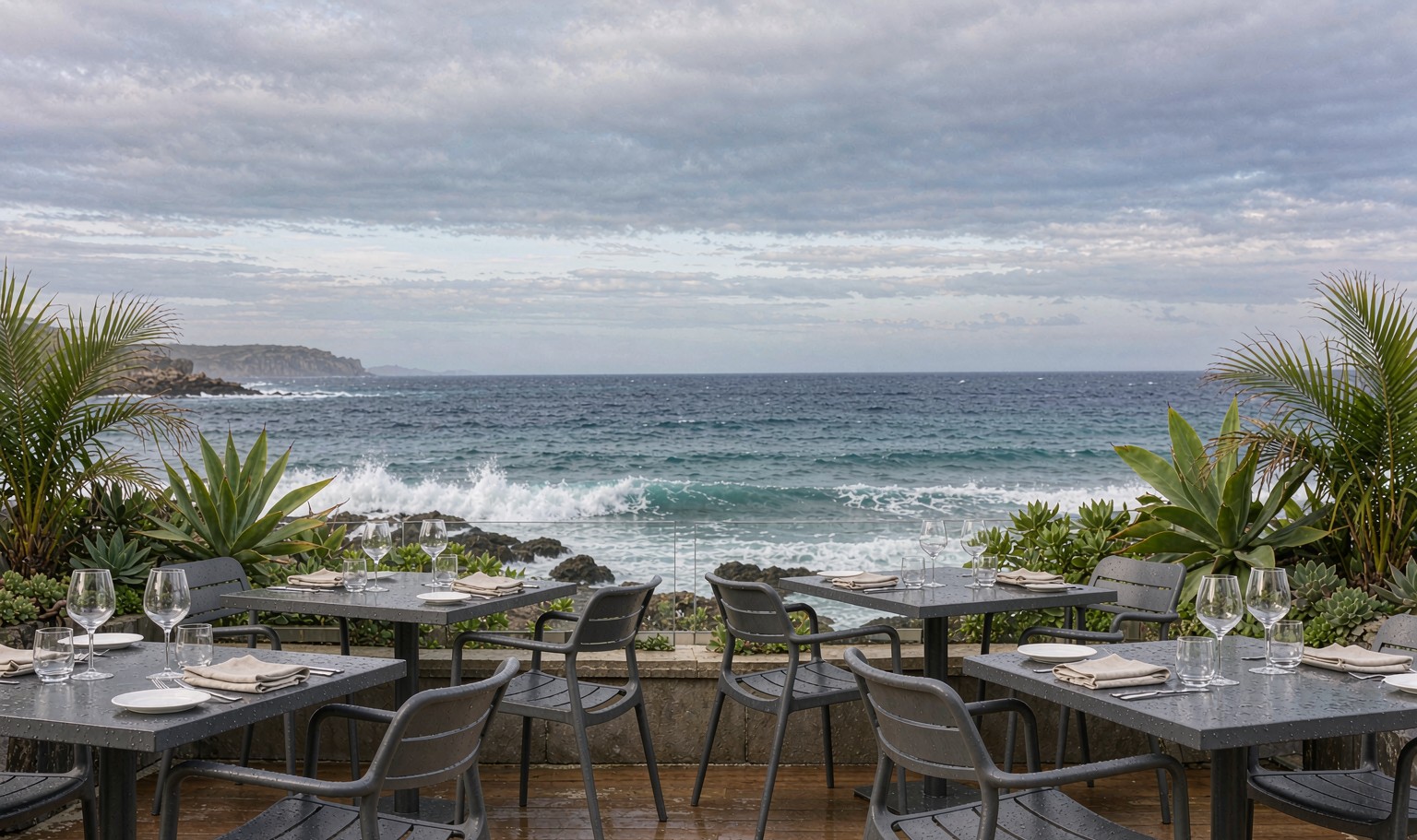
Coastal projects — beach clubs, seaside hotels, Caribbean and West African terraces — put chloride in the air and salt-laden moisture on every surface. That argues for the top of both ladders: a 2605-level fluoropolymer powder with a documented pretreatment line, or a Class I anodise with a warranty. Within a few kilometres of the coast, salt spray performance is the whole specification; inland, UV and heat cycling dominate and a well-applied 2604 finish in a mid-tone colour is usually the sensible economy.
Colour choice interacts with exposure too. Dark finishes absorb more heat and cycle through a wider temperature range, which accelerates gloss loss and makes chalking visible sooner on horizontal surfaces. If the brief demands charcoal or black frames in full sun, that is a 2605 conversation, not a 2604 one.
Maintenance ownership: cleaning, touch-up and reorders
Specify the maintenance regime at handover, because the two finishes have different owners' manuals. Both should be washed with a neutral-pH detergent and a soft cloth — never abrasive pads, never solvent or caustic cleaners, and on anodised surfaces especially, never anything above pH 9. Powder-coated frames should be inspected annually at fastener points and touched up with the factory-matched pen before wet season; matte textures hide touch-up almost invisibly, which is one more reason matte powder is the pragmatic contract choice. Anodised frames need the same cleaning discipline but no touch-up regime — the instruction is simply "do not scratch it, and replace damaged parts".
Reorder matching is the quiet commercial difference. Powder coating reorders against a RAL number, so a replacement chair two years later arrives in the same colour family. Anodised reorders depend on dye lots and alloy batches — a 0.05 percent difference in iron content shifts the tone — so the contract should name archived master samples and an agreed ΔE tolerance at sample stage.
What to ask a factory before you order
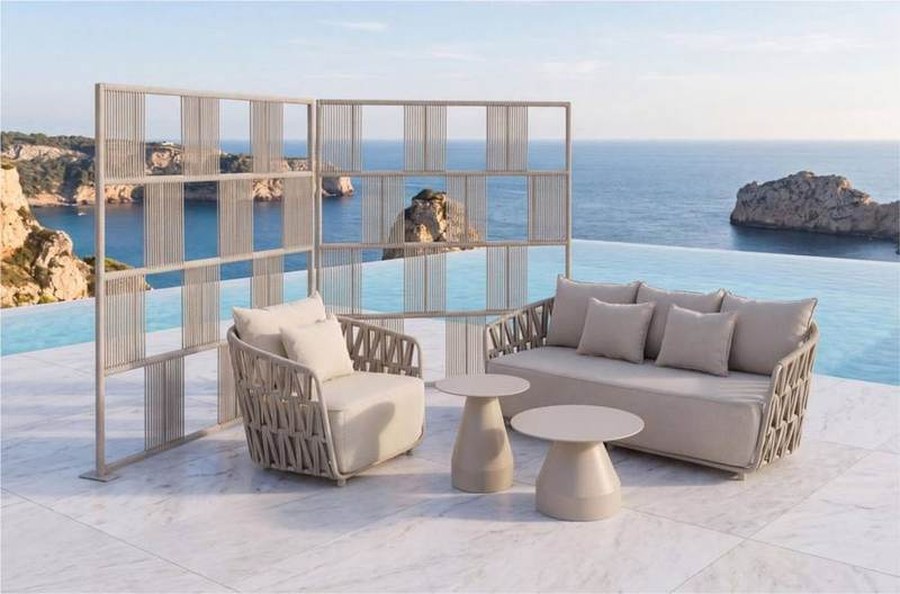
Finish quality is invisible in a quotation, so make it visible in the questions. Ask which AAMA tier the powder meets and whether the applicator is certified by the powder manufacturer — certified applicators are audited for adhesion, colour accuracy and pretreatment control. Ask for the salt-spray hours and the pretreatment chemistry (chromate or chrome-free zirconium). Ask what the warranty covers: colour and gloss change only, or corrosion as well. And ask for the touch-up kit — colour-matched pens or spray — to ship with the container, because a touch-up that arrives with the furniture gets used, and one that has to be re-sourced from another continent does not.
For our own aluminium range we powder-coat every frame and ship matched touch-up pens with commercial orders, because the cheapest warranty claim is the one that never gets filed. If your project sits in a marine environment or a high-UV market, tell us the exposure and we will specify the finish tier — and, where anodised extrusions are the right answer for the design, we will say so rather than quietly substituting what is easiest to make.
The short version
Powder coating is the contract default: any colour, repairable in service, reorders against a RAL number, with performance that hinges entirely on pretreatment and film build. Anodising is the premium specialist: harder, integral to the metal and colour-stable, but translucent, limited in palette and unforgiving of damage. Name the tier — 2604, 2605 or 611 Class I — in your purchase order, and the finish stops being a guess.