Small Balcony Outdoor Furniture: A Buyer's Guide to Specifying Compact Sets
A 1.2 × 2.4 m balcony is the most common footprint in European apartment blocks and in compact hotel key-room layouts. It is also the easiest place to overspecify: buyers order a four-seat dining set, then discover at delivery that no chair can be pulled back without blocking the door. Small balcony outdoor furniture works on different maths — circulation first, seat count second. This guide gives the clearances, format comparisons, material choices and wholesale order structure that buyers need when specifying compact sets for apartments, hotel balconies and rooftop micro-terraces.
Measure the clearance before you choose a single piece
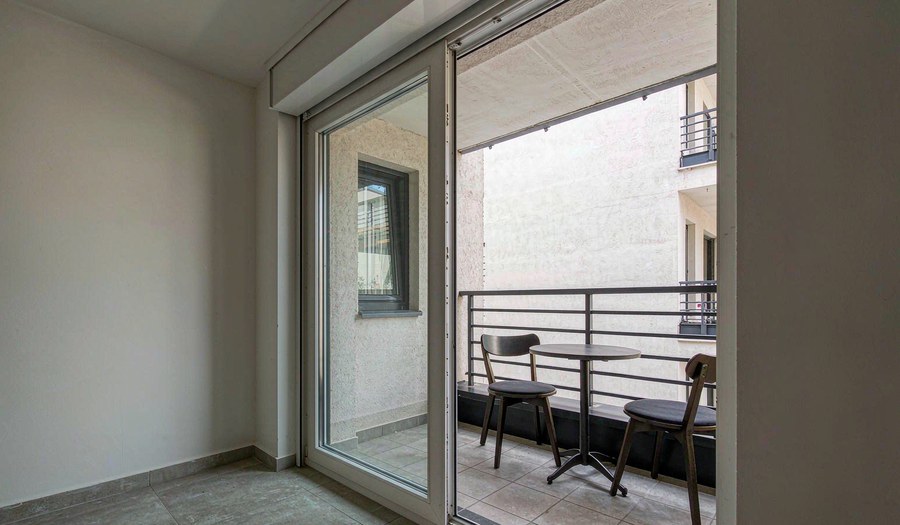
Start with three numbers, not a catalogue. First, the clear depth between the door swing and the balustrade. Second, the clear width of the door opening, because every fully assembled piece has to pass through it. Third, the building's balcony load allowance, which your client's facilities team or structural engineer must confirm — never assume a domestic slab is rated for a commercial sofa set. As a working rule, keep a 800–900 mm circulation lane from door to railing, allow 600 mm behind any seat for it to be drawn back, and leave 450 mm between a table edge and the balustrade so a chair can be used without a guest leaning into the rail.
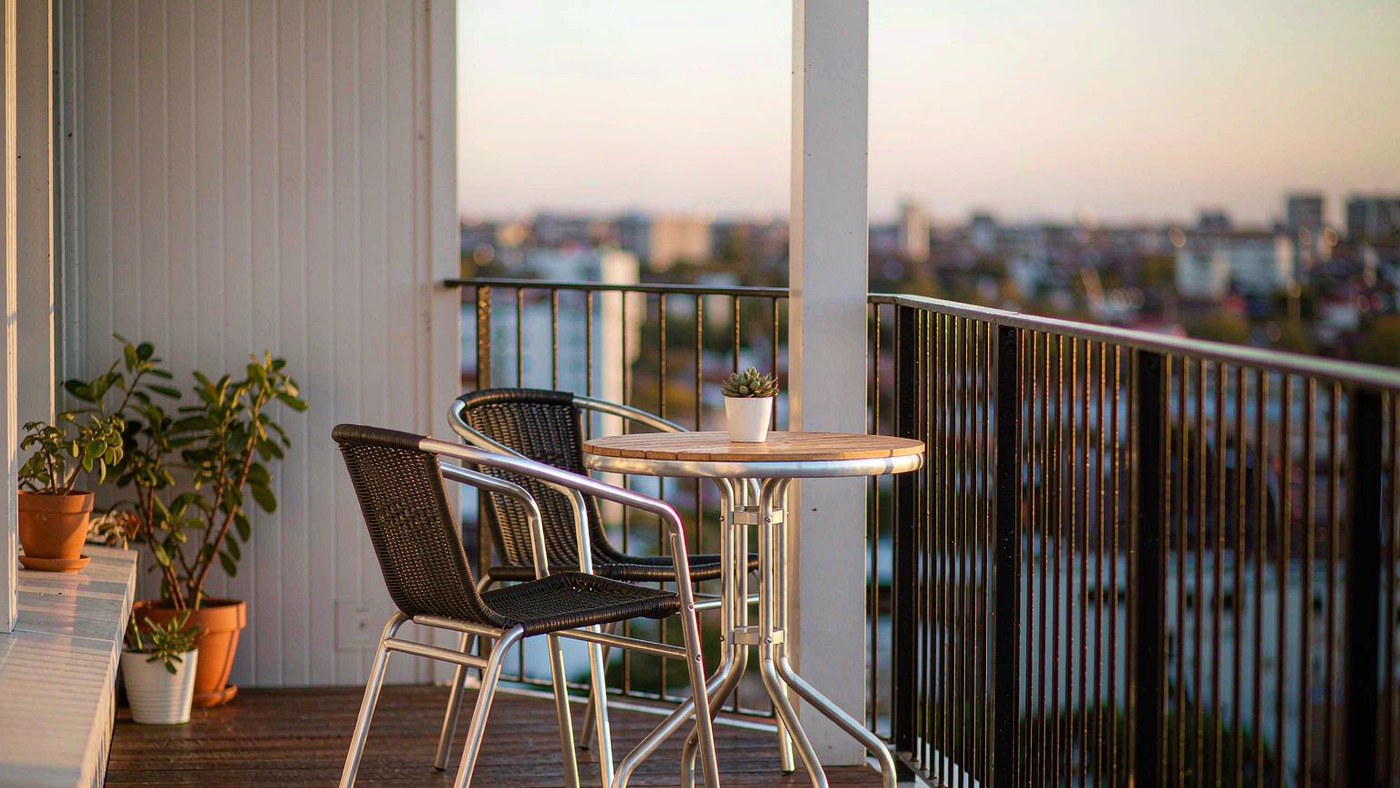
A round bistro table of 600–700 mm diameter with two chairs fits a 1.2 m deep balcony; 800 mm tables need 1.5 m or more. A 900 mm bench against the railing seats two with no pull-back space at all, which is why compact patio furniture set specifications often outperform conventional dining sets on narrow decks. Put these in the purchase order as maximum assembled footprints, not nominal product names, and ask the manufacturer for overall width, depth and height of the finished piece rather than carton dimensions.
| Clear balcony depth | Format that fits | Seats | Circulation left |
|---|---|---|---|
| 0.9–1.1 m | Wall-mounted bench or two static outdoor chairs, no table | 2 | 700–800 mm |
| 1.2–1.4 m | 600–700 mm round bistro set | 2 | 800–900 mm |
| 1.5–1.8 m | Two-seat dining set or a corner sofa set with a coffee table | 2–3 | 900 mm |
| 2.0 m and over | Small four-seat set plus a parasol base | 4 | 900 mm plus |
Choose the format: bistro set, bench or a two-seat corner
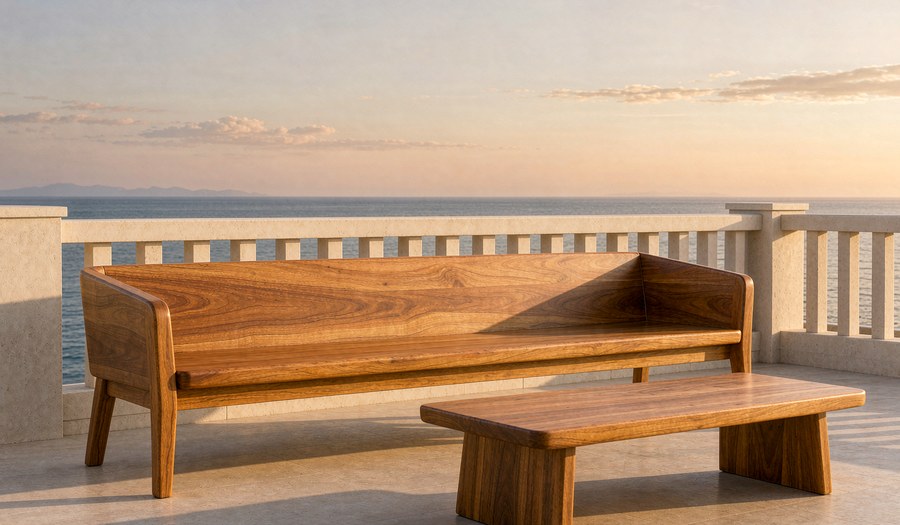
Three formats cover almost every small-space brief, and each solves a different problem. A balcony bistro set wholesale order is the safest default for hospitality: two chairs and a round table read as a complete room, move as one delivery unit, and give each guest their own armrest. A bench is the space saving outdoor furniture answer where depth is under 1.1 m, but it has no back-pull requirement and no table, so it suits a view balcony rather than a dining one. A two-seat corner or compact modular unit gives lounge comfort at the cost of roughly 30–40% more floor area and a heavier frame — worth it on a villa terrace, usually wrong on a 12th-floor apartment balcony.
| Format | Typical assembled footprint | Best for | Watch out for |
|---|---|---|---|
| Bistro set | Ø600–700 mm table + 2 chairs | Hotel balconies, apartment patios | Table too tall for lounge chairs |
| Bench / outdoor chair pair | 900–1200 × 450 mm | Shallow balconies, view decks | No surface for drinks |
| Two-seat corner sofa set | 1400–1600 × 800 mm | Rooftop micro-terraces, villas | Weight, wind, delivery through door |
Specifying materials for small exposed spaces
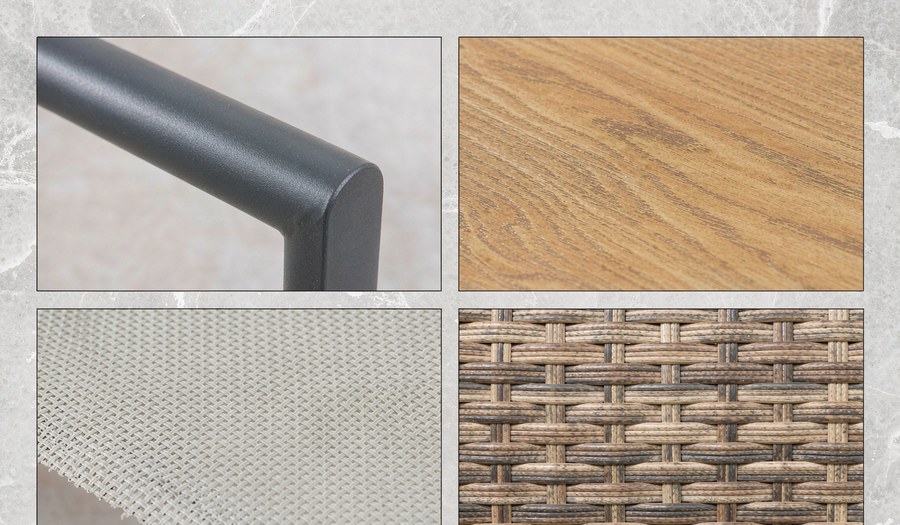
Small balconies are harsher than gardens. There is no shade, wind accelerates around the building corners, and rain dries slowly between two walls. Powder-coated aluminium is the default frame: light enough for a two-person carry through a 800 mm door, corrosion resistant, and available in a colour that can be matched across reorders. Teak is denser and more stable in gusty positions and reads as premium on a villa garden or hotel terrace, but a solid teak bench is heavy and needs oiling or left to silver on a schedule. Rattan wicker and rope weaves add texture and catch less heat than bare metal, while textilene sling seats dry in minutes after rain — genuinely useful on a balcony with no covered storage.
For any coastal or high-rise project, ask for the powder-coated finish specification in writing, including pretreatment and coating thickness, and ask the supplier whether the same colour code will be available for a reorder 12 months later. Ask for the timber species and origin if teak is involved; it is the single detail that later determines both import paperwork and how the surface weathers. Avoid mixing a teak top with an aluminium frame unless the factory confirms the two are factory-joined as one finished piece — differential movement is where mixed-material sets fail first.
Weight, wind and the building rules nobody checks
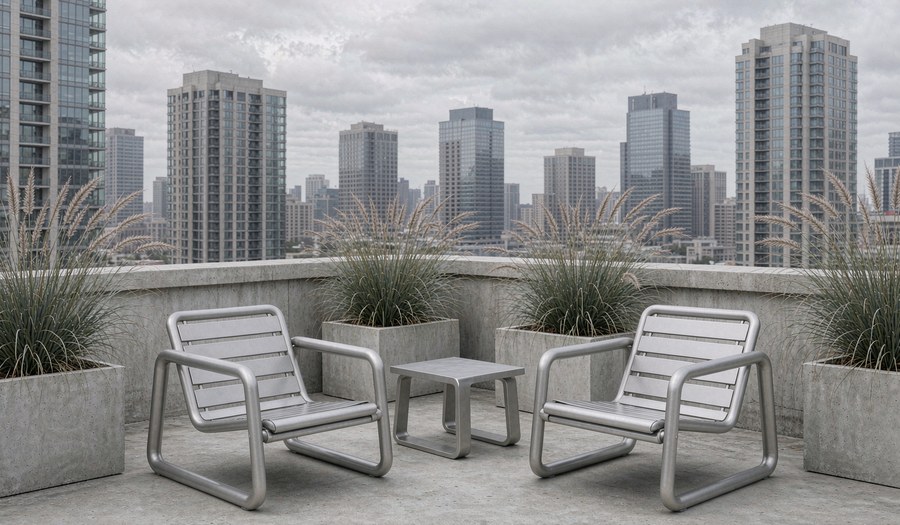
A light chair is a liability on an exposed upper floor. Specify a minimum assembled weight per seat for the exposure class, and prefer a lower, wider base over a tall narrow silhouette. Do not rely on loose cushions or a parasol left open to hold a setting down: a cantilever parasol on a small balcony needs a rated base and a clear closing rule, and many strata and hotel policies prohibit unsecured shade structures above a certain height altogether. Ask the client for the balcony's fire and egress rules before you order — some buildings ban combustible screening, gas appliances or anything fixed to the balustrade.
Every piece in this category should arrive fully assembled with a fully welded one-piece frame with seamless smooth joints and a clean uninterrupted finish, ready to place straight out of the protective wrap. That matters commercially: a balcony has no room to lay out parts, and a hotel cannot schedule a fit-out crew per room. Confirm the finished piece really passes the door and lift dimensions before the container is booked — a 40 mm oversize on a chair width is a returns problem, not a quality claim.
Care and storage in a tight footprint
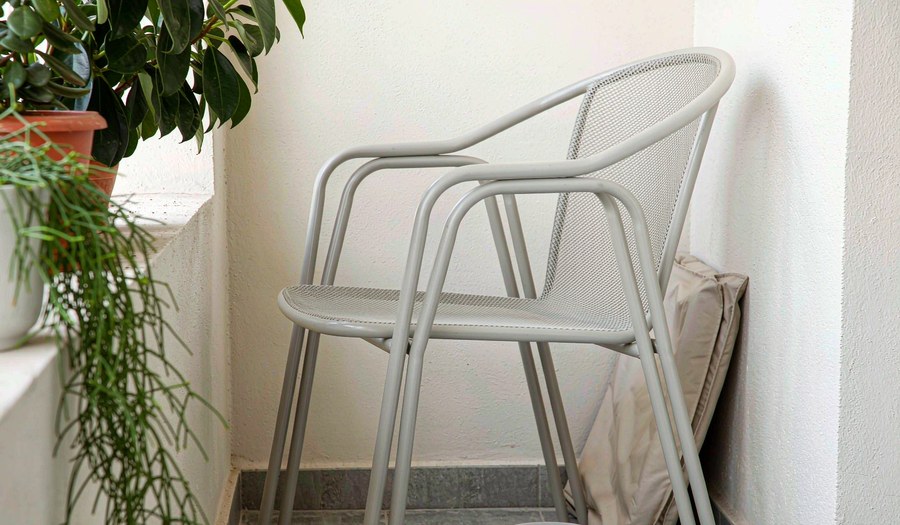
Compact sets are easy to neglect because they are out of sight. Give the operator a one-page routine and the furniture lasts two to three times longer.
| Interval | Action | Why it matters on a balcony |
|---|---|---|
| Weekly in season | Wipe frames and table with mild soapy water, rinse fresh | Salt and pollution concentrate in a small sheltered area |
| Monthly | Check powder coat for chips, dry sling or cushion fully | Damp trapped between walls slows drying |
| Seasonally | Oil teak if keeping the honey tone, or let it silver evenly | Uneven sun exposure produces patchy weathering |
| Off-season or storm | Move sets indoors or stack and cover; close and stow parasols | Wind uplift, not rain, is the main failure mode |
Buying wholesale: MOQ, mixed containers and reorders
An apartment balcony furniture supplier will usually set MOQ by frame colour and weave batch rather than by piece count, because a small run of a custom powder-coat colour is expensive to schedule. Ask for the MOQ per finish, not just per SKU. Compact sets are unusually good container loading candidates: bistro sets and benches nest densely, so a mixed 40HQ can carry balcony sets alongside sun loungers, a sofa set and dining set for the same project, letting a distributor hit MOQ across several lines instead of over-ordering one. Ask the factory for a loading plan with carton cube and stack limits before you commit.
Five questions to put in the RFQ: what is the finished assembled footprint of each piece; what is the MOQ per finish and per SKU; will the exact colour and weave be held for a reorder; what is the packed cube and stacking limit per carton; and which parts, if any, are replaceable without returning the whole frame. Add one line requiring a retained approved sample, because small sets are bought on looks and the second container is where colour drift shows. Close with a delivery checklist — door width, lift depth, balcony load allowance and building rules — signed off before production, not after the goods land. Buyers who specify compact sets this way get a balcony that actually seats two people, and a reorder that matches the first one.