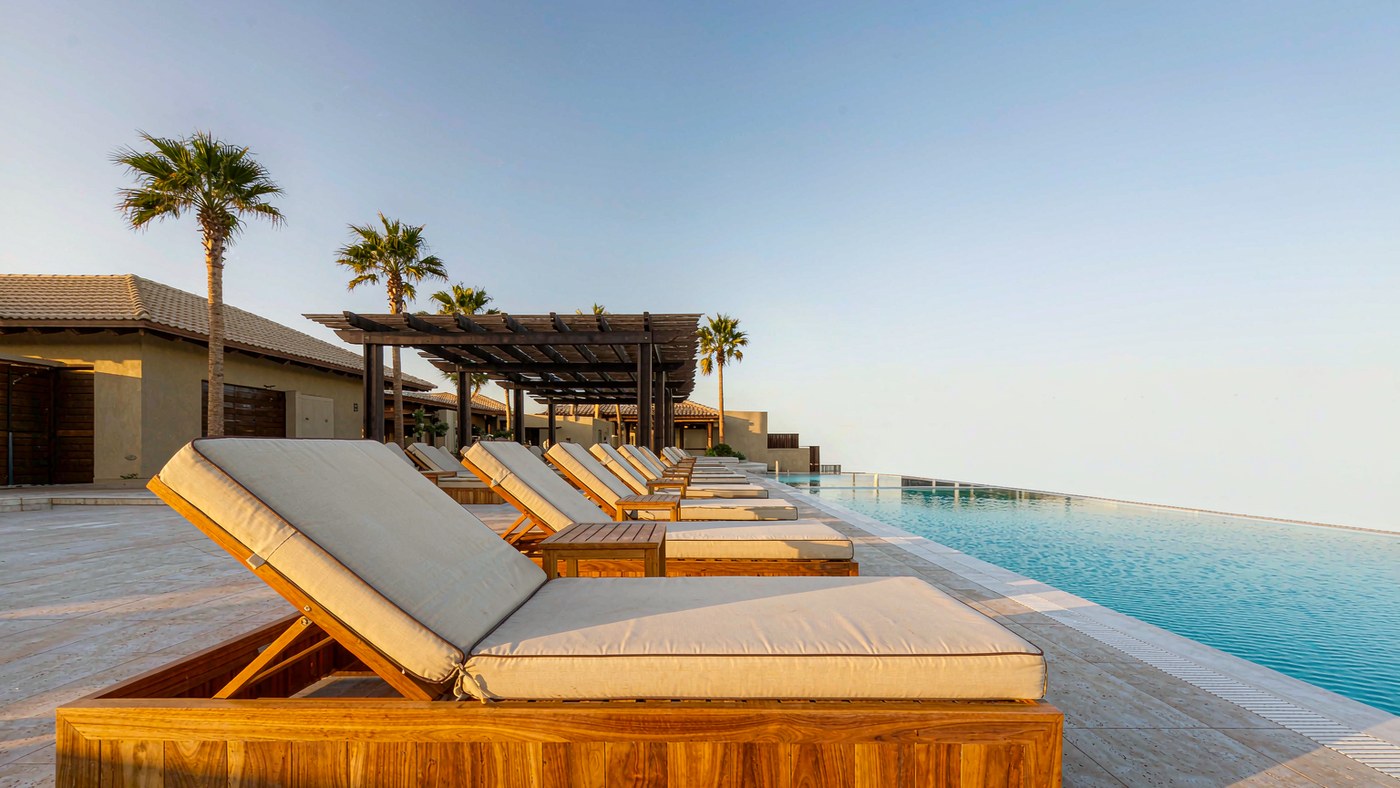
Poolside furniture fails in a way garden furniture never does. The deck stays wet long after the last swimmer leaves, chlorinated splash dries into a concentrated film on every horizontal surface, and each bolt on a sun lounger lives in damp for ten months a year. That is why a set that looked identical to a garden catalogue item starts year two on a resort deck with rust rings under the feet, a mildew core inside the cushions and powder coat lifting at the cut edges.
This guide is a pool deck furniture specification for hotel and resort buyers: what pool water chemistry actually does to furniture, how to zone the deck before choosing anything, which materials earn the waterline, and the fixings, glides and drainage details that decide whether poolside furniture for resorts survives its third season — not just its first summer.
What pool water actually does
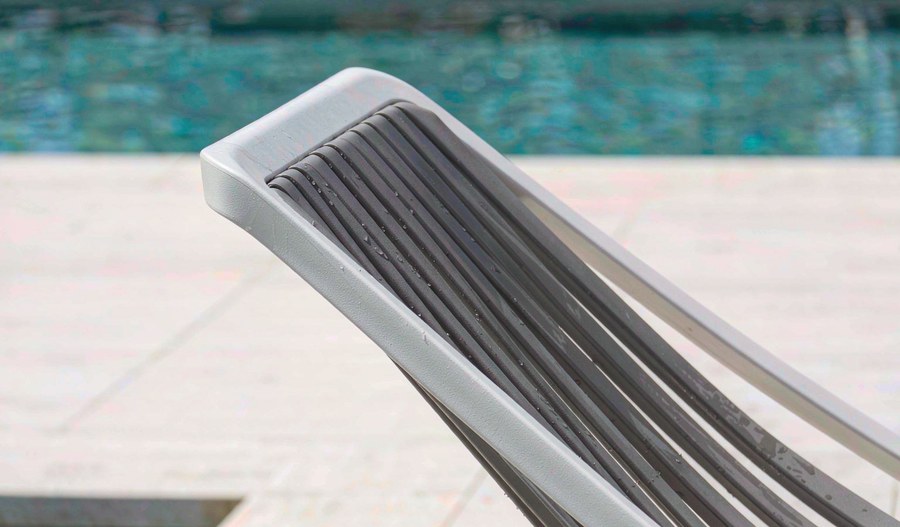
Hotel pools are managed to tight chemistry. Free chlorine is typically held at 1–3 ppm, pH between 7.2 and 7.8, and salt-chlorine systems run 2,700–3,400 ppm of dissolved salt. None of those numbers looks aggressive — until splash water dries on a frame and the residue concentrates. Two cycles do the damage. First, wet-dry cycling: splash, sun, repeat, which leaves chlorinated and saline films on slats, welds and cushion seams. Second, shock-treatment days, when chlorine is pushed far above the everyday range and a careless splash can bleach fabric and dull coatings.
The result is a recognizable failure pattern: pitting corrosion on the wrong grade of stainless fasteners, coatings lifting where profiles were cut, foam that was never truly quick-dry holding water like a sponge, and teak tannins staining pale stone decking. Chlorine resistant outdoor furniture is not a marketing adjective — it is a materials and fixings decision that has to be made before the quote, because none of it can be retrofitted.
Zone the deck before you choose anything
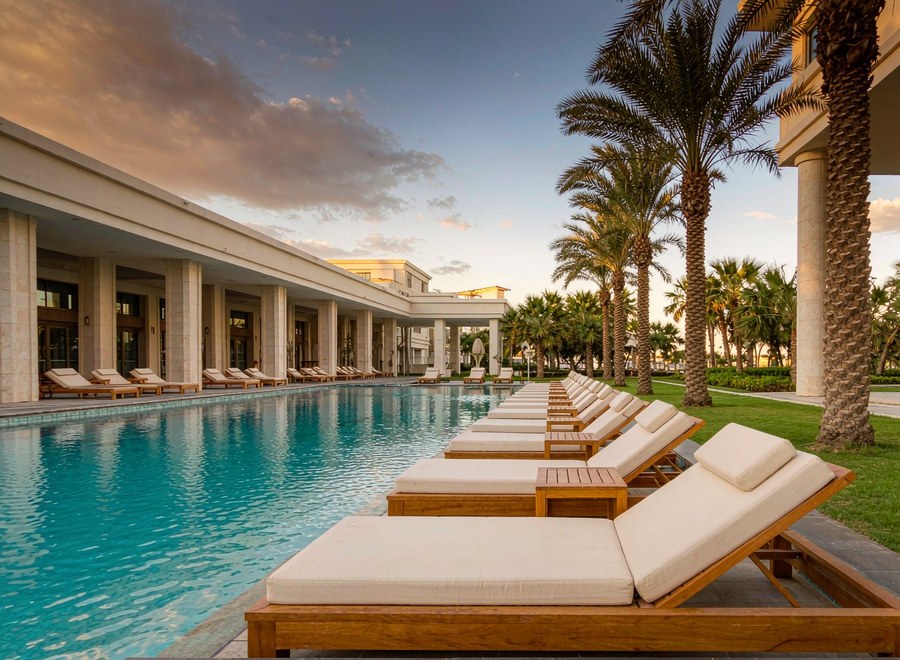
The cheapest specification move costs nothing: divide the deck into three bands and match materials to each band, instead of buying one furniture family for the whole pool area.
| Zone | Distance from water edge | Exposure | Material rule |
|---|---|---|---|
| Splash zone | 0–1.5 m | Daily splash, standing water, wet-dry cycling | Powder-coated aluminium frames, 316 stainless fixings, quick-dry cushions, mesh or textilene slings. No mild steel anywhere, no unsealed end grain. |
| Wet walkway | 1.5–4 m | Frequent overspill, wet towels, sunscreen | Aluminium or teak frames both work; slings and slatted seats that drain fast beat closed cushion decks. Stone-safe glides are mandatory. |
| Dry deck | Beyond 4 m | Occasional splash only | Full range: teak sofa sets, daybeds, parasols and lounge seating. This is where warm wood tones earn the premium look. |
Within those bands, spec the geometry as deliberately as the materials. A commercial sun lounger occupies roughly 190–210 × 65–80 cm, and rows read best when centres sit 1.2–1.5 m apart with at least a 900 mm walkway behind the head end for staff and towel trolleys. Daybeds need a 2.2–2.5 m footprint once access is counted. Drawing those numbers into the deck plan before ordering is the difference between a pool deck that photographs well and one that housekeeping can actually service.
Aluminium, teak and the waterline
Powder-coated aluminium is the default splash-zone frame, and rightly so: it does not rust, it stays cool enough to touch, and modern coatings hold colour under poolside UV. What varies between suppliers is edge quality — coating pulls thin over sharp cut edges, and that is exactly where poolside corrosion starts. Ask how profiles are cut and sealed before coating, not just what the coating is.
Teak tolerates splash better than any other timber — dense grain, natural oils — but it has two poolside-specific caveats. Constant wet-dry cycling grows mildew in the dirt film that settles on horizontal slats, so teak at the waterline needs a weekly scrub, not an occasional oil. And tannins leach from freshly wetted teak and stain light travertine and limestone permanently, so either place solid teak beyond the splash zone, let it weather grey before installation, or keep it on timber decking where staining does not matter.
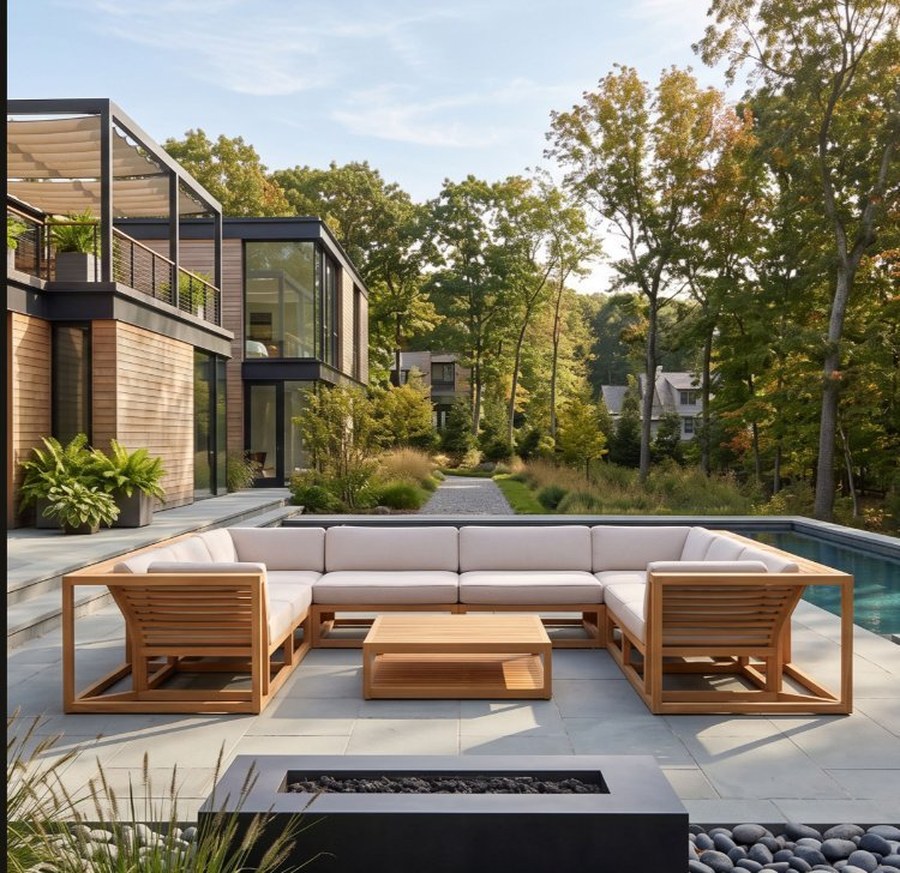
Rope-weave and textilene slings are the fastest-drying seats on the deck and shrug off pool chemistry, which is why a resort poolside sun lounger in a sling dries between morning swimmers and afternoon guests. Cushion-backed loungers photograph better but demand the drainage and storage discipline covered below.
Fixings, glides and the deck below
Every frame leaves our factory fully welded and finished, so there are no exposed joints for chlorinated water to sit in. What actually decides poolside life is the finish system: a properly pre-treated, powder-coated aluminium surface or a well-oiled solid teak frame resists chloride far better than a thin or bare coating. Ask for the pre-treatment and coating specification in writing, and check that tube ends are sealed so pool water cannot collect inside the profile.
Glides matter almost as much. Bare steel glides leave rust rings on pale stone within one season, so spec stainless or nylon glides, preferably height-adjustable to absorb uneven paving. For poolside furniture drainage, favour slatted or mesh deck surfaces that shed water and open profile ends that cannot trap it; a closed box section that holds pool water will corrode from the inside where nobody can see it.
Cushions, drainage and night storage
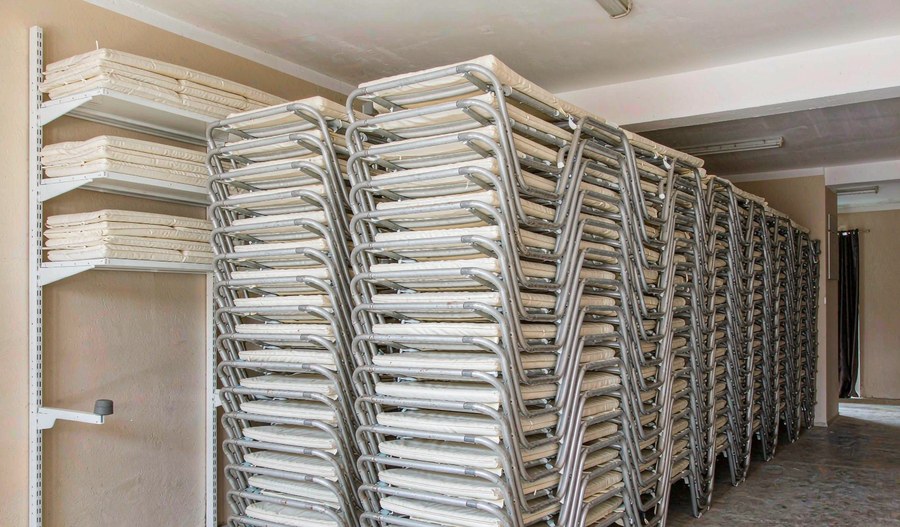
Poolside cushions should be specified as a drainage system, not a colour choice: reticulated open-cell quick-dry foam, a breathable mesh base, and zipped solution-dyed acrylic covers that come off for washing. A cushion that dries in hours instead of days is the difference between a fresh deck and a mildew-smelling one.
Then plan the storage arithmetic with the factory, because it drives both the furniture design and the back-of-house space. Most commercial loungers stack, and a tower of six occupies roughly half a square metre — so forty stacked loungers need about three to four square metres plus aisles, while cushions live on shelving off the floor. If the property stacks furniture nightly, tell the supplier: stacking geometry, glide protection and handle placement are design inputs, not afterthoughts.
Test reports worth the file size
European contract buyers have a clean benchmark: EN 581-1 covers general safety for outdoor seating and tables, EN 581-2 the mechanical safety of seating and EN 581-3 the tables — with higher test loads for contract use than domestic, seat static load stepping from roughly 1,300 N to 1,600 N. When a report claims contract compliance, check that the use category is named; a report that only proves domestic grading will not survive a hotel procurement review. For coatings, the recognized method is neutral salt-spray testing per ISO 9227 — ask for the hours achieved and the coating system tested, not just a pass stamp.
Six questions for a resort poolside supplier
- Which stainless grade are the fasteners — 304 or 316 — and are isolating washers fitted at every aluminium-to-stainless joint?
- How are aluminium profiles cut and edge-sealed before powder coating?
- Is the cushion foam reticulated quick-dry, with mesh base and zipped covers — and can I see the foam grade in writing?
- Do the loungers stack, how many per tower, and what protects the slat below?
- Which EN 581 parts and use category do the test reports cover, per production batch?
- What spare-parts percentage — glides, slings, covers — ships with the first pool deck furniture wholesale order?
One last commercial note: because a full pool deck mixes loungers, daybeds, side tables and parasols, it is the natural single order in which to consolidate a container from one manufacturer — one colour batch, one hardware spec, one packing plan. Get the six answers above in writing, and the deck you buy will still look like the render in season three.