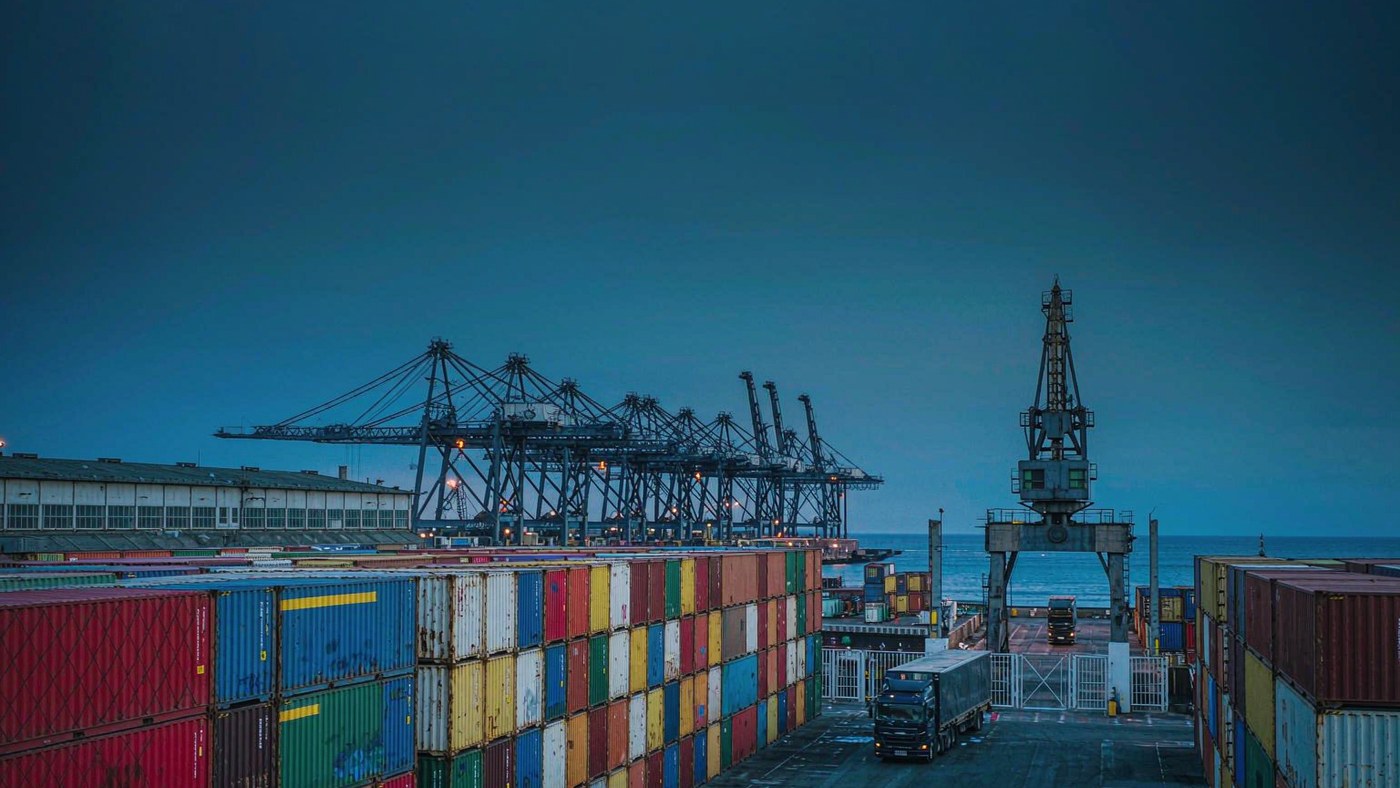
Europe is the market where the duty line disappears. Teak and aluminium outdoor furniture enter the EU at 0% most-favoured-nation duty — no Section 301 stack, no Chapter 99 overlays, no anti-dumping orders on finished goods. For an importer comparing quotes, that single fact explains why European landed-cost models look so much friendlier than American ones.
But zero duty is not zero landed cost, and since 2024 the work has moved somewhere else: into import VAT mechanics, and into a compliance layer — EUDR, REACH formaldehyde limits, packaging rules — that decides whether your container clears at all. This guide covers what you actually pay and what you actually have to collect: classification first, the duty position, the VAT table, the compliance stack, and a worked landed-cost example for a 40HQ.
Step one: classification decides everything
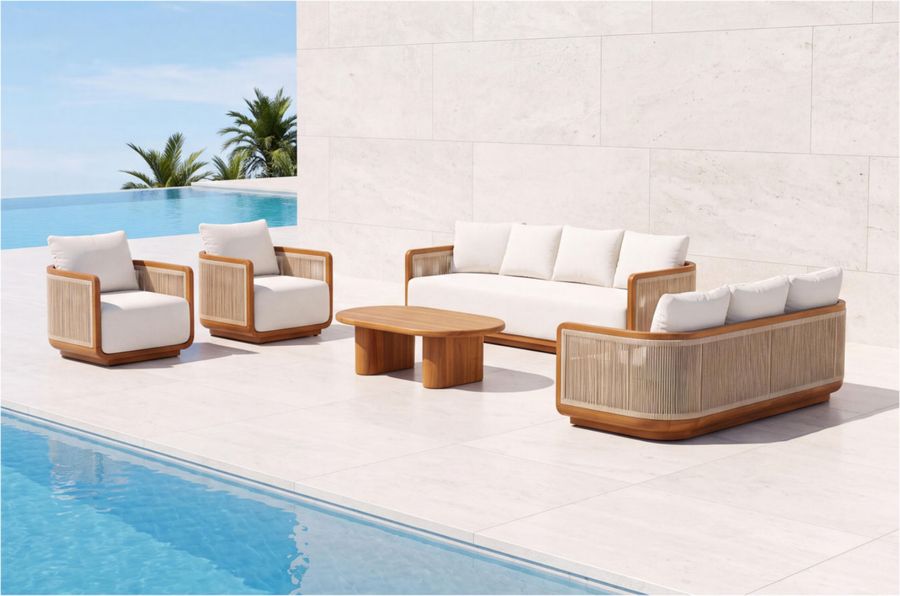
Duty rate, VAT treatment and even whether EUDR applies all hang off the CN code your goods clear under, and for outdoor furniture the code follows construction, not appearance. A teak-framed sofa with cushions clears as upholstered seating (9401.61); the same frame without cushions clears as 9401.69; its aluminium twin with cushions is 9401.71 and without is 9401.79. All four are 0% MFN. What changes between them is not the rate but the paperwork — any wood component pulls the product into EUDR scope, and that is where the real work sits.
| Construction | Typical CN line | EU MFN duty |
|---|---|---|
| Wooden furniture — tables, benches, side tables | 9403.60 | 0% |
| Metal furniture — tables, side tables, shelves | 9403.20 | 0% |
| Upholstered seats, wooden frame — cushioned sofas, lounge chairs | 9401.61 | 0% |
| Upholstered seats, metal frame | 9401.71 | 0% |
| Non-upholstered seats, wooden frame — teak frames without cushions | 9401.69 | 0% |
| Non-upholstered seats, metal frame — aluminium rope sets | 9401.79 | 0% |
| Seats of cane, osier, bamboo or similar materials | 9401.52 | Duty applies — commonly quoted around 5.6%; verify in TARIC |
Two habits protect you here. First, agree the lines with your broker before the proforma is signed, not when the container arrives — under most Incoterms, classification and customs entry are the importer's legal responsibility, and a factory that has shipped to your market will still know the usual lines. Second, keep the construction description in your purchase order: frame material, upholstered or not, wood content. If customs later reclassifies, that description is your defence. Loose cushions, parasols and spare parts each classify on their own lines — confirm them separately rather than assuming they ride with the frames.
The duty rate: 0% on teak and aluminium — with three things to check
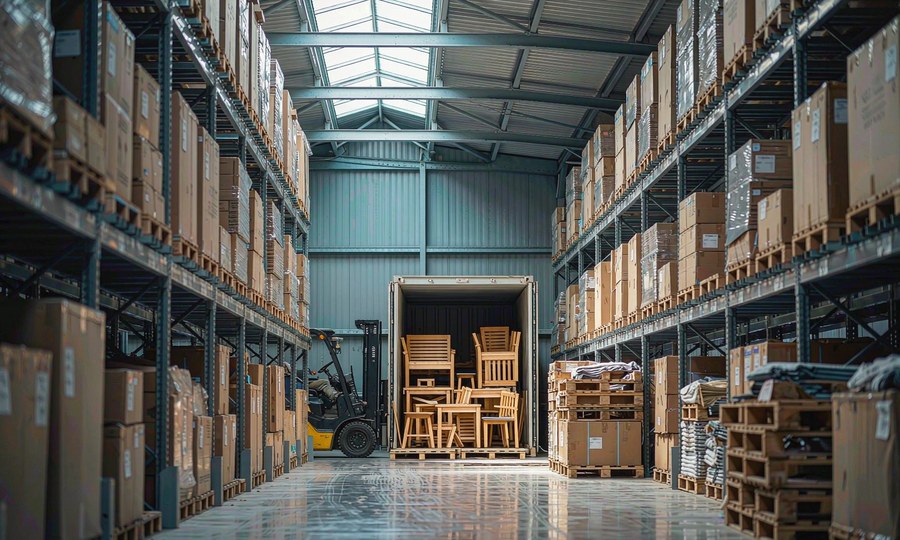
The Common Customs Tariff charges 0% MFN on the furniture and seating lines above, and there is no EU–China free trade agreement to complicate the picture. Three checks before you treat that as settled:
1. The exact line. Most Chapter 94 furniture is duty-free, but material lines differ. A synthetic-rope aluminium set classifies as a metal seat at 0%; the same look in natural rattan classifies as a cane seat (9401.52) and carries duty — commonly quoted around 5.6%. Confirm the eight- or ten-digit line in TARIC before the goods ship, especially on anything described as "wicker" or "rattan-look".
2. Trade-remedy measures on components. No anti-dumping duty applies to finished Chinese furniture. Measures do exist on inputs: hardwood plywood has carried a definitive EU anti-dumping duty since November 2025 (with an anti-circumvention investigation opened in July 2026), aluminium extrusions have been under EU trade-remedy measures since 2021, and multilayered wood flooring picked up a definitive duty in July 2025. None of that touches a finished sofa under 9401.79 or a table under 9403.20 — but if you import panels, profiles or parts rather than finished goods, check TARIC line by line.
3. Origin honesty. At 0% there is no duty saving to chase through transshipment and no preferential regime to document. Origin paperwork is about fraud risk, not rate shopping — keep the mill and factory chain simple, documented and truthful.
Import VAT: the real tax at the border

Import VAT is charged on the customs value — goods plus freight and insurance to the EU point of entry, not the FOB invoice alone — at the standard rate of the member state of entry. That makes it the largest single government line in most European landed-cost models, and it is the number importers most often leave out of a factory-price comparison.
| Country of entry | Standard VAT rate | Practical note |
|---|---|---|
| Netherlands | 21% | Article 23 licence defers import VAT and reverse-charges it on the same return — net cash at customs can be zero |
| Germany | 19% | Deferment account (Aufschubkonto) moves payment to the VAT return cycle |
| Belgium | 21% | Similar deferment routes available through your customs representative |
| France | 20% | Postponed accounting available to established VAT-registered importers |
| Italy | 22% | Plafond VAT account regime for regular importers |
| Spain | 21% | Deferment via the special customs regime used by most importers |
| Ireland | 23% | Postponed accounting standard practice |
| Poland | 23% | Deferment available for registered importers |
| Sweden / Denmark | 25% | Highest standard rates in the EU — entry-port choice matters |
For a VAT-registered business, import VAT is recoverable as input tax: a cash-flow item, not a cost. What decides the cash flow is the deferment route — the Netherlands Article 23 licence is the cleanest, deferring the payment and settling it on the same VAT return, while Germany's deferment account and similar schemes in Spain, Italy and most member states achieve a similar effect. If you are not established in the EU, several countries will require a fiscal or indirect customs representative — book one early, because it affects clearance time more than the rate does.
If you cannot recover the VAT — a private villa buyer, for instance — it is a real cost of 17% to 27% on top of everything else, and the spread between Luxembourg (17%) and Hungary (27%) is wide enough to influence where you clear. Two practical notes: choose the entry port by delivery address rather than headline freight rate, and be careful with DDP terms, where the supplier's forwarder is fronting this cash — suspiciously cheap DDP quotes into Europe tend to hide risk in that arrangement.
EUDR: the regulation that changes teak sourcing
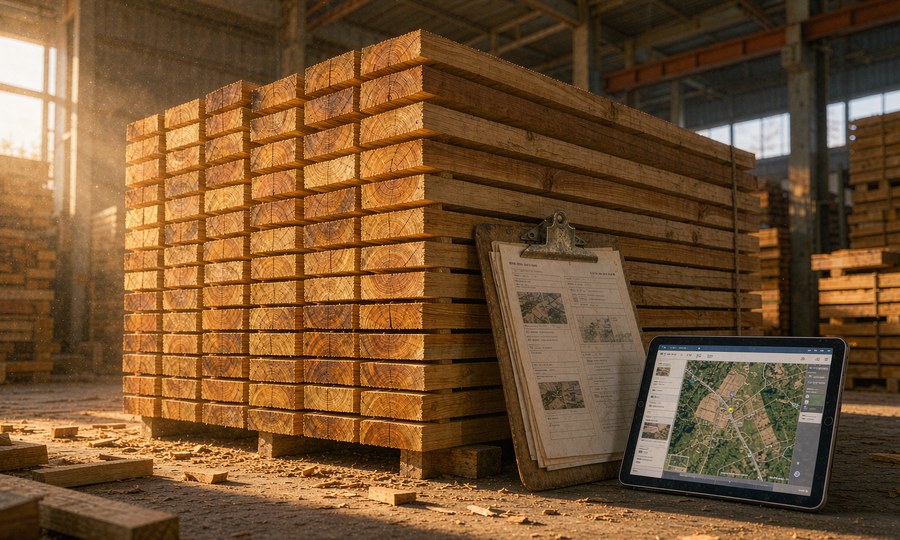
The EU Deforestation Regulation is the 2026 change that touches teak directly. From 30 December 2026, large and medium operators placing wooden furniture on the EU market must hold a due-diligence statement showing the wood was legally produced and not linked to deforestation after 2020, with geolocation data for the plots of origin — for every wood component. Micro and small operators follow from 30 June 2027. A December 2025 revision simplified the paperwork, but the due-diligence core stands.
What that means in practice: teak is in scope, and so is any set with wood components — an aluminium sofa with teak slats, a teak-topped dining table, wooden feet on a metal frame. The data has to come from the factory and its timber suppliers, and the statement is per consignment, which means it must exist before the container sails, not be reconstructed at the port of entry. Where the exact species per component is impractical, every species that may have been used has to be listed.
Ask for four things, in writing: species (teak is Tectona grandis), country and region of harvest, geolocation or plot references for the timber, and the supplier chain that connects your cartons to those plots. A factory that cannot produce this is not ready for the EU market, whatever its price — our own approach to traceability and certification is set out in the sustainable teak sourcing guide.
Alongside EUDR, two smaller obligations arrived in 2026. The REACH formaldehyde limit for wood-based articles — 0.062 mg/m³ under the prescribed chamber test — applies to imports exactly as to EU-made furniture, so ask for the chamber report on the finished product, not just the board it was cut from. And the Packaging and Packaging Waste Regulation has applied since August 2026, which can put documentation duties on you for the cartons and wrap you place on the market. Wood pallets and crates still need ISPM-15 marking; that one has not changed.
What landed cost actually looks like
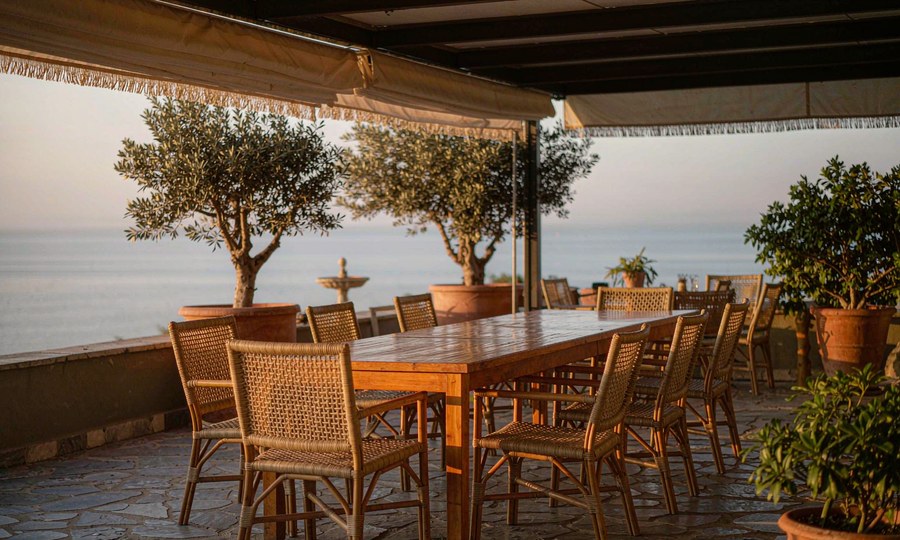
Here is a worked example: one 40HQ of mixed teak and aluminium furniture, FOB Foshan, cleared at a North European port. The figures are illustrative — freight and destination charges move constantly — but the structure is the one to copy.
| Line | Amount | Note |
|---|---|---|
| Goods value, FOB Foshan | €18,000 | Mixed teak and aluminium order |
| Ocean freight + insurance (CIF) | €2,600 | Your forwarder's quote; roughly 30–40 days transit |
| Customs value (CIF) | €20,600 | Goods plus freight and insurance to the EU entry port |
| Import duty (0% MFN, 9403.60 / 9403.20 / 9401.x) | €0 | Zero on teak and aluminium lines |
| Import VAT, 19% on customs value | €3,914 | Recoverable as input tax if you are VAT-registered |
| Destination charges | €950 | Terminal handling, clearance, delivery — quoted separately |
| Landed cost, excluding VAT | €21,550 (+19.7%) | Compared with the FOB price |
| If VAT is not recoverable | €25,464 (+41.5%) | Unregistered importers only |
Three things to take from the example. The duty line is zero, so freight is the number that moves between quotes — ocean quotes for the same 40HQ on this lane have ranged from roughly US$1,200 to US$4,200 in recent years, so a landed-cost model built on last year's freight rate is stale. The VAT is cash flow, not cost, if you are registered and can recover it — and a real cost if you cannot. And destination charges are the line importers forget: they are quoted separately by the destination agent and vary by port and country.
For comparison, the same container to the USA carries a 37.5% duty stack as of late 2026 — the full math is in our USA import duty and landed-cost guide. Europe's zero duty is a genuine structural advantage; it just is not the whole bill.
What to ask a factory before you order

Send these with your enquiry. They take a factory ten minutes to answer if it has shipped to Europe before — and they separate that factory from one quoting a price without a programme behind it.
1. Which CN lines do you declare these products under for EU entry, and will you put them on the proforma?
2. Can you provide the EUDR data package — species, harvest country, geolocation, supplier chain — for every wood component?
3. Do you hold a chamber-test formaldehyde report (0.062 mg/m³) on the finished product?
4. Are pallets and crates ISPM-15 marked, and can you send photos of the marking?
5. Will you split packing from goods value on the invoice? (It affects the customs value.)
6. Can you send the loading plan, carton list and loading photos before the container doors close?
7. What documentation arrives at sailing — bill of lading, packing list, certificate of origin, test reports?
A first-container checklist for Europe
1. Fix the CN lines with your broker before the proforma is signed.
2. Confirm your VAT status and deferment route in the country of entry.
3. Collect the EUDR data for wood components before production starts — not after.
4. Ask for the finished-product formaldehyde chamber report.
5. Check TARIC for trade-remedy measures if any part of the order is panels or profiles.
6. Get a CIF freight quote plus destination charges, so the landed number is complete.
7. Choose the entry port by delivery address, not by headline freight rate.
8. Budget import VAT as cash flow — and as a real cost if you cannot recover it.
9. File the due-diligence reference, test reports and loading photos with the shipment record.
10. If you are not established in the EU, book a fiscal representative early.
Working with a factory on a European programme
PatioHue is a Foshan factory-direct manufacturer of solid teak and powder-coated aluminium outdoor furniture, exporting to Europe, the Middle East, North America, Australia and West Africa. Our European shipments clear under the furniture and seating lines above, and the EUDR data package and finished-product test reports are part of the shipping file rather than an afterthought. Upholstered items sold to consumers also carry the market-specific fire and traceability labelling covered in our private label guide.
If you are planning a first container, send us your product mix and delivery country and we will come back with a specification, a loading plan and the documentation list your broker will ask for. Samples take around 15 days and production runs 25–35 days — the evaluation process is set out in our sample guide, and the loading math in our container loading guide. For material choice, our teak vs aluminium comparison covers the trade-offs that decide which of the two belongs in your mix.