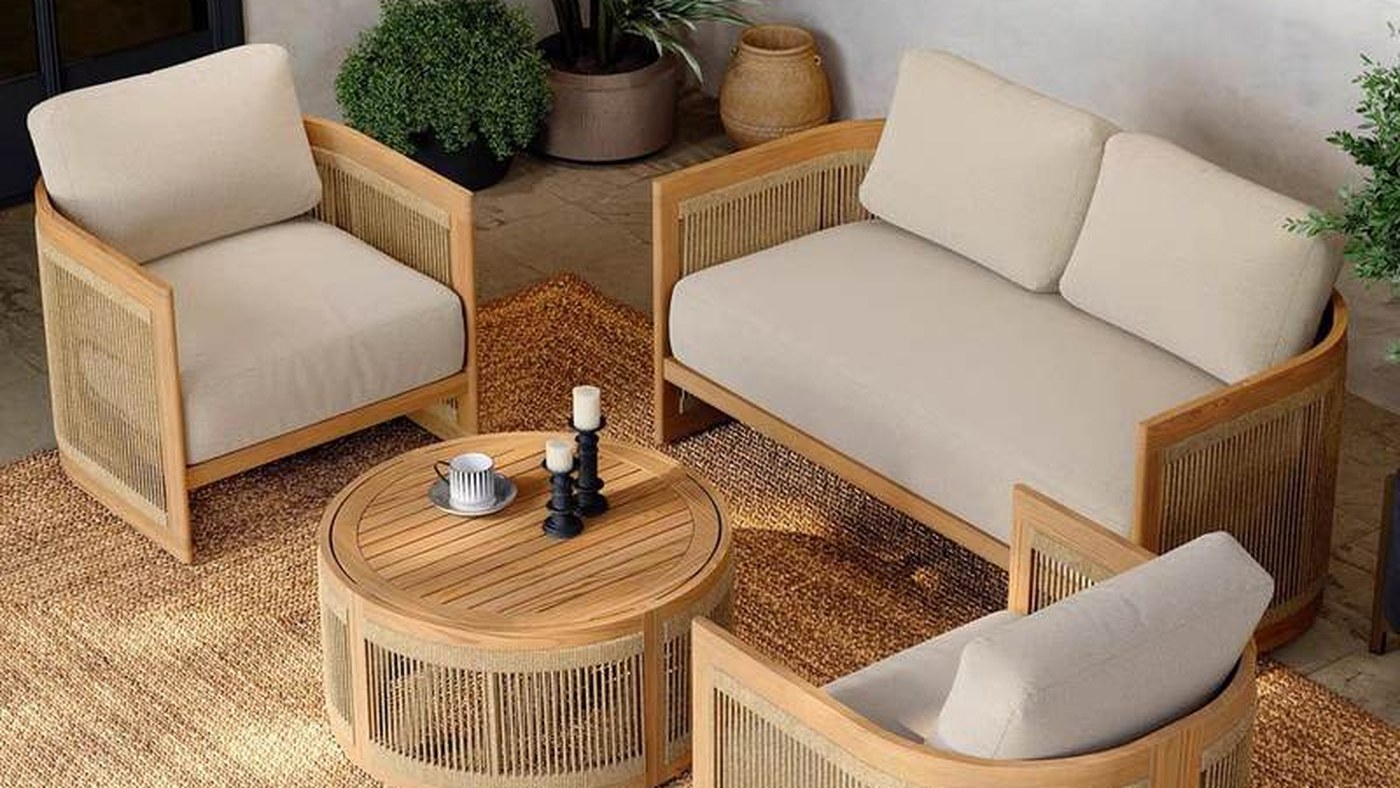
"Is your teak sustainable?" It arrives as a one-line question in an RFQ, usually from a European buyer, a hotel group's ESG team, or a municipality — and it is a fair question. The honest answer has two halves. First, teak from well-managed plantations is among the more responsible materials available for outdoor furniture: it is grown as a crop, harvested on a human timescale, and durable enough to outlast most alternatives by a decade or more. Second — and this is where most sourcing conversations go wrong — the word "teak" on its own tells you nothing about where the tree grew or how it was harvested. This guide separates what you can verify from what you cannot, explains what FSC, SVLK and the EU Deforestation Regulation actually mean for a furniture buyer, and gives you the questions that separate real documentation from marketing language.
Where teak actually comes from
Natural teak forests once covered large parts of mainland Southeast Asia — Myanmar, Thailand, Laos and India among them. Almost all of that natural forest is now protected or closed to commercial harvesting, and Myanmar has restricted log exports for over a decade. The teak that reaches the furniture trade today is overwhelmingly plantation teak, grown as a managed crop rather than cut from old-growth forest.
Plantation teak is grown across Southeast Asia — Indonesia is the largest producer, with state and private plantations on Java and beyond — as well as in Latin America and, increasingly, in parts of Africa. The crop cycle is the part buyers rarely appreciate: teak is typically harvested at roughly 20 to 30 years, when the heartwood has developed enough density and oil content for structural and outdoor use. That is a long rotation by agricultural standards, which is precisely why verification matters — a supply chain can quietly mix plantation material with illegal old-growth logs, and the finished furniture looks identical.
Plantation vs old-growth: does it matter for furniture?
Less than the marketing suggests, provided the material is properly selected and dried. The performance of teak outdoors is driven by three things: the proportion of heartwood to sapwood, how the timber is graded for knots and defects, and the moisture content it is dried to before machining. A well-graded, kiln-dried plantation board will outperform a careless old-growth one.
| Aspect | Old-growth teak | Plantation teak |
|---|---|---|
| Availability | Effectively closed — protected forests and export bans | The mainstream commercial supply for furniture |
| Growth | Centuries | Typically 20–30 years to harvestable size |
| Certification | Rarely available for commercial furniture supply | Regularly certified — ask for the certificate number |
| Furniture performance | Excellent, when available | Excellent with proper grading and kiln drying (target ~8–12% MC) |
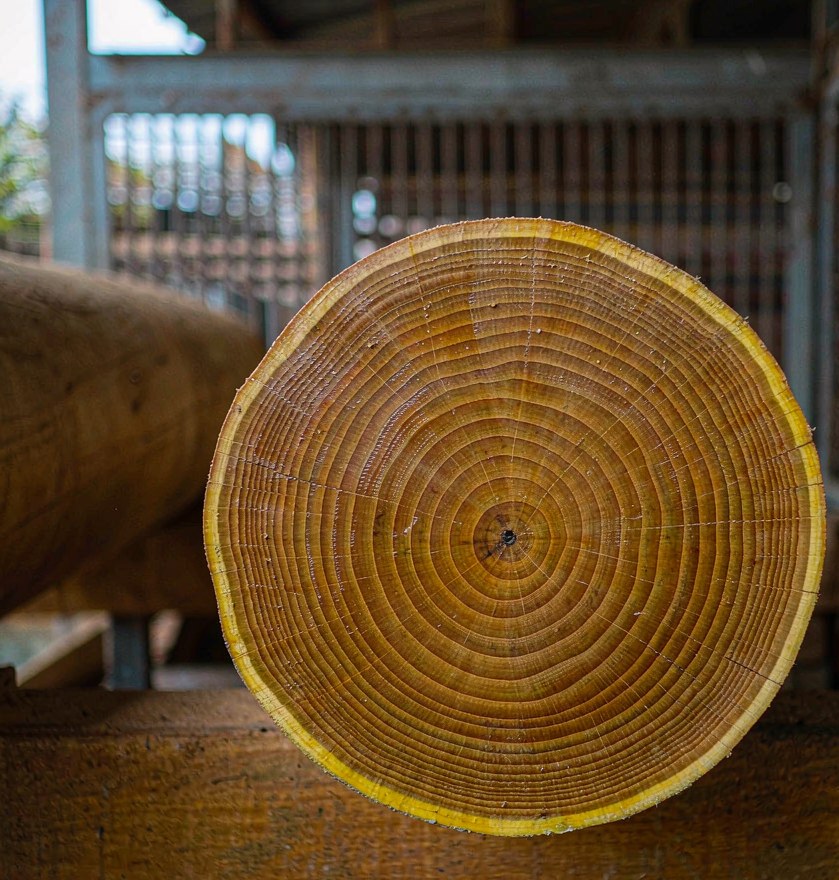
The practical takeaway: stop asking "plantation or old-growth?" and start asking "what is the grade, the heartwood content and the moisture content?" Those are the specifications that decide whether your furniture cups, checks or cracks in year two.
What the labels actually mean
Certification labels are useful, but only if you know what each one certifies — and what it does not.
| Label / scheme | What it actually certifies | What to ask for |
|---|---|---|
| FSC Forest Management | A forest is managed to FSC standards (the forest itself) | Only relevant to the forest — not proof about your product |
| FSC Chain of Custody | Certified material is tracked and separated through the supply chain | The certificate number and the product claim — both verifiable in the public FSC database |
| PEFC | An alternative forest certification system, built on national schemes | The certificate number and what fraction of the order it covers |
| SVLK (Indonesia) | Legal timber verification — legality, not sustainability standards | The V-Legal document reference for the shipment |
| "Eco-friendly" / "sustainable teak" (unqualified) | Nothing verifiable | Treat as marketing until specifics are provided |
The single most useful habit: look the number up. A genuine FSC chain-of-custody certificate can be checked in minutes in FSC's public database against the company name. A supplier who cannot produce a number, or whose number does not match the entity on your invoice, has answered your question even if they used the word "certified".
What the EU Deforestation Regulation changes for European buyers
If you sell into the EU, the regulatory picture changed more in the last two years than in the previous decade. The EU Deforestation Regulation (EUDR, Regulation (EU) 2023/1115) covers wood and wood-derived products — furniture included — and repeals the older EU Timber Regulation. Three things matter for a furniture buyer:
- Who carries the obligation. The operator who first places the products on the EU market must exercise due diligence and submit a due diligence statement in the EU's information system (TRACES). Downstream traders are largely exempt from submitting their own statement, but the first downstream operator must collect and retain the reference number — which means the paperwork request travels up the chain to you, and from you to your factory.
- What the statement needs. Due diligence covering the commodity, the country and region of production, geolocation of the plots where the wood was grown, and evidence that the land was not deforested after 31 December 2020. The Commission also benchmarks countries by risk (low / standard / high), which determines how deep the due diligence must go.
- The timeline. After two postponements and a December 2025 simplification revision, the deadline for large and medium operators is 30 December 2026; micro and small operators follow on 30 June 2027. There will be no further postponement — the Commission has confirmed the dates are final.
What this means in practice for a project buyer sourcing from China: your EU importer will ask for sourcing information, and they will ask you for it because their own deadline is coming. The factory side of the chain is not the regulated party — but factories that cannot answer species, origin and mill questions will lose EU-bound business regardless. Ask early, at RFQ stage, not at loading stage.
Beyond certification: what responsible actually looks like
Certification is one signal, not the whole picture. Three practical indicators predict responsible sourcing better than a logo:
- Documented, legal origin. Species, country and region of harvest, and the mill or plantation reference — the same data the EUDR asks for, whether or not you sell into Europe.
- Durability, treated as an environmental feature. Furniture that survives fifteen years in a harsh climate beats "sustainable" furniture replaced every three. Teak's natural oils and aluminium's corrosion resistance are sustainability arguments as much as performance ones — and the maintenance schedule you run decides which claim survives contact with reality (see our commercial maintenance guide).
- Repairability and spares. A supplier that ships spare cushions, rope and touch-up with the container is designing for a long service life rather than a replacement cycle.
How to read a supplier's answer
| Green flags | Red flags |
|---|---|
| Species named: Tectona grandis, not just "teak" | "Eco-friendly teak" with no species, origin or document |
| Origin country and region stated | Origin refused or changed between conversations |
| Certificate number provided and verifiable | "FSC-style", "FSC-equivalent" or a certificate that does not match the invoicing entity |
| Moisture content and grade specified in the quote | No MC figure, or MC stated without drying method |
| Documentation commitments written into the PO | Documentation promised verbally, absent from the contract |
Questions to add to your RFQ
- What species is supplied, and from which country and region is the teak sourced?
- Is the teak kiln-dried, and to what moisture content?
- Do you hold chain-of-custody or legality certification — and can you provide the certificate number for verification?
- What sourcing documentation can you provide for EUDR purposes (species, origin, geolocation where available)?
- Can documentation commitments be written into the purchase order?
Five questions, asked before you shortlist. A factory that answers all five in one email is a factory with a supply chain worth having.
Sourcing documentation for your project
PatioHue is a Foshan factory-direct manufacturer of teak and aluminium outdoor furniture, exporting to Europe, the Middle East and North America. We know sourcing documentation is now a procurement requirement, not a nice-to-have — especially for EU-bound projects. If certification, legality documentation or EUDR support matters for your market, say so at RFQ stage and we will tell you exactly what documentation we can provide for the material in your order, alongside trade pricing and the container loading plan. It usually takes a day.