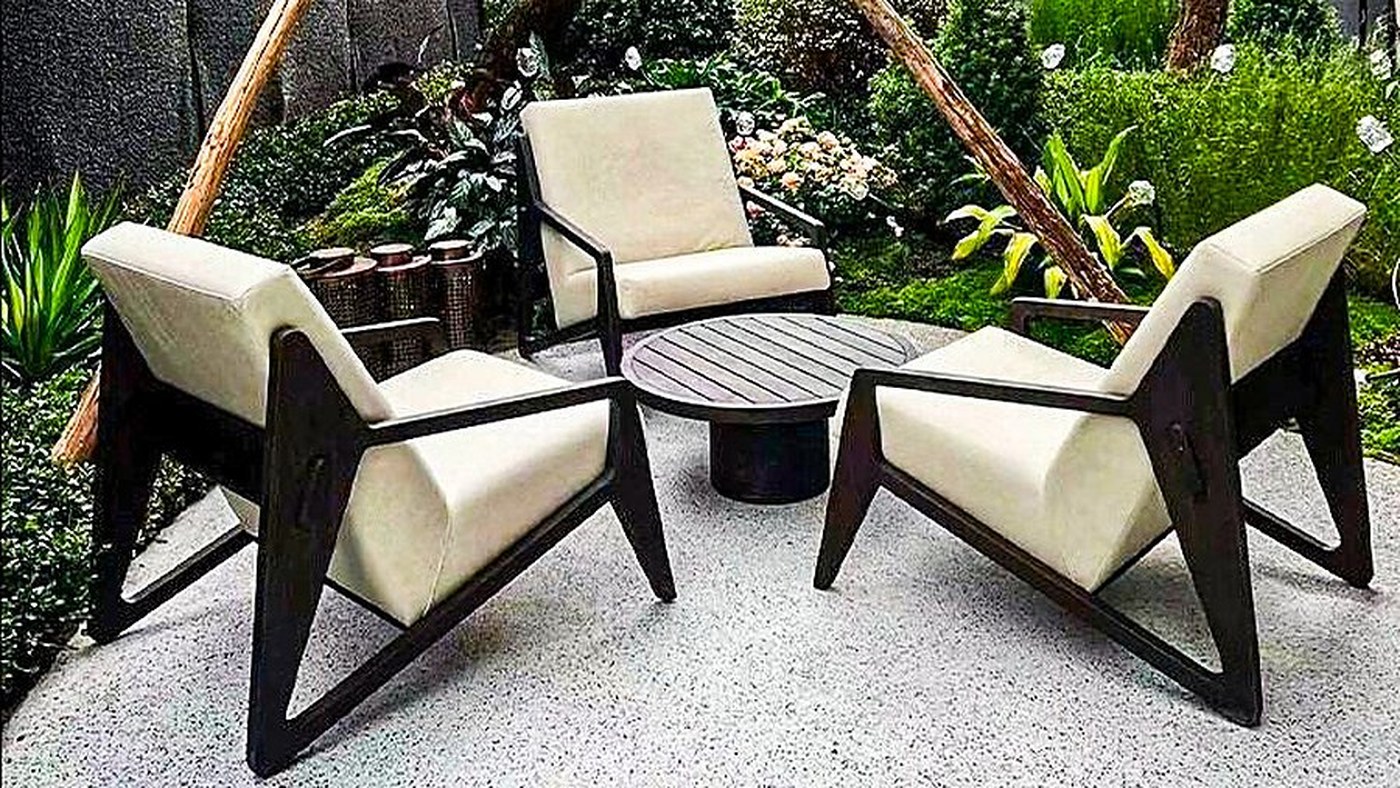
Japan is the most quality-sensitive furniture market in Asia, and it is growing. Inbound arrivals reached a record 42.68 million in 2025 — up 15.8% year on year — with travel expenditure of ¥9.5 trillion, and the government is targeting 60 million visitors a year by 2030. Estimates of the Japan outdoor furniture market size range from roughly US$0.6 billion to US$1.6 billion for 2025 depending on scope, with forecasters clustering around 6–9% annual growth. For anyone selling outdoor furniture to Japan, the demand is real — and the specification, paperwork and packaging expectations are unusually strict. This guide covers what to write on the purchase order.
What is actually driving demand
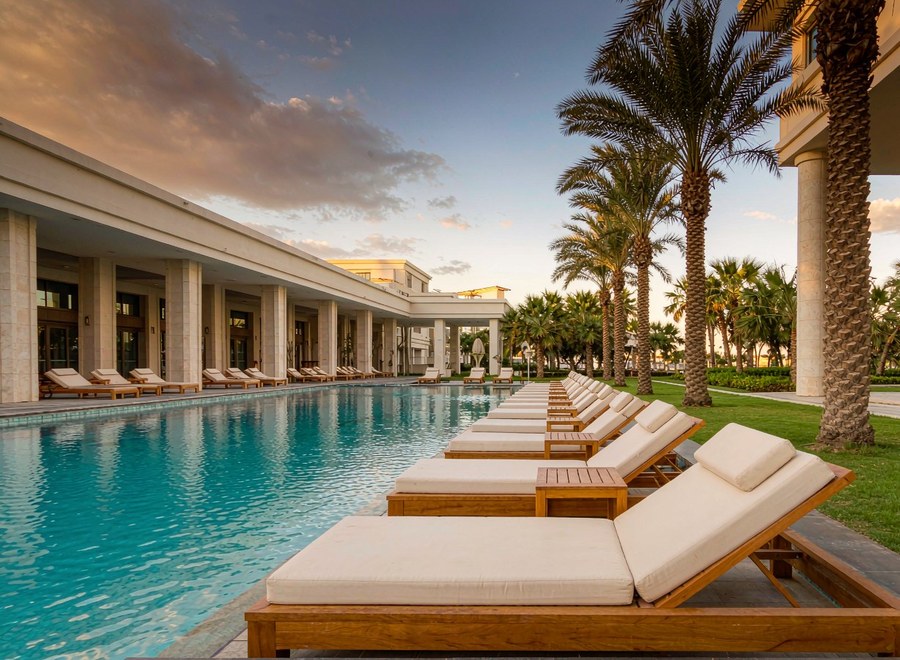
Three forces pull the market. First, hospitality: Japan's hotel pipeline stood at roughly 221 projects and 33,079 rooms at the close of Q1 2026, concentrated in Tokyo, Osaka and Kyoto and increasingly in resort regions — land prices in Hakuba rose 29.3% in a single year. Premium, design-led openings from Rosewood Miyakojima to 1 Hotel Tokyo buy outdoor furniture as part of the architecture, not as an afterthought, and that is where a factory that can hold a finish specification wins.
Second, a construction crunch that favours refurbishment: hotel building costs rose about 41% between 2022 and 2024, and new-room openings have fallen sharply. Existing properties are extending and re-outfitting rather than rebuilding, which puts terrace dining sets, poolside sun lounger replacements and FF&E refresh budgets on the table for the next two to three seasons.
Third, residential: small terraces and balconies, an ageing population, and a strong preference for low-maintenance, compact, multifunctional pieces. Wood remains the largest material segment by revenue, and metal is the fastest-growing — the two segments a teak-and-aluminium factory already speaks.
What Japanese buyers order
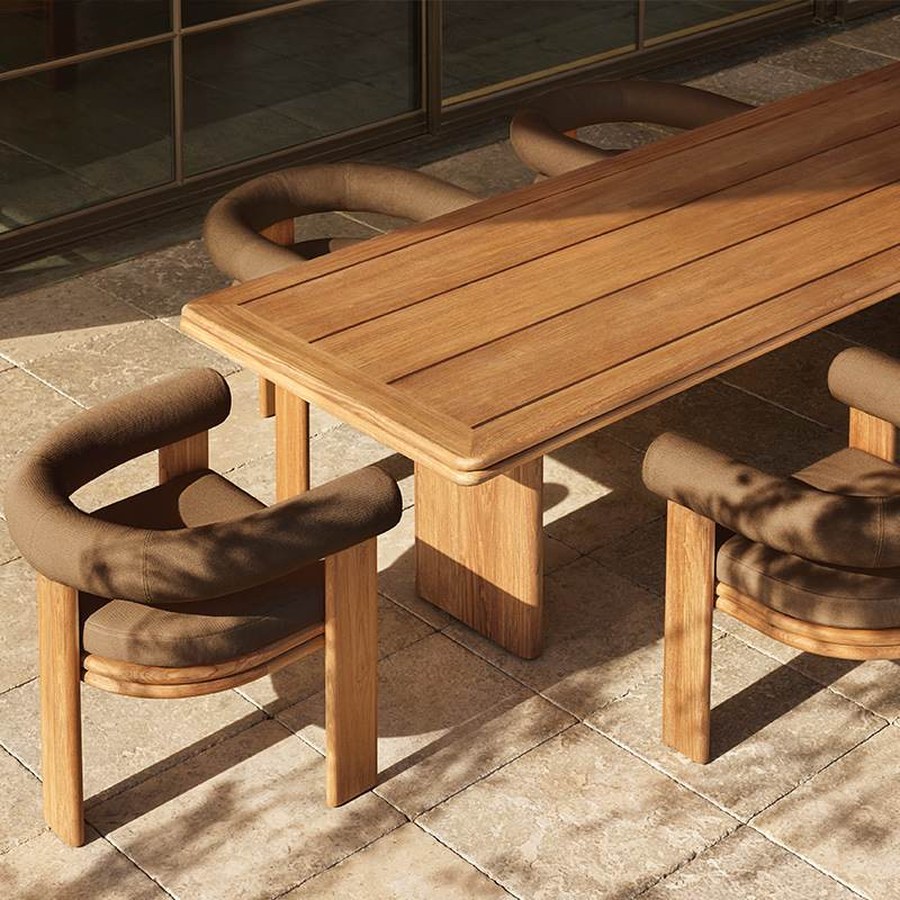
Wood leads, and teak is the reference: buyers accept silvering as patina rather than defect, provided the timber grade and moisture content are documented. The aesthetic runs restrained and minimal — natural materials, quiet lines, no visual noise — and finish quality is judged closely, because Japanese buyers read joint lines, edge profiles and cushion tailoring as a proxy for how the whole order was made.
Two practical consequences. Dimensions matter more than in most markets: furniture has to reach apartment terraces and hotel service corridors, so compact footprints and stated per-piece weights decide whether a delivery succeeds. And everything must arrive fully assembled — a welded one-piece frame, cushions fitted, nothing to build on site. On-site assembly labour is expensive and simply not expected.
Japan outdoor furniture import duty and customs basics
Outdoor furniture enters Japan mainly under HS 9401 (seats) and HS 9403 (other furniture). Most lines that matter for garden furniture — non-leather seats with wooden or metal frames, and wooden or metal furniture — are Free under the WTO column, so the duty itself is usually zero. The charge that actually moves money is consumption tax: 10% applied to the CIF value plus any duty. Japan assesses on CIF, so international freight and insurance sit inside the tax base — a landed-cost quote built on FOB understates the border bill.
Mechanically, commercial imports clear through NACCS with a licensed customs broker (tsūkan-gyōsha), and an importer of record must exist in Japan. China is an RCEP party, so preferential origin documentation exists — but where the WTO rate is already Free it changes little, and it matters only for the exception lines. Consignments at or below ¥10,000 taxable value are exempt, though that threshold is under review. Where a heading is genuinely ambiguous, request an advance classification ruling from Japan Customs: the written ruling is what holds at examination.
Japan outdoor furniture standards to write into the PO
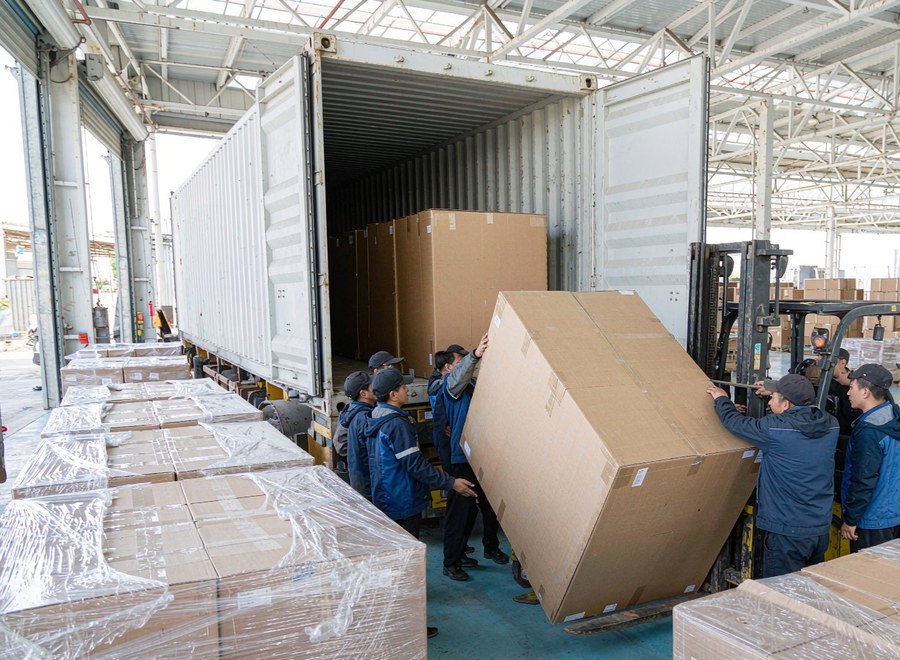
Four requirements account for almost every hold-up at a Japanese port or a buyer's QC room.
ISPM 15 wood packaging. Pallets, crates, dunnage and packing blocks must be heat-treated to a 56 °C core for 30 minutes (or fumigated) and carry the IPPC mark on at least two opposite sides — avoid red or orange ink. Plywood, OSB, hardboard and paper-based packaging are exempt. Finished furniture itself is not subject to plant quarantine; it is the packaging that gets pulled aside, and unmarked wood means inspection, treatment or return at the importer's cost.
F☆☆☆☆ for engineered panels. Where a set uses plywood or MDF that will live indoors or on a covered veranda, Japanese buyers ask for F☆☆☆☆ under JIS A 1460 — average formaldehyde emission ≤0.3 mg/L, maximum ≤0.4 mg/L by desiccator method. Solid teak has no adhesive question to answer; composite panels do.
PSE for anything electrical. An LED-lit table top, a powered lounger or a heated parasol falls under the Electrical Appliances and Materials Safety Act. Confirm notification and marking requirements with the buyer before production, not at the port.
Legal sourcing documentation. Japan's Clean Wood Act runs a voluntary registration system, and registered importers may request evidence of legal, sustainable sourcing. For a teak programme, expect requests for FSC or chain-of-custody paperwork — have the file ready before the first sample ships.
| Requirement | Applies to | Line to write on the PO |
|---|---|---|
| ISPM 15 (HT 56 °C / 30 min) | Pallets, crates, dunnage | IPPC mark on two opposite sides, photo evidence before loading |
| F☆☆☆☆ (JIS A 1460) | Plywood / MDF panels, indoor use | Third-party test report per panel batch |
| PSE / DENAN | LED-lit tops, powered pieces | Buyer confirms notification + marking before production |
| Clean Wood Act file | Teak and timber programmes | FSC or chain-of-custody documents with first shipment |
Climate: typhoon season outdoor furniture and humidity
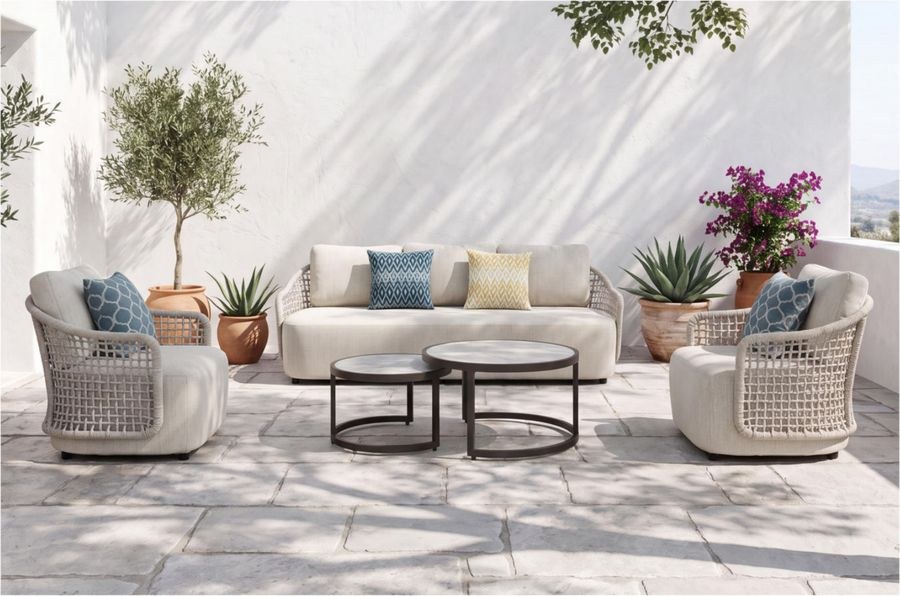
Typhoon season runs from May to October and peaks between July and September, and official guidance is explicit: bring in or secure balcony and garden furniture before a storm. An unsecured chair or parasol becomes a projectile, and in rental buildings tenants can be held liable for the damage. That makes weight, footprint and storability real specifications rather than marketing points.
Spec accordingly: heavier bases with a wide footprint for parasols and cantilever chairs; stackable or fold-flat pieces one person can move indoors when a warning is issued; cushions on quick-dry foam that survive both the storm and the mould risk of the June–July rainy season. Powder-coated aluminium handles humidity better than steel, which bleeds rust onto pale stone; teak weathers to silver-grey and stays structurally sound. Breathable covers extend the interval between deep cleans.
Shipping and working with the factory

Geography is Japan's advantage in this trade. Container loading on the Pearl River Delta reaches Yokohama or Kobe in days rather than the weeks an Atlantic crossing takes, so sample-and-production loops stay fast and a container of MOQ samples can be judged in person before a full order. Ask for SKU-labelled cartons grouped by room or zone, a packing list that mirrors the furniture schedule — your broker files from it — and per-piece weights in the specification sheet, because installers in tight service corridors plan by weight and dimension, not guesswork.
Choose a wholesale manufacturer that documents rather than promises: timber grade and moisture certificates, finish specifications in writing, and a pre-loading inspection with photographs. Suppliers who have never shipped to Japan will learn ISPM 15 on your order; suppliers who have make it routine.
The Japan spec card
The Japan outdoor furniture market rewards suppliers who treat its rules as design constraints instead of surprises. Get the border arithmetic, the packaging marks, the panel grades and the storability right, and a Japanese programme becomes one of the most repeatable orders in the book. If you are specifying a hotel, resort or dealer programme for Japan, send us the furniture schedule — we will review dimensions, weights and documentation against this checklist before quoting.