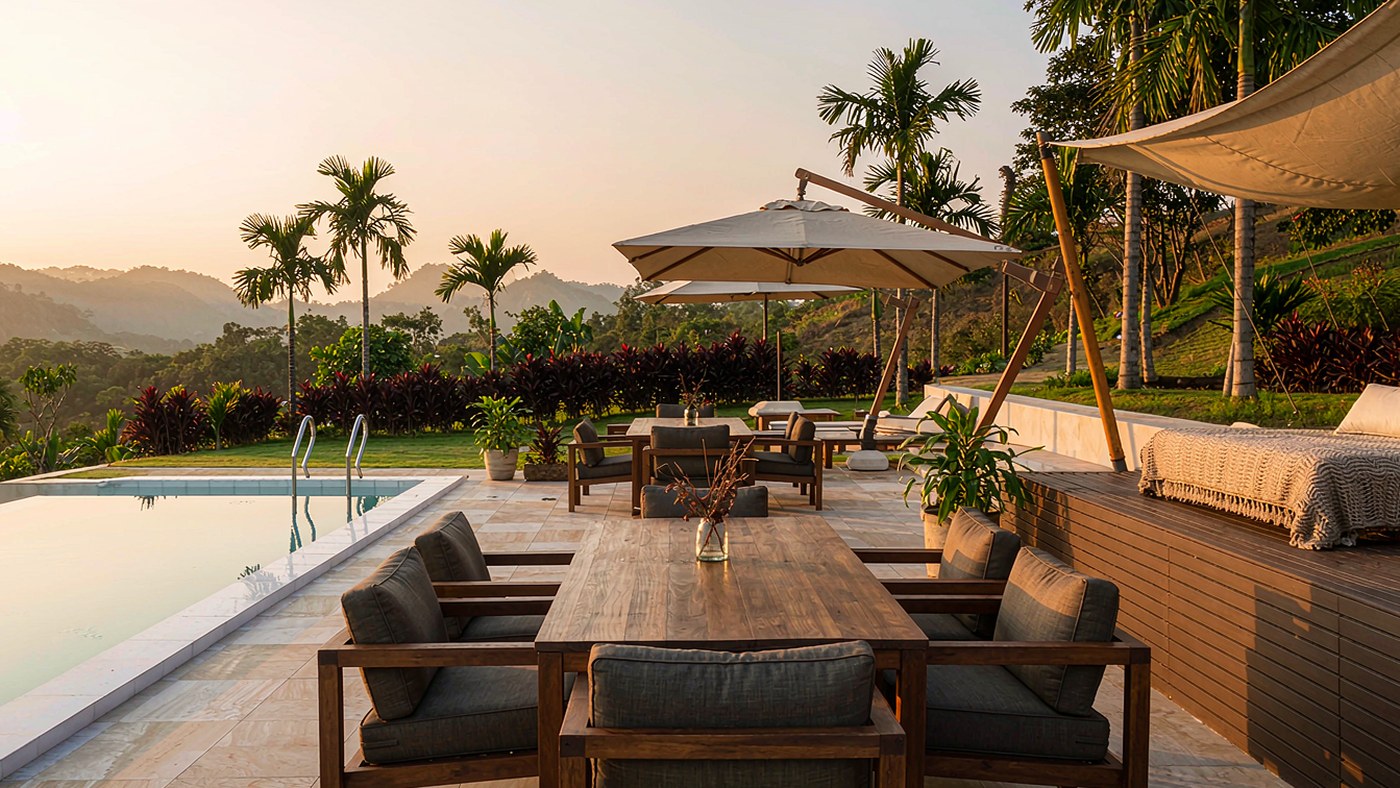
Outdoor furniture is usually the first FF&E line item a hotel replaces — and the one most often budgeted as an afterthought. A pool deck or restaurant terrace that opened to five-star reviews in year one starts failing quietly in year two: cushions that no longer look clean after washing, slings that have lost their stretch, teak that has silvered past what the brand standard allows. None of that is a procurement accident. It is what happens when nobody wrote an outdoor furniture replacement cycle into the capital plan.
This guide is a budgeting framework for hotel and resort buyers: what the FF&E reserve actually covers, how long each material really lasts in contract use, when a refresh beats a replacement, and how to phase a resort FF&E refurbishment across seasons without a visible dip in guest experience. The goal is a hotel outdoor furniture refurbishment budget that reads as an asset-management plan — and a clear answer to how to budget hotel patio furniture replacement before the complaints start, not after.
Why outdoor FF&E fails first
Three forces work on outdoor furniture that indoor casegoods never face. UV load drives fade and polymer breakdown in fabrics, rope and coatings. Wet-dry cycling — and at the poolside, chlorinated splash that dries into a concentrated film — attacks the wrong fastener grade first. And traffic: guests drag sun loungers across paving, staff stack and shift sets nightly, and every terrace chair absorbs a full sit-down hundreds of times a day.
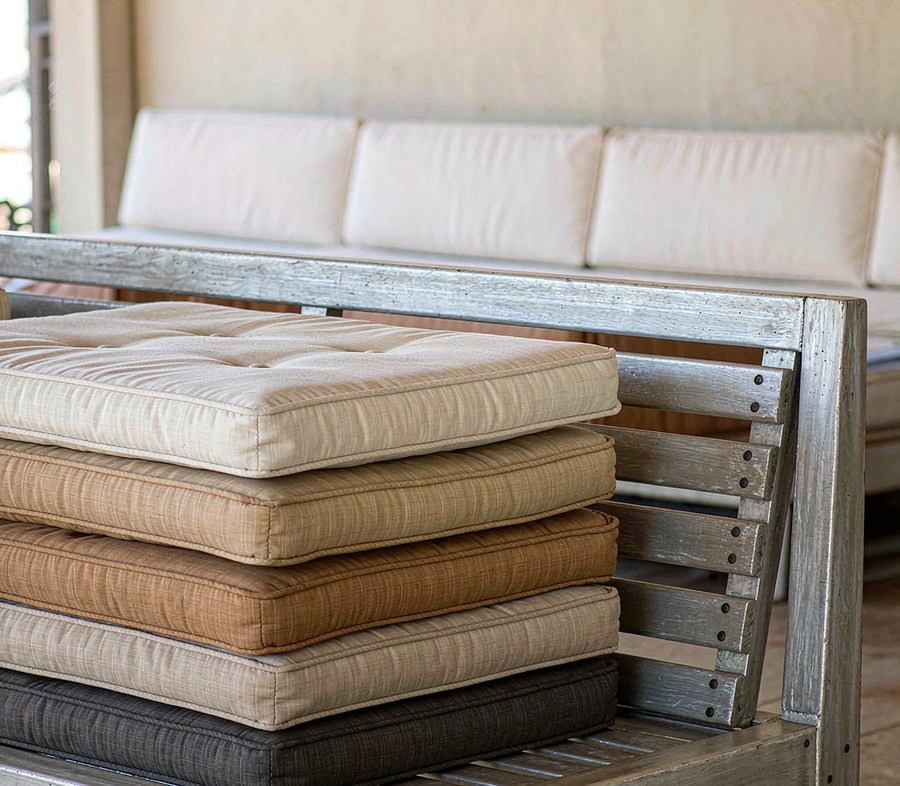
The result is that frames routinely outlive their soft components by years. The structural life of a powder-coated aluminium sofa set can run 7–15 years in contract use, while its cushions sit on a 2–5 year clock. Commercial outdoor furniture lifespan is therefore never one number per set — it is two or three overlapping cycles, and a budget that treats a set as a single item with a single life is how properties end up replacing sound frames because the cushions looked tired.
What the FF&E reserve actually covers
The FF&E reserve is a restricted capital account, mandated by lenders and management agreements, that funds replacement and refurbishment of short-life assets. Contracted contributions typically sit at 3–5% of gross revenue, with survey ranges running from about 1% to 5.5% depending on market and positioning. The hotel FF&E reserve percentage is a contract term, not a market rate — read your management agreement before planning anything.
One distinction decides most arguments: the reserve is not the maintenance budget. Routine cleaning, re-oiling, glide replacement and repairs come from operating expense; the reserve covers replacement cycles. Industry guidance splits those cycles — soft goods, the category that includes outdoor cushions, slings and parasol canopies, are planned on a 5–7 year refurbishment cycle, with outdoor and poolside FF&E specifically quoted at 4–6 years because exposure compresses it. Hard goods run far longer, typically 12–15 years. If the reserve is being consumed mostly by guestroom soft goods, the outdoor programme is the line quietly under-funded — and the outdoor zones are the ones guests photograph.
| Component | Planning cycle | What moves the number |
|---|---|---|
| Outdoor & poolside FF&E (overall) | 4–6 years | UV load, splash chemistry, nightly handling, storage discipline |
| Cushions, slings, canopies (soft goods) | 2–5 years | Fabric grade, foam type, cleaning regime, covered vs open siting |
| Frames — powder-coated aluminium | 7–15 years | Coating system and edge sealing, fastener grade (304 vs 316) |
| Frames — teak and hardwoods | 7–12 years | Drainage design, maintenance discipline, brand tone expectations |
| Synthetic wicker, rattan weave, resin | 3–7 years | UV exposure; covered terraces gain years, rooftops lose them |
| Stainless steel components | 10+ years | Grade selection and salt-deposit cleaning |
Refresh in place before you replace
The cheapest line in a refurbishment budget is the one you do not spend. Before quoting replacement sets, audit what a refresh can recover:
- Re-cushion: if frames are sound and finish intact, new solution-dyed acrylic cushions on original frames cost a fraction of new sets — and fix the most common guest-perception failure first.
- Re-sling: textilene and mesh slings are wear items; most contract frames accept replacement slings as a service part.
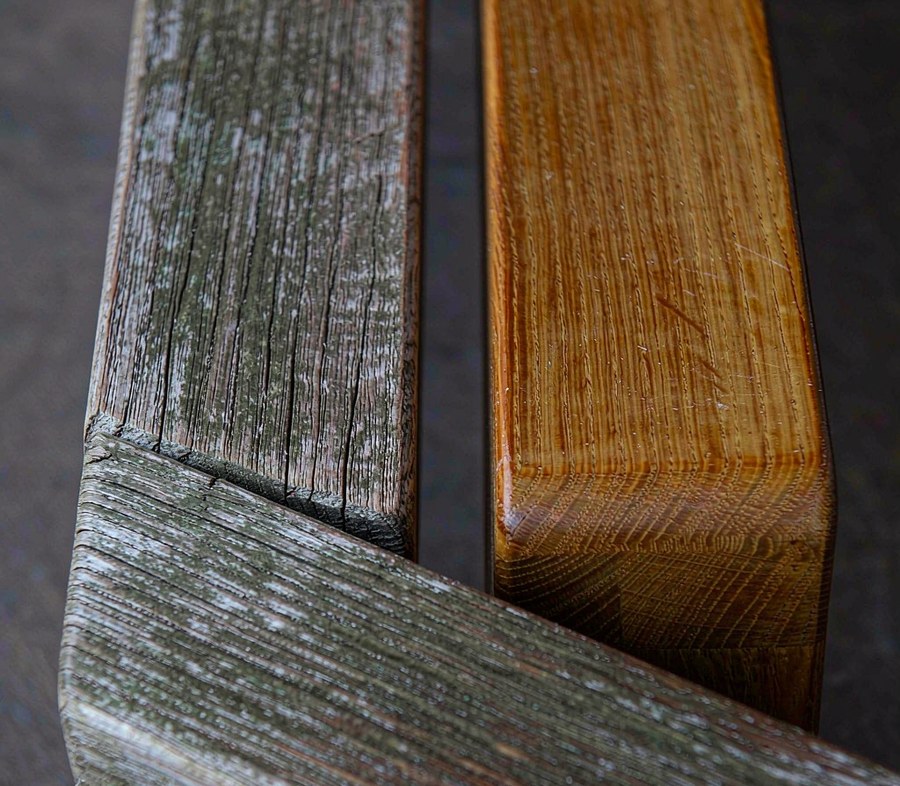
- Touch-up and re-oil: powder-coat chips can be repaired, and teak can be re-oiled where the warm tone is a brand requirement — or accepted as silver-grey where the design allows.
- Re-cover: parasol canopies are replaceable on quality frames; specify the canopy as a consumable from day one.
Two disciplines decide whether a refresh reads as new. First, batch matching: cushions and canopies reordered in year three must match the originals, so retain a sample and the original fabric or dye-lot reference in the asset file. Second, spare parts at first order — 5–10% spare cushions, slings and glides shipped with the initial order is cheap insurance against a mid-season gap, and a manufacturer that publishes wholesale reorder pricing on spares is telling you something about the next decade.
Phase the budget by zone
Very few properties should replace every outdoor zone in one year. Phasing by zone across 12–24 months smooths capital timing, keeps the estate photogenic throughout, and tests a design update before committing the whole property. Sequence by two factors: guest-perception impact and exposure.
| Phase | Zone | Why here | Timing |
|---|---|---|---|
| 1 | Poolside loungers, daybeds, side tables | Highest wear, most photographed, shortest cycle | Low season |
| 2 | F&B terrace dining sets and chairs | High traffic, direct revenue link, heavy handling | Between seasons |
| 3 | Lobby and arrival seating | First impression, moderate exposure | Shoulder season |
| 4 | Villa and suite terraces, garden corners | Lowest wear, frame families age slowly | Following year |
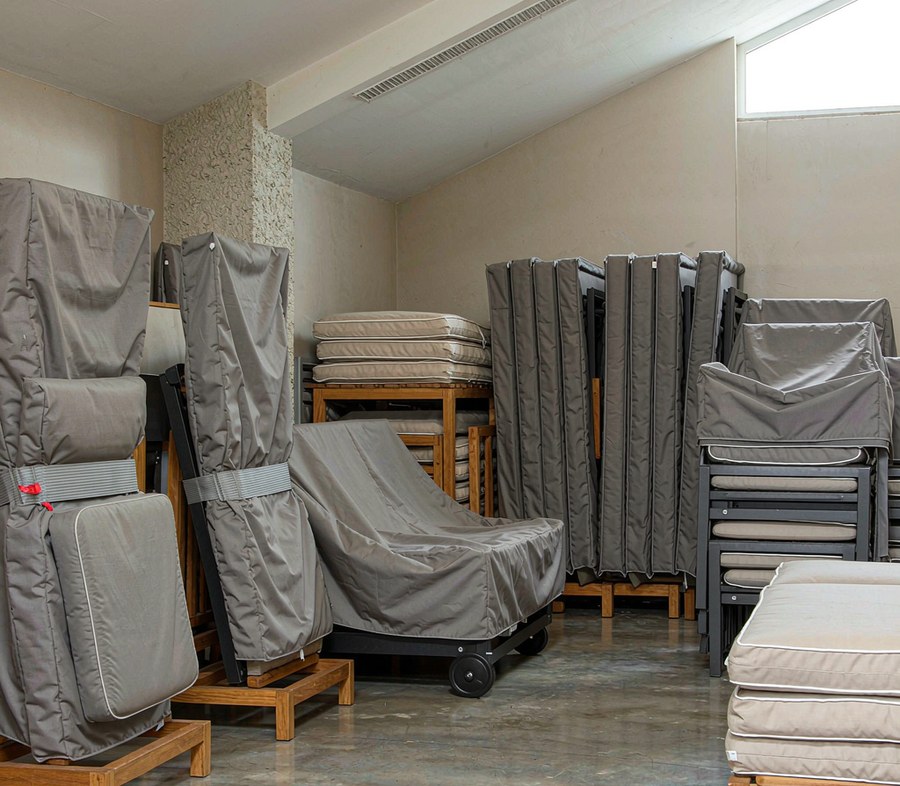
Two timing rules matter. Book production against your low season — a resort cannot take a pool deck out of service in peak weeks — and never let a phase land without covered interim seating. Then plan the storage arithmetic before the furniture arrives: a property that covers or stores soft goods in low season buys back a year or two of cushion life, the single highest-return line in the whole budget.
Consolidate the order, not just the budget
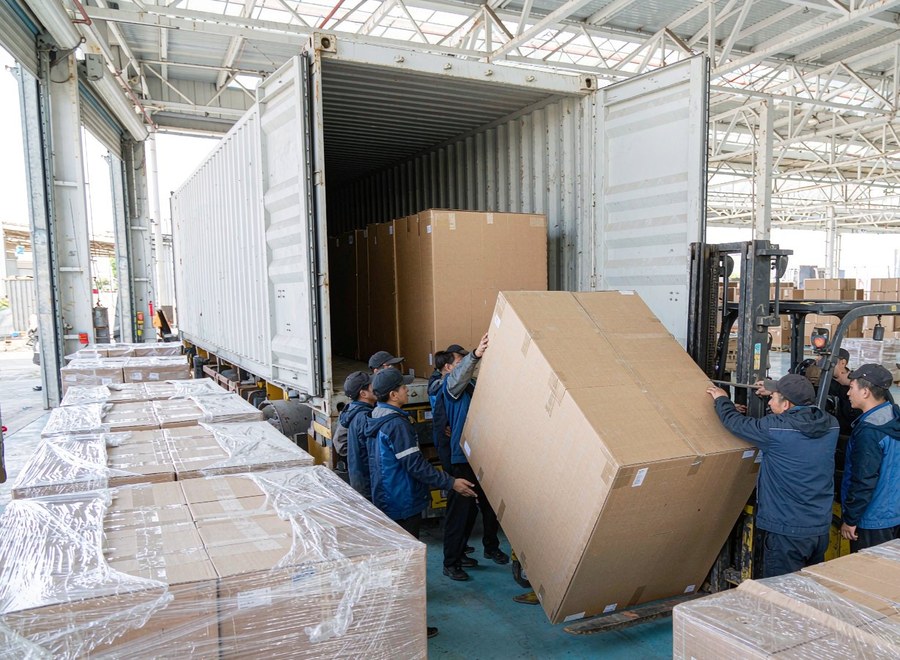
Phasing does not mean fragmenting procurement. A refresh that mixes loungers, dining sets and parasols from one manufacturer consolidates into fewer containers, one packing plan, one hardware specification and one accountable supplier — the same logic as an initial FF&E package. Where phases span years, ask the factory to hold the frame finish and fabric reference so year-three reorders match the year-one installation; custom OEM programmes with batch continuity are worth more than a one-off low price, and MOQ rules for phase reorders should be agreed in writing up front.
Freight belongs in the budget too. Consolidating a full phase into a single container loading usually beats drip-feeding mixed pallets, and a factory that plans the load by zone — loungers in one bay, dining sets in another, cushions last on top — cuts your installation labour on arrival.
Six questions before you sign the refurbishment budget
- What is the contracted FF&E reserve percentage in our management agreement, and what is left in it today?
- Which zones are inside the 4–6 year outdoor cycle now — and which frames are sound enough to re-cushion instead of replace?
- What spare-parts percentage (cushions, slings, glides, canopies) ships with this order, and is reorder pricing held?
- Can the factory batch-match cushions and canopies to the original dye lot in later phases?
- Which stainless grade are the fasteners — 304 or 316 — so this phase does not restart the corrosion clock?
- How will the order be container-loaded and delivered by zone, and what installation support is included?
A hotel outdoor furniture refurbishment budget is really a lifecycle document: it names the cycle for each material, protects the reserve from being consumed by soft goods alone, refreshes what is sound, and phases what is not. Do that, and the outdoor programme stops being the emergency line that arrives whenever guests complain — and becomes the line that keeps the property looking like its renders in season three.