Outdoor Furniture Warranty and Spare Parts: What to Settle Before the PO
The warranty line on a quotation is usually the most generous sentence in the document — and the least useful. A "10-year frame warranty" that excludes commercial use, starts at the origin port and covers parts but not labor tells you almost nothing about what happens in year three, when the cushions on a poolside sofa set have collapsed and the powder coat is chalking at the welds. This guide is for distributors, hotel procurement teams and resort fit-out buyers who need to read an outdoor furniture warranty policy the way an engineer reads a spec sheet: component by component, exclusions first.
The split warranty: frames get years, soft goods get months
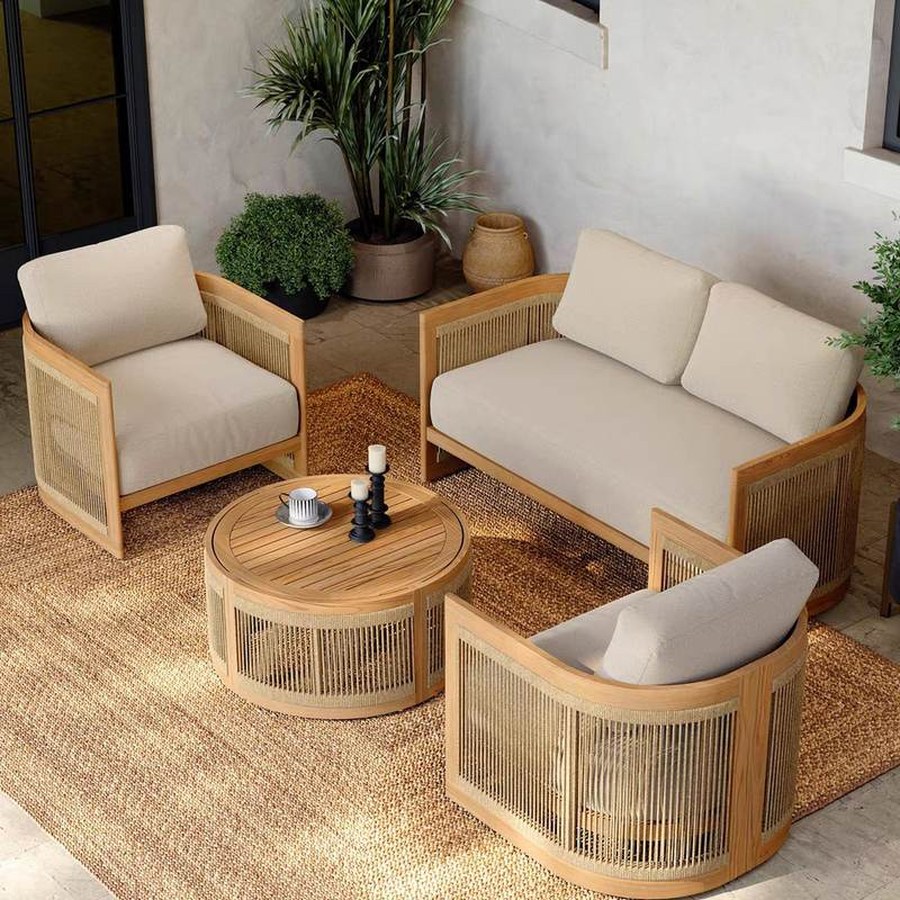
Every credible supplier splits cover by component, because the components fail differently. Frames carry the long numbers; soft goods carry the short ones. That asymmetry is not a red flag — it is how the industry prices risk — but it does mean the parts you will replace most often are the parts with the least protection. A typical commercial outdoor furniture warranty period looks like the table below; treat any quote that falls far outside these ranges as a question, not a bargain.
| Component | Typical commercial cover | Field failure it addresses | First question to ask |
|---|---|---|---|
| Aluminium frame (structural) | 3–5 years; 5 is near the ceiling | Weld separation, cracking under rated load | Which alloy and wall thickness — and is the period prorated? |
| Powder-coated finish | 2–5 years | Peeling, blistering, chalking beyond normal | How many salt-spray hours sit behind the coating spec? |
| PE rattan / rope weave | 2–5 years | Breakage, unraveling, fading beyond grade 4 | UV-stabilised PE, or a PVC blend that goes brittle? |
| Teak frame | 1–2 years, often shorter than aluminium | Splitting, joint failure | Does the period start at shipment or at installation? |
| Cushion construction and foam | 30 days–1 year | Seam slippage, zipper failure, foam collapse | Quick-dry core — and are spare covers available? |
| Cushion fabric (mill warranty) | Separate, often up to 5 years from the mill | Colorfastness loss, disintegration | Which mill — and is the mill warranty transferable to us? |
| Sling, strap or rope seating | 6–12 months | Breakage under tension | Part number and price of a replacement sling? |
| Parasol and base | 1 year, sometimes excluded | Canopy tear, base corrosion | Wind rating — and is a spare canopy in stock? |
Two rows deserve attention. Teak frames often carry shorter written cover than aluminium frames even though teak outlasts aluminium in the field, because warranty length is a statement about process confidence, not a ranking of materials. And cushion cover measured in months rather than years is normal: foam and fabric are wear items, and no clause changes that. The correct response is not to hunt for a longer warranty — it is to plan the spares.
Why the residential number on the product page is not your number
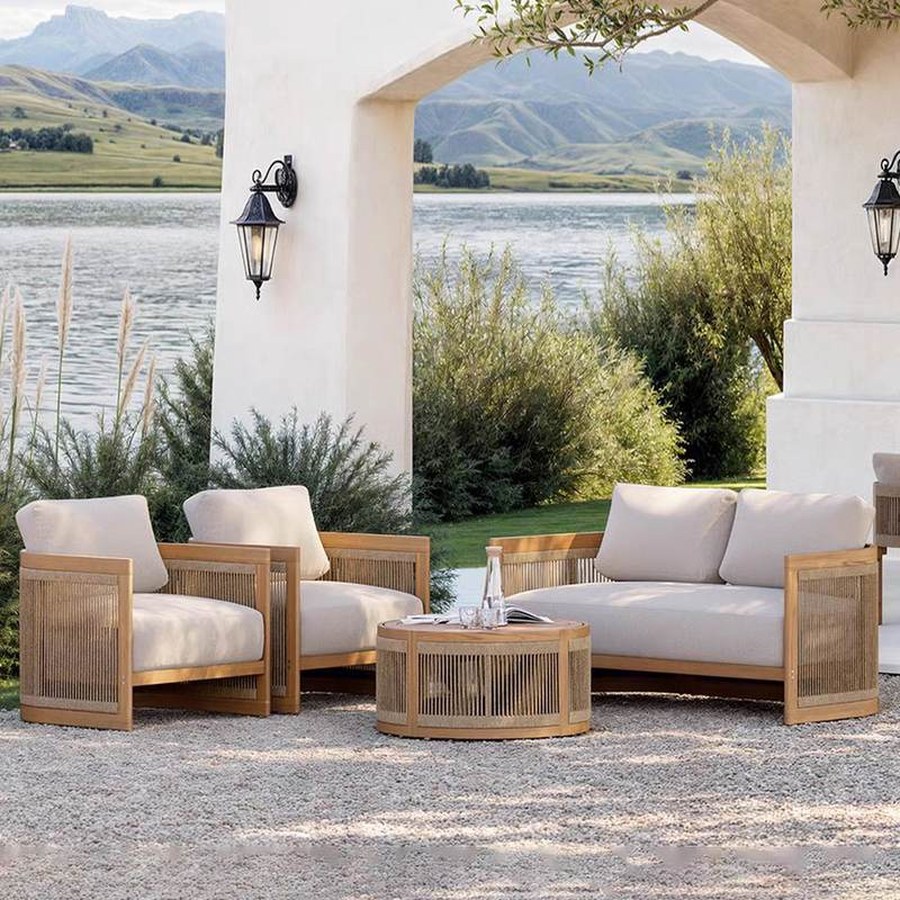
Most published terms assume a private patio. Several well-known brands state plainly that their residential warranty does not apply to commercial use, and others cover only models marked with a contract code — the same chair moved to a hotel terrace can drop from fifteen years of frame cover to five, one, or nothing. A resort sun lounger is sat on by dozens of guests a day, dragged across pavers, stacked nightly and wiped with strong cleaners; a home lounger sees a fraction of that load. For a hospitality order, ask for the contract or commercial warranty as a separate written document, and confirm that the exact SKUs on your purchase order appear on it. Some factories also publish a dedicated hospitality SKU with a reinforced frame, upgraded foam and heavier fabric, carrying a longer warranty than the residential equivalent — specify that SKU, not the lookalike from the catalogue photo.
What a credible claims process looks like

The period is the headline; the process is the product. Before you commit, ask what happens when fifty dining chairs arrive with weld cracks. A workable answer names a QC contact rather than a general sales inbox, follows a documented inspection protocol that separates manufacturing defects from use damage, and commits to a timeline — industry practice clusters around review within five business days, an initial response inside seven to fourteen business days, and resolution inside thirty to forty-five. Two clauses matter more than the calendar. First, an obvious factory defect should never require you to ship goods back at your own cost before a replacement is authorised. Second, check whether the remedy is repair, replacement or credit: a warranty that promises defects "will be addressed" without naming the remedy is not enforceable in any useful way.
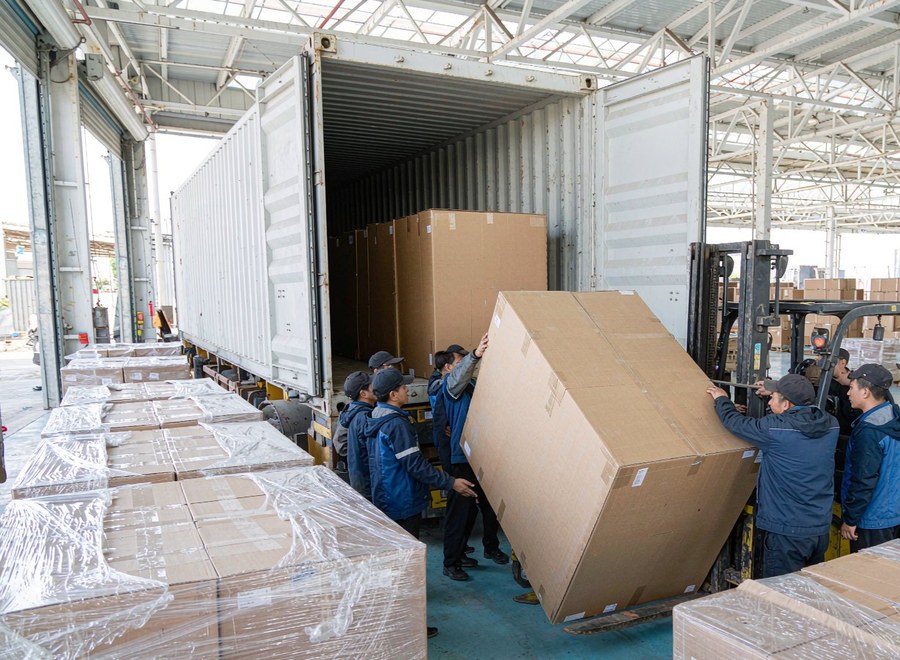
Two things sit outside the warranty entirely, and buyers lose money by confusing them with it. Freight damage is a carrier claim, not a product claim — note it on the delivery receipt at the port, photograph it, and claim against the carrier or the cargo insurance, because no factory can honour a warranty for a crate crushed in transit. And a replacement part does not restart the clock: the new cushion carries the remaining cover of the original order, not a fresh period.
The spare parts program is the real warranty
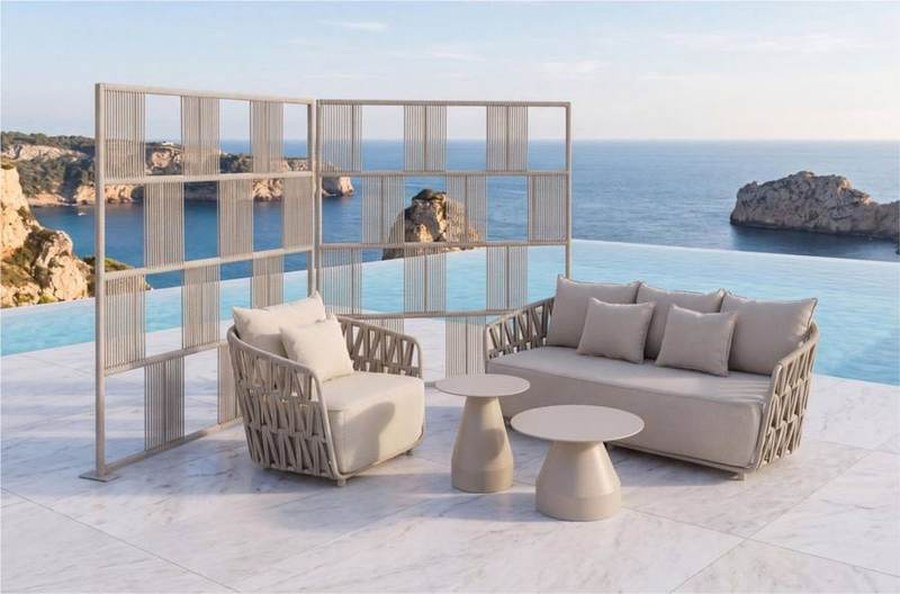
On a hotel or resort contract, the outdoor furniture spare parts supplier relationship outlives the warranty itself. Cushions, slings, parasol canopies and touch-up paint are consumables, and the factory that built your furniture is the only source that can match them. Replacement cushions for outdoor furniture are the most-ordered spare on any hospitality contract, and they are also the item most likely to arrive in the wrong colour. Three practices separate a planned spares program from an emergency.
First, order spares with the main container, not after it. Five to ten percent extra cushions and fabric, cut from the same dye lot, cost a fraction of a reorder and eliminate the cross-batch colour mismatch that makes a year-three top-up look wrong on the terrace. The same logic covers powder-coated frames: agree a Pantone or RAL reference at order stage and buy a matching tin of touch-up paint with the shipment, because a field repair in a slightly different grey is visible from across the poolside.
Second, demand traceability. Ask the factory to record batch and lot numbers per unit and to mark them on the product label, so a defect claim points at one production run instead of the whole order. Without it, every investigation becomes a debate about which container the bad chairs came from.
Third, price the spares line at order stage. If you order outdoor furniture spare parts wholesale alongside the main shipment, agree the spares MOQ and a price list — cushion sets, foam cores, covers, slings, canopies, touch-up paint — with part numbers, attached to the purchase order as an annex. A five-percent spares line on a two-hundred-piece resort order costs less than one reupholstery cycle, and it arrives in the same container instead of on a courier invoice six months later.
What to put in the purchase order
Warranty terms belong in the purchase order, not in a sales email. At minimum the document should state component-by-component periods in writing; define the start date (shipment at the origin port is the factory-friendly default, delivery or installation the buyer-friendly one — choose consciously); name the remedy and who pays freight in each direction; state whether labor is covered, since labor is often the larger hospitality cost; attach the spare parts price list; and set a claims response time in business days. Ask for the test reports behind the numbers — salt-spray hours behind the coating specification, and a grey-scale rating of 4 or better after 1,000 hours of xenon or QUV exposure for cushion fabric. A supplier who cannot produce those documents is asking you to take the warranty on trust.
Questions to ask the factory before the deposit
- Which of these SKUs are approved for commercial use, and can you send the contract warranty as a separate document?
- What is your documented claims process — who inspects, how do you separate a manufacturing defect from use damage, and what are the response and resolution timelines?
- If a batch arrives with a frame defect, do you require the goods returned at our cost before replacements ship?
- How long do you keep moulds, weave stock and fabric lots for a SKU after the production run ends?
- Can replacement cushions, slings, canopies and touch-up paint ship as a wholesale spares line with the main container?
- What is the lead time and courier cost for one spare cushion set to our destination port?
- Does the warranty cover labor and freight, or parts only — and does a replacement part carry the remaining original period?
Put these seven questions to every outdoor furniture manufacturer you shortlist and the answers will tell you more about the next five years than any headline number. A factory that replies in writing, with documents attached, is a factory that expects to still be shipping your replacement cushions in year four.