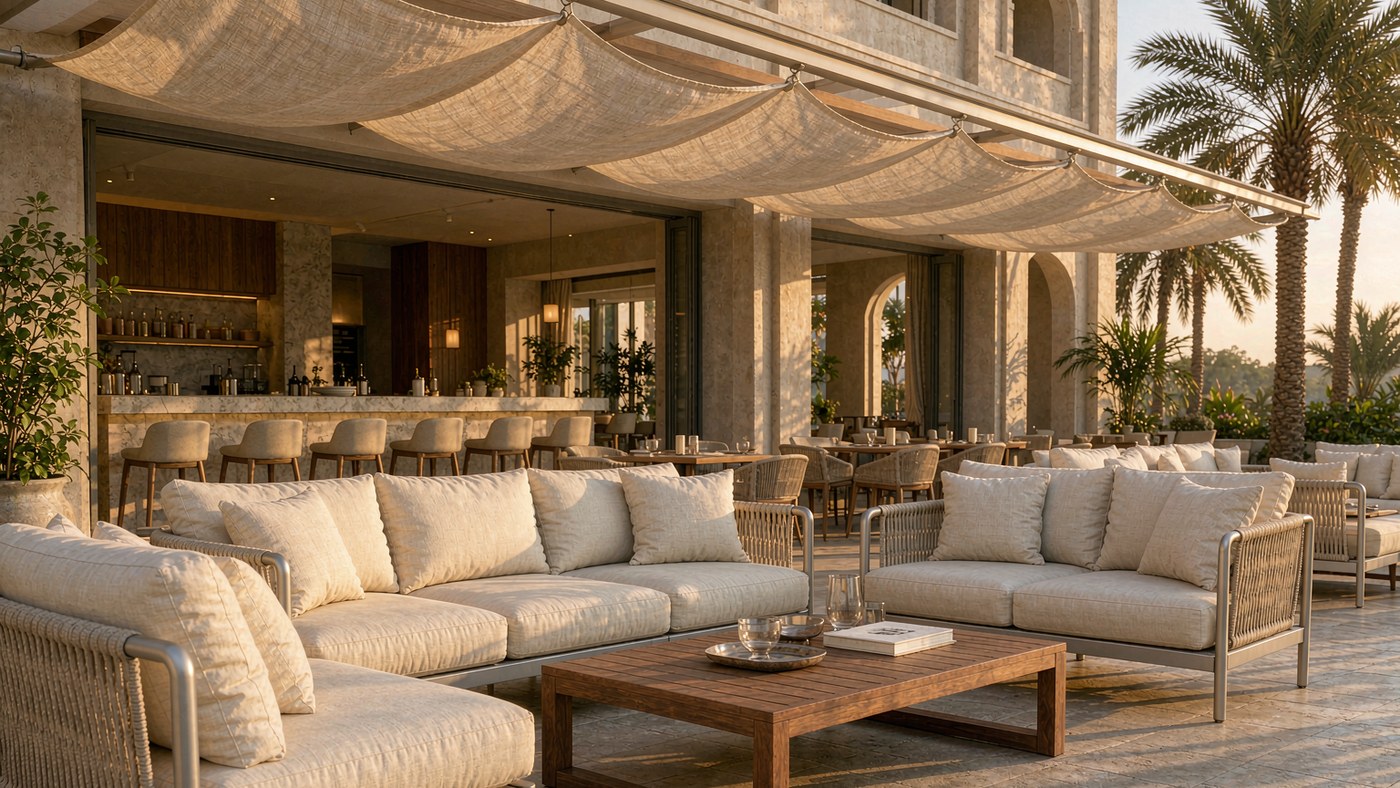
Cushions fail first. On a commercial terrace, the foam flattens, the fabric fades and the zips seize long before the teak frame or the powder-coated aluminium frame with rope weave shows its age — and the cushion is also the only part of an outdoor sofa set that carries a fire specification. Most buyers never ask for one.
This guide is for buyers specifying flame retardant outdoor cushions for hotels, resorts, restaurants and poolside projects: what the regulations actually require, what the major fire tests measure, the two fabric routes and their trade-offs, the foam question underneath, and the wording that puts a flame retardant outdoor cushion specification into a purchase order.
The regulations are not the specification
Start with the fact that surprises most buyers: in the United States, California Technical Bulletin 117-2013 — the standard behind the flammability labels on upholstered furniture, adopted federally as 16 CFR Part 1640 in June 2021 — explicitly exempts "cushions and pads intended solely for outdoor use." A patio cushion sold for home use carries no US flammability obligation at all.
Hotel specifications ignore that exemption, and they are right to. A resort restaurant terrace is a semi-covered space metres from guest rooms, furnished with cushions that spend their life dry, sun-baked and within reach of candles, kitchen heat and smoking areas. The fire officer's risk assessment for the venue, the insurer's conditions and the brand's own FF&E standard all write their own requirements — none of them read the outdoor exemption. When you brief a factory, the regulation is the floor; the venue specification is what you actually buy.
| Standard | Market | Ignition source | Pass criterion |
|---|---|---|---|
| TB 117-2013 / 16 CFR 1640 | USA | Smouldering cigarette | Mock-up based; vertical char length must stay within limits |
| NFPA 260 Class 1 | USA | Cigarette | Class 1 rating, commonly written into contract specs |
| EN 1021-1 | EU | Lit cigarette | No progressive smouldering after 60 minutes; no spread to rig edges |
| EN 1021-2 | EU | Match-flame equivalent, 15 s | Self-extinguishing within 120 s of flame removal |
| BS 5852 (sources 0/1/5) | UK | Cigarette, match, wooden crib | Crib 5 (source 5) for most commercial settings |
| IMO 2010 FTP Code Part 8 | Marine | Cigarette and flame | Upholstered furniture on SOLAS vessels |
Two details in that table decide real orders. First, the European tests are run on the combination of cover fabric and filling — a fabric certificate alone does not make a compliant cushion, which is why the foam line in the spec matters as much as the fabric line. Second, EN 1021 requires chemically flame-retarded fabrics to be water-soaked and dried before testing; that pre-treatment exists because surface-applied treatments wash out, and the test is designed to catch exactly that.
The standards map: what each test actually does
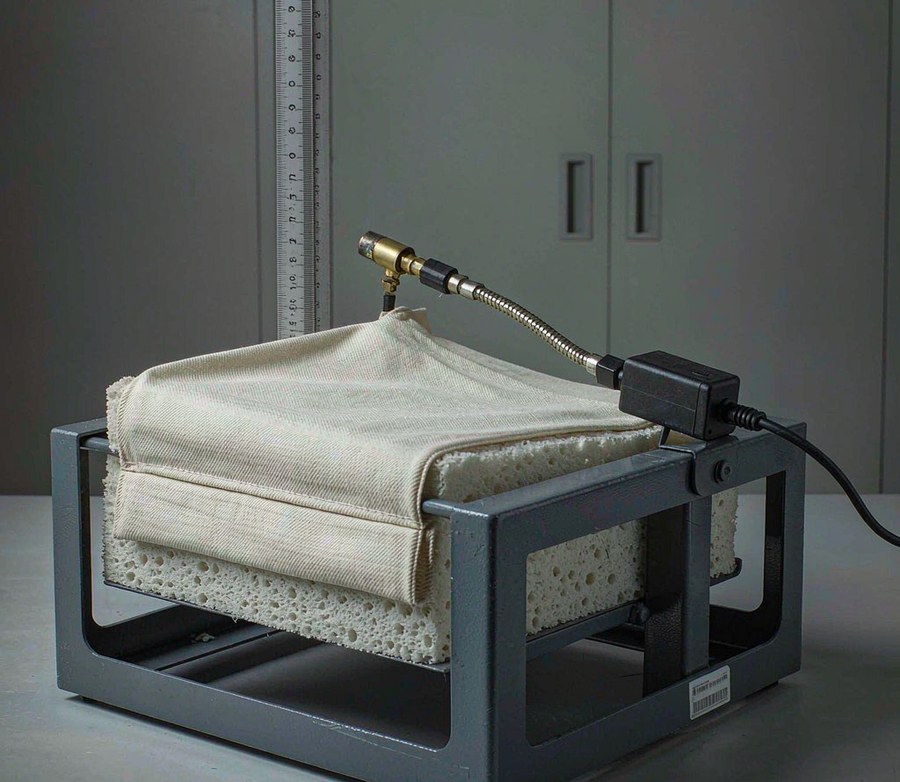
Read the standards map as a set of simulated accidents. TB 117-2013 and EN 1021-1 drop a lit cigarette into the crevice between seat and back — the smouldering ignition that starts most furniture fires. EN 1021-2 holds a match-sized flame against the fabric for fifteen seconds and demands the flame dies within two minutes of removal. BS 5852 climbs the same ladder in named steps: source 0 (cigarette), source 1 (match) and source 5, the wooden crib that burns like a small waste-bin fire and is the bar most UK pubs, hotels and public buildings are held to.
For buyers, the practical reading is this. For mainland Europe, EN 1021-1 and -2 on the composite is the baseline, and hospitality spec writers ask for both. For the UK, expect a venue fire officer to name BS 5852 sources and, for busier settings, Crib 5. For marine work — daybeds on charter yachts, loungers on ferries — the furniture test sits under the IMO FTP Code. And in the US, contract specs typically write NFPA 260 Class 1 or the federal smolder standard even though pure outdoor use is exempt, because the venue's own risk assessment does not care about the exemption.
Fabric routes: inherent IFR versus topical treatment
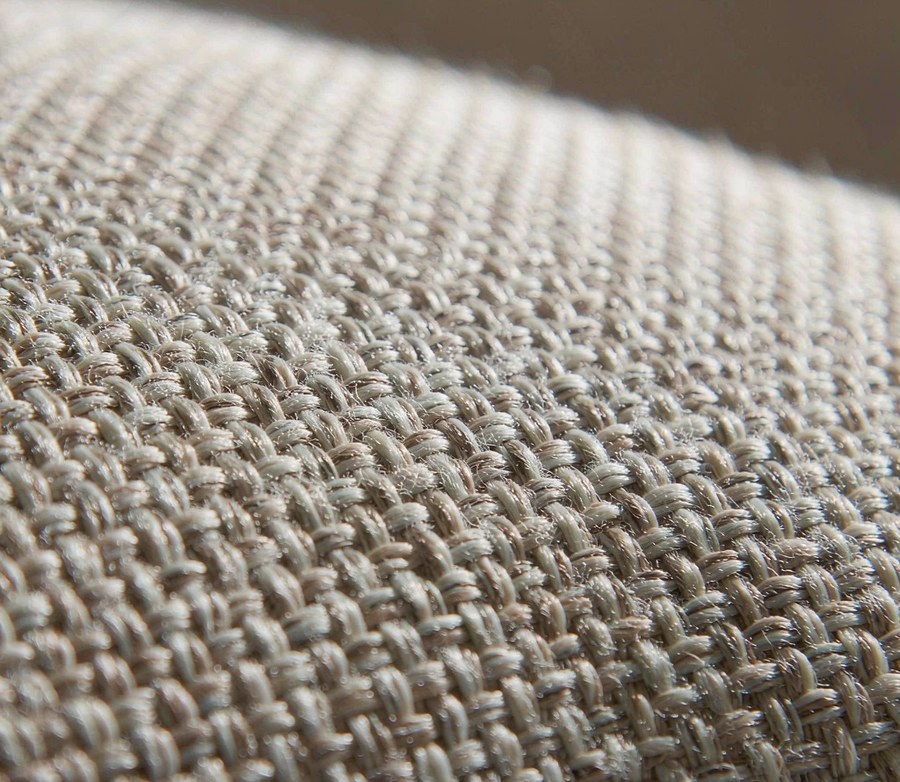
Outdoor cushion fabric is normally solution-dyed acrylic — colour is pigmented into the fibre before weaving, so it fades slowly under UV. What buyers miss is that weather resistance and flame resistance are separate properties. A standard solution-dyed acrylic is not automatically a fire retardant outdoor fabric, and the two routes a factory can offer behave very differently over a terrace's life.
| Inherent (IFR) | Topical / back-coated | |
|---|---|---|
| How it works | Flame-retardant property built into the fibre or the solution-dyed formula before weaving | FR chemistry applied to the back of the woven cloth as a coating |
| Survives cleaning? | Yes — it cannot leach or wash out | Degrades with washing, abrasion and weathering |
| Typical claims | NFPA 701/705, ASTM E84 Class 1, California Title 19, UFAC / NFPA 260 Class 1 | Passes the ignition test as supplied; may fail after wetting or wear |
| Best for | Hotel, resort and restaurant cushions cleaned repeatedly | Budget-led or short-life projects |
The practical test is one question to the mill or the factory: was the fabric tested as supplied, or after the water-soak procedure? A report that only covers the as-supplied state is telling you half the story. The fire retardant outdoor fabric standards behind these claims — EN 1021-1/-2 in Europe, NFPA 260 and TB 117-2013 in the US, BS 5852 in the UK — all exist to separate the two routes, and an FR outdoor cushion hotel order should name the standard, not the adjective.
Foam: the layer buyers forget
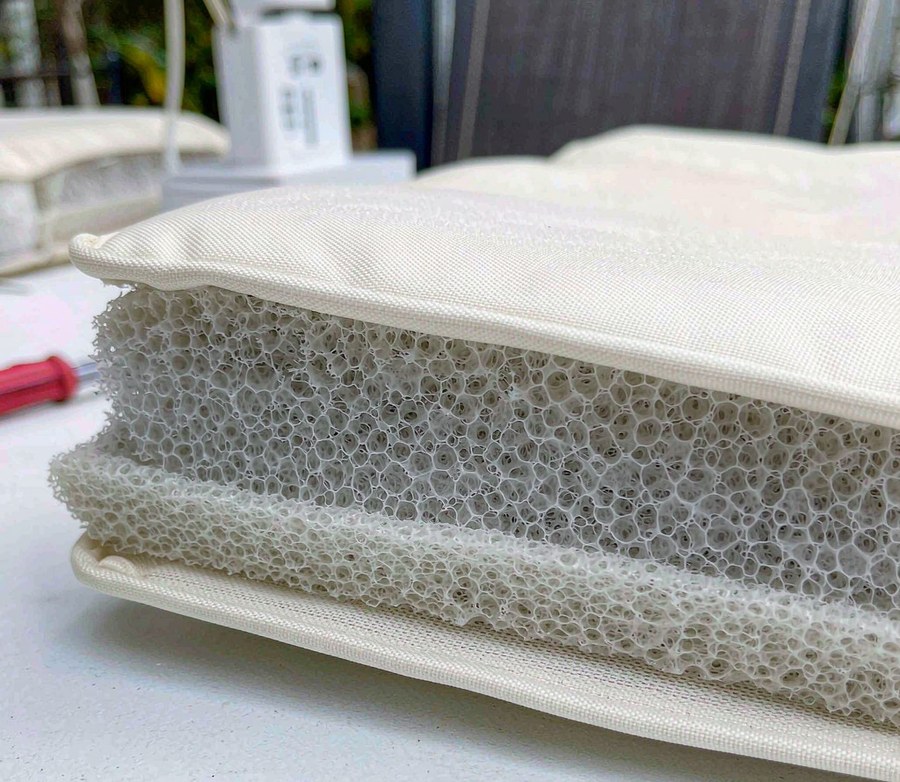
Contract cushions live on a compromise. The outdoor ideal is reticulated open-cell quick-dry foam: water passes straight through, so a sun lounger cushion dries in hours instead of days and never grows a mildew core. The fire-specification ideal is a combustion-modified high-resilience (CMHR) grade — foam whose flame retardants are chemically bonded into the polymer, which is what passes the UK's Crib 5 test and most commercial ignition assessments. Neither property implies the other.
Outdoor cushion foam type for contract use therefore has to be specified as its own line, not inherited from the fabric choice: open-cell reticulated quick-dry where drainage dominates and the venue tolerates it; a CMHR or FR quick-dry grade where the fire specification demands it. Ask which grade the factory is quoting and get the test report that matches — a reticulated foam can pass an ignition test, but "it drains fast" is not evidence that it does. Density matters separately again: firmer, higher-density cores hold their shape under commercial sitting, and the figure belongs in the spec next to the thickness.
Writing the specification
A cushion specification that survives a factory quote and a fire inspection is four lines long. Write it into the purchase order, not the email:
- Covers: solution-dyed acrylic, inherently flame retardant, [colour/ref], tested to EN 1021-1 and EN 1021-2 as a composite with the filling, test report per production lot.
- Filling: [reticulated quick-dry / CMHR] foam, [density] kg/m³, [thickness] mm, with breathable mesh base.
- Construction: removable zipped covers; zip, thread and piping matched to the cover lot.
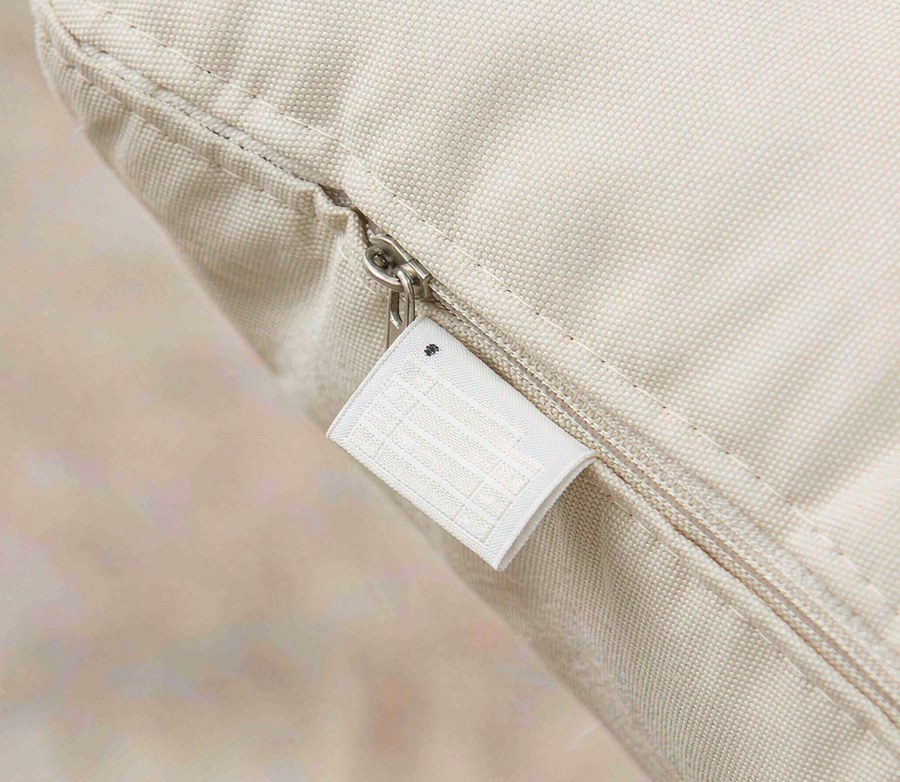
- Labels: permanent care/compliance label sewn into each cushion seam — standard, maker name, batch number.
Three habits make that specification real rather than decorative. First, ask for the test report per lot — FR performance is a property of the batch, and a mill certificate from last year's dye lot proves nothing about this container. Second, keep the label requirement: UK regulation requires a permanent label with the maker's name and a batch number on regulated upholstered furniture, and that same batch number is what lets you re-order matching fabric eighteen months later. Third, order spare covers with the first container — five to ten percent of the cushion count is the cheap version of the alternative.
Replacement, reorders and the questions to ask
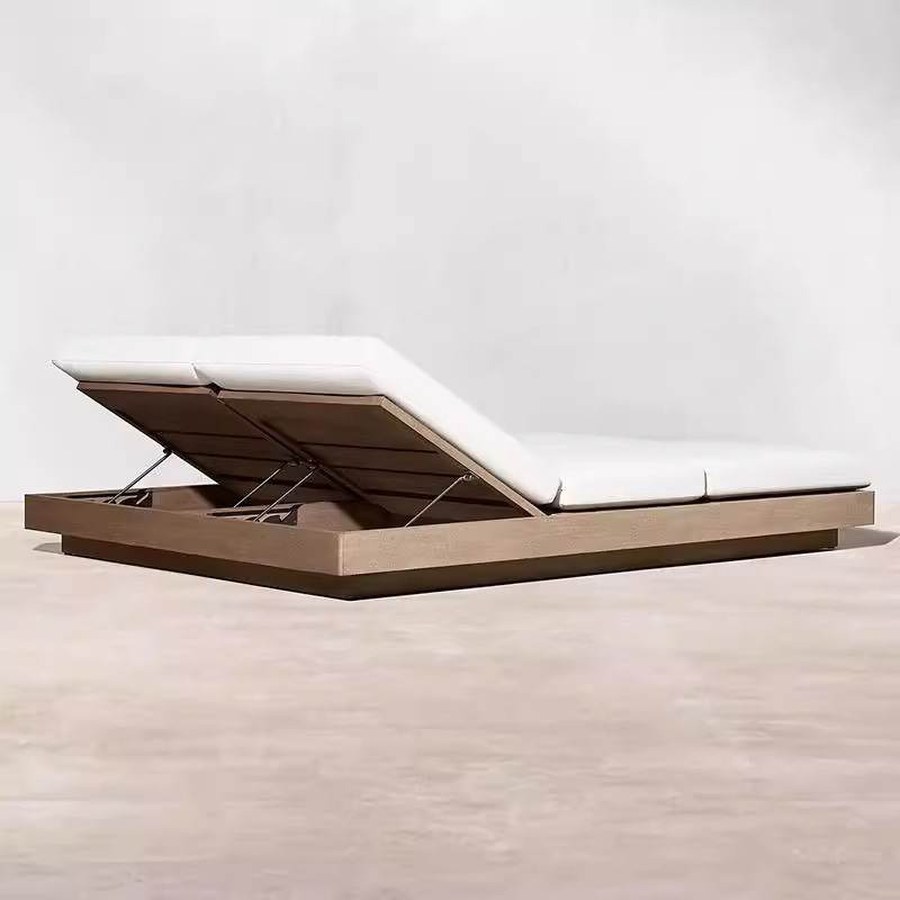
Plan commercial outdoor cushion replacement as a consumables cycle, not a warranty event. Fabric fades, foam takes a set, and no frame specification postpones either. The reorder question is decided at the original order: if the fabric lot, the foam grade and the label batch number were documented, a re-cover refresh is a purchase order; if not, it is a re-design.
Five questions separate a factory that can hold an FR specification from one that quotes around it:
- Which standard and part does your cushion fabric pass — and tested as supplied or after water soaking?
- Is the test report issued per production lot, and can you send it before shipment?
- Which foam grade sits under the cover: reticulated quick-dry, CMHR, or a blended FR grade — and what is its density?
- Do covers and cushions carry a permanent label with maker name and batch number?
- Can spare covers and replacement foam cores be ordered against the original batch reference?
A factory that answers all five in writing has a controlled upholstery process; one that answers with brand names on a swatch card does not. Specify the standard, keep the paperwork per lot, and the cushions — not the frames — stop being the weak link in the FF&E schedule.