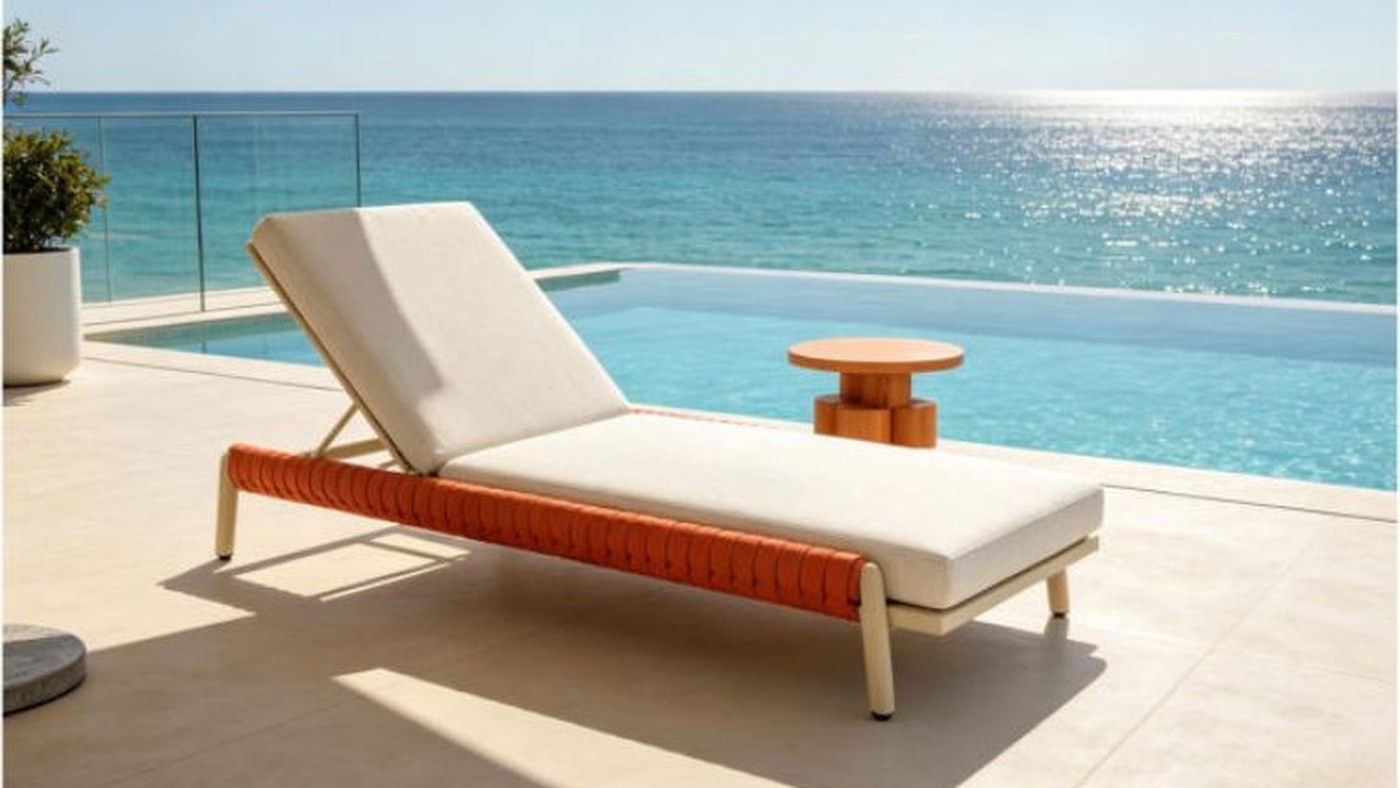
Why a ship deck is not a hotel terrace
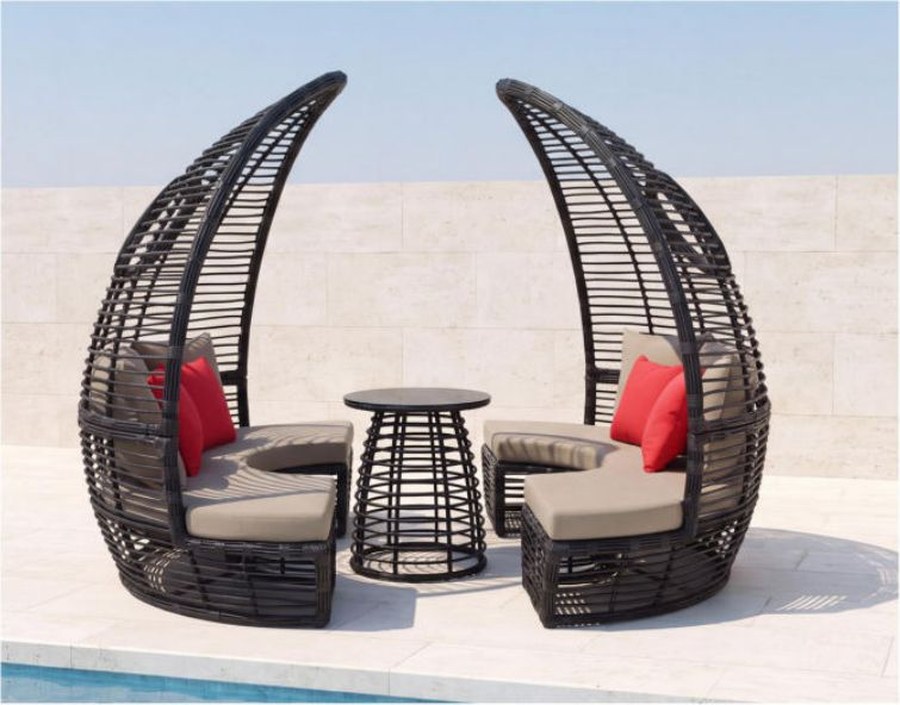
A resort pool terrace and a cruise ship open deck can look identical in a render, yet they fail for completely different reasons. A ship deck is exposed to open-sea air around the clock, moves under the furniture every hour of the voyage, and is cleaned daily by a crew who cannot drive to a supplier for a replacement part. Cruise ship deck furniture that is specified like hotel furniture tends to fail early: coatings lift at the fixings, cushions stay wet, and loose pieces slide on a wet teak or composite deck in a beam wind.
This guide is written for the FF&E buyer, interior designer, naval architect's team or marina operator comparing marine grade outdoor furniture for cruise ships, ferries, superyachts and waterfront clubs. It covers the five stressors that define a marine specification, the material systems that answer them, the fire and documentation regime that governs upholstered items, fixing and layout decisions, and the logistics of delivering to a shipyard. The same logic scales down to a marina pontoon or a yacht club terrace.
The five stressors that define a marine specification
| Stressor | What it does | What answers it |
|---|---|---|
| Salt spray and salt aerosol | Chloride pitting of metal, coating creep at edges and fixings | 316 stainless fixings, marine-grade aluminium alloys, epoxy-primed powder-coated systems |
| UV and heat | Fades and embrittles non-stabilised fibre and fabric | Solution-dyed acrylic, UV-stabilised rope and rattan wicker |
| Motion and wind | Loose pieces slide, tip or shift in rough weather | Deck fixing, low centre of gravity, heavier bases, stowage plan |
| Fire regulation | Upholstered items must resist ignition and limit smoke | IMO FTP Code Part 8 tested constructions, class-society documentation |
| Weight and space | Every kilogram counts across hundreds of pieces; decks are tight | Aluminium frames, bespoke reduced-depth seating, stackable dining |
Two of these are routinely underestimated. Salt does not simply corrode; it drives moisture into crevices and beneath coatings, so the failure starts at welds, edges and fixings rather than on open faces. And a deck is a moving floor: furniture that is perfectly stable in a showroom becomes a projectile or a trip hazard when the vessel rolls, which is why loose deck items are secured and open decks are restricted in heavy weather as a matter of shipboard routine. Write all five stressors into the cruise ship deck furniture specification itself — not into a cover email — because that document is what the yard and the flag state will hold you to.
Frame, timber and fibre: the material system
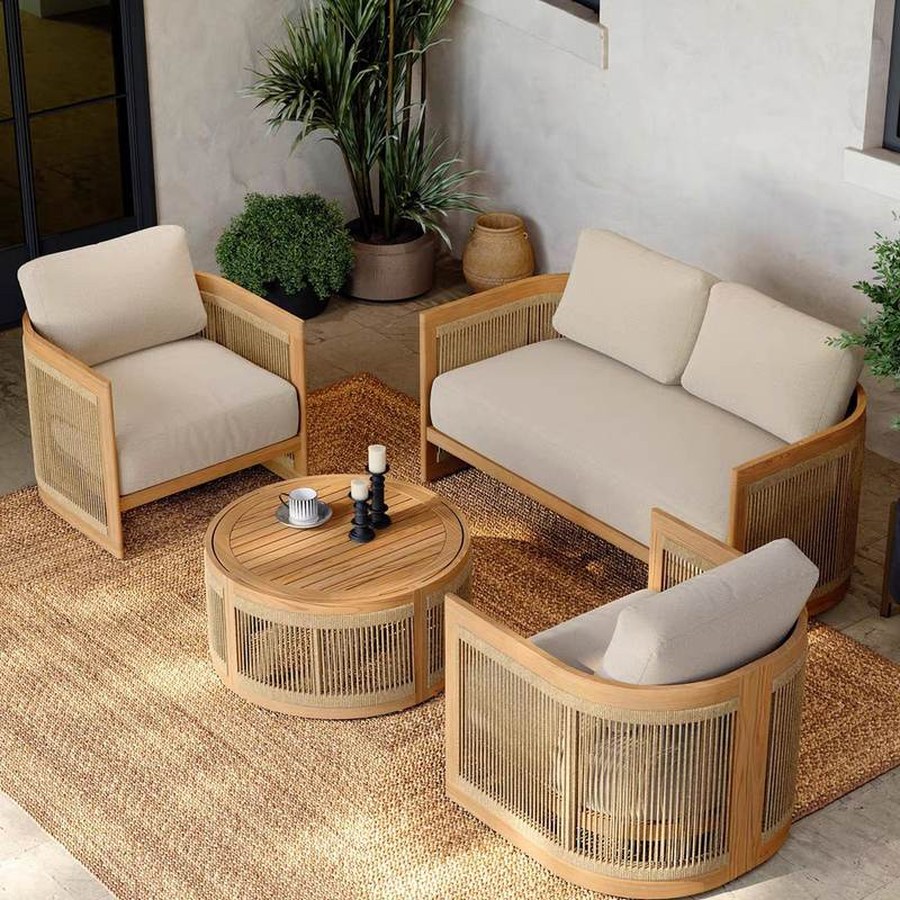
Specify the system, not the surface. Three frame routes dominate contract marine work. 316 stainless steel — roughly 16–18% chromium, 10–14% nickel and 2–3% molybdenum — is the reference for chloride exposure, and the molybdenum is the element that resists pitting. Marine-grade aluminium in structural alloys such as 6063 or 6061 with a marine powder-coated finish over epoxy primer is the lighter route: film builds of 80–120 microns with primer are the marine range, against 40–60 microns for standard outdoor work. For splash zones and anchorages, request a salt-spray report on the finished frame — 500 hours to ASTM B117 is a reasonable inland figure, and 1,000 hours is the number to ask for where spray is continuous.
Teak remains the marine timber standard for a physical reason: natural oils and silica make it dimensionally stable in constant wetting, and it stays grippy underfoot when wet — even after it weathers to silver-grey. For furniture, that means solid teak frames and slats on sun decks and promenades; specify grade (FEQ heartwood) rather than the word "teak" alone, because plantation stock with more sapwood moves and weathers unevenly.
For woven and slung surfaces, UV-stabilised rope (olefin or HDPE), PE rattan wicker and textilene sling all work at sea provided the fibre is solution-dyed or otherwise stabilised — colour is then locked into the polymer rather than printed on. Where a guest sits on upholstery, insist on reticulated quick-dry foam that drains in minutes and covers in solution-dyed acrylic or a marine-grade performance textile, with removable, washable covers so a crew can replace a soiled cover without replacing the cushion.
Fire code and documents: what the paperwork must say
On a passenger vessel, fire performance is not a preference. Upholstered furniture installed on ships is assessed under the fire-test regime associated with SOLAS Chapter II-2, most often through the IMO FTP Code Part 8 upholstered furniture test, which exposes a construction to a smouldering source and a small open flame and measures resistance to ignition. The test result belongs to the whole construction — cover, foam and any fire-blocking layer — not to the fabric alone. Change one layer and you have changed the tested product.
Practically, that means the document pack is the specification. Ask for the FTP certificate or a classification-society document (Lloyd's Register and peers issue them) that names the exact fabric, foam and construction you are buying, and check the scope on the certificate matches the item and the vessel's requirements — acceptance ultimately sits with the flag state and the project. A verbal "it is IMO compliant" is worth nothing at a shipyard gate. The same discipline applies to load claims: a stated safe load per seat, with a report, is a contract term; "marine grade" printed on a label is not.
Fixing, weight and layout: the decisions made on board
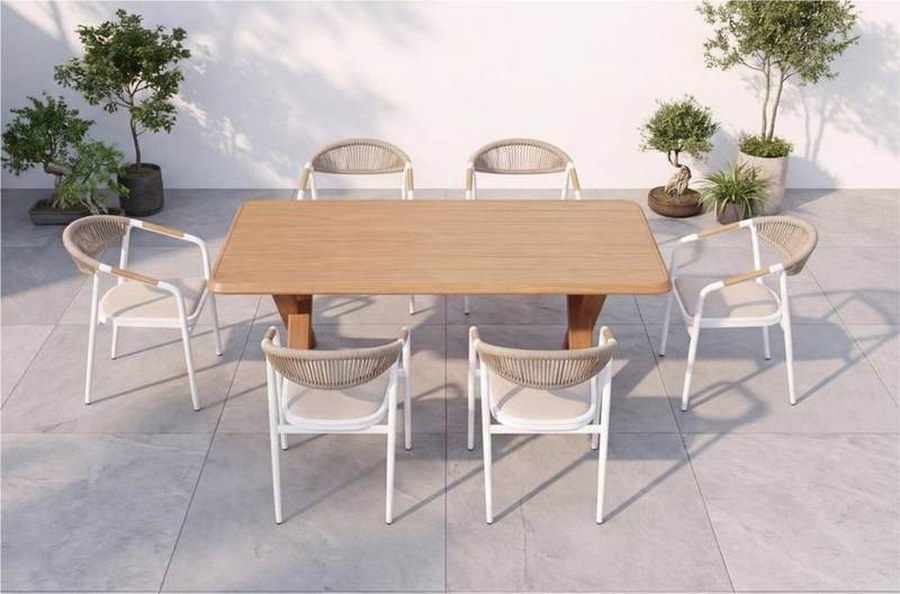
Start from the approved deck plan, not the catalogue. Clearances, routes and capacities come from the vessel's safety plan and the naval architect's drawings; a layout that only works when every chair is pushed fully under the table is not a layout. Decide for each piece whether it is fixed, movable or stowed: pool-deck seating, open-air dining and fixed banquettes are commonly bolted to the deck with aluminium or 316 fixings, while occasional seating and quiet-corner pieces need a defined storage destination and a route a crew member can actually carry them along.
Weight is a design input, not an afterthought. A large ship carries thousands of furniture pieces, and naval architects ask for per-piece weight data because the total affects balance and fuel. Heavier pieces are sometimes deliberately specified on exposed decks to resist movement in wind; lighter is not automatically better. For a marina or a pontoon — a floating, moving structure — the same logic applies at smaller scale to marina pontoon furniture: backless benches give 360° access, seat surfaces shed water, and everything is anchored for the pontoon's movement rather than for a static slab. Yacht clubs and marinas buy through the same lens, and a yacht club outdoor furniture supplier should be able to answer the same five questions as a shipyard vendor.
Match the furniture to the deck zone
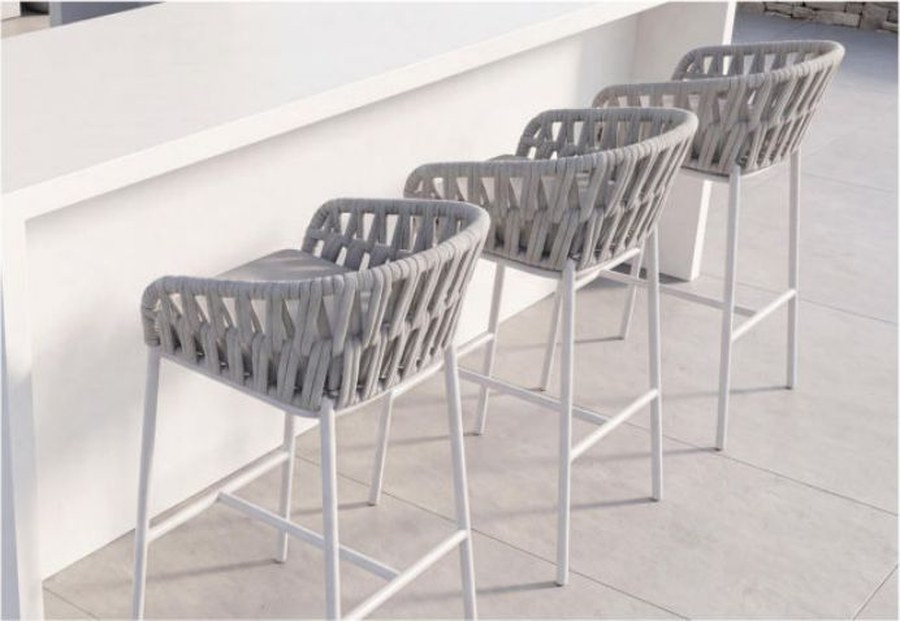
Cruise ship deck furniture fails most often where one look was copied across every zone. Plan the deck zone by zone instead, because the pool deck, the lounge bar and the open-air restaurant stress the same chair in different ways.
| Deck zone | Typical pieces | What matters most |
|---|---|---|
| Pool and sun deck | Sun lounger, daybed, side table | Rinses clean, quick-dry cushions, replaceable covers |
| Lounge and bar deck | Sofa set, armchairs, coffee table, bar stool | Long-stay comfort, modular rearrangement, fixed positions in wind |
| Open-air dining | Dining set, stackable chairs | Stability on a moving deck, fast cleaning, stacking route |
| Promenade and quiet corners | Bench, swing chair, accent seating | Footprint, sightlines, secured in heavy weather |
| Balconies and terraces | Bistro set, compact chair | Compact dimensions, low weight, drainage |
Freight, delivery and life in service

Marine furniture is usually delivered to a shipyard or refit berth against a fixed installation window, so the packing list is part of the specification. Require palletised, clearly labelled cartons grouped by installation area — a yard receiving from hundreds of suppliers cannot hunt for unlabelled crates — and agree a spares plan before the first order: cushion covers, rope or sling sections and replacement glides are the parts that wear first, and a reorder months later from a different dye lot is how a deck ends up mismatched.
In service, the routine is short: a fresh-water rinse to remove salt, pH-neutral soap on woven surfaces, no solvents or close-range pressure washing, and a hand-check of fixings and welds each season. Salt left on a frame keeps working after the surface looks dry.
Five questions settle a marine quote. Which alloy and coating system is the frame, and what salt-spray hours does the finished piece carry? Is every metal fixing 316 or marine aluminium? For upholstered items, which exact fabric-foam-barrier combination is fire-tested, and can I see the certificate scope? What is the stated safe load per seat and the weight per piece? How is the order packed, labelled and delivered to the shipyard, and which spare parts are held? A buyer who gets these answers in writing before the deposit rarely argues on installation day.
PatioHue Outdoor manufactures fully welded aluminium and teak contract furniture in Foshan — sun lounger, daybed, sofa set, dining set, bar stool and bench programs for hotel, resort, marina and wholesale buyers, with marine-grade material and finish specifications and custom OEM options. Send a deck plan or a pontoon layout with target quantities; we will return a matched specification, weight data and a shipyard-ready packing plan.