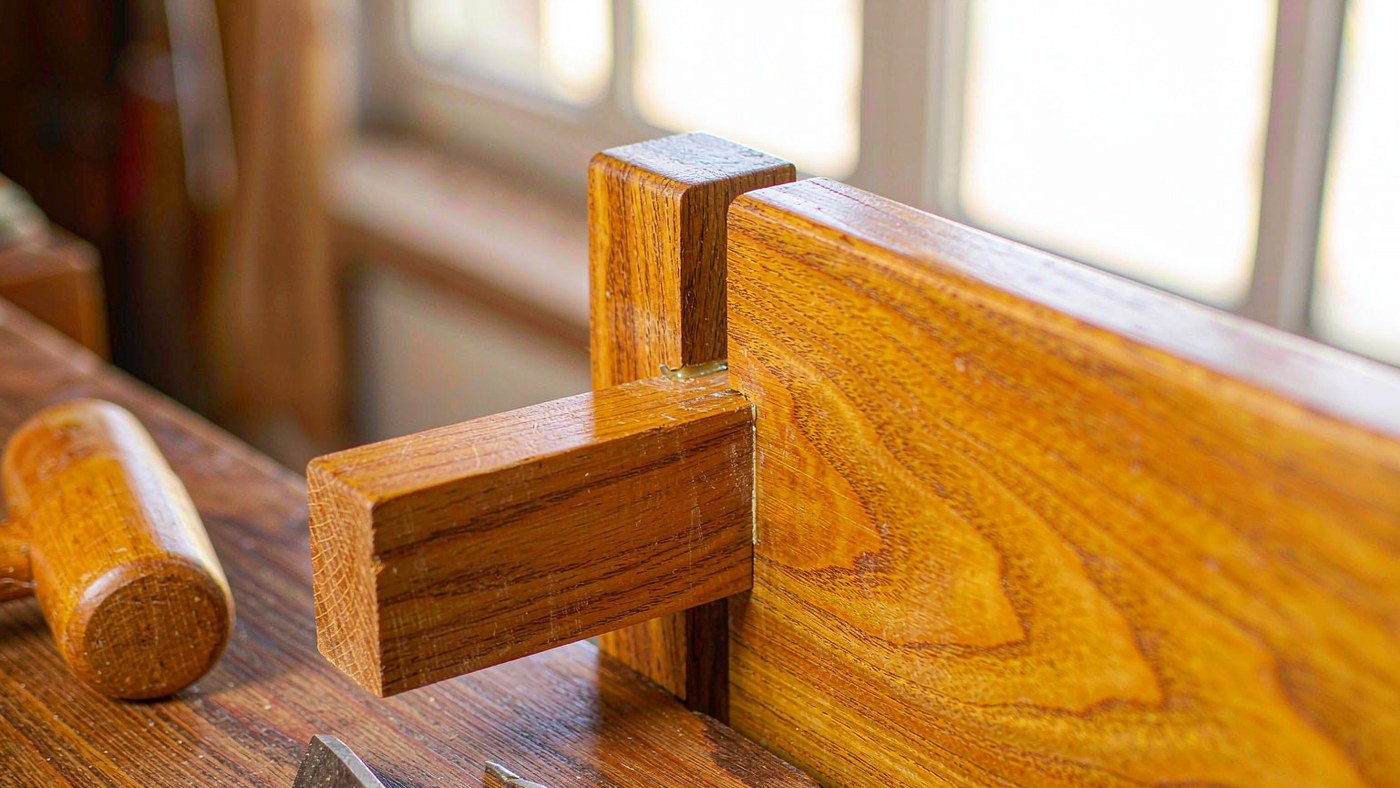
Outdoor furniture almost never fails in the middle of a board. It fails at the joint — and on most terraces, the joint that fails first is the one that was never properly joined. A teak chair that spends fifteen years on a hotel pool deck is not surviving because of the wood grade alone. It survives because the frame was joined: tongues of wood seated into sockets of wood, carrying load through the timber itself, with no metal needed to hold the frame together.
This guide is for buyers looking at teak outdoor furniture for the first time — or for buyers quoted "solid teak" who want to know what separates a frame that tightens with age from one that wobbles by its second season. It covers what mortise and tenon joinery is, the joint families in a teak catalogue, why weak joints open while strong ones stay tight for decades, and how to inspect a joint before you commit.
What mortise and tenon actually is
A mortise and tenon joint has two parts. The tenon is a tongue of wood cut on the end of one member; the mortise is the matching socket cut into the other. The tongue seats into the socket, and the load travels through wood — the same material, moving with the seasons in the same way, so the joint stays tight instead of relying on a separate metal part that expands and contracts on its own schedule.
Three variations decide what you are looking at:
- Blind tenon — stops short of the far face, so the joint shows no end grain. Cleaner, slightly weaker, common on light-duty pieces.
- Through tenon — passes through the post and is visible on the far face, often wedged. The strongest joint, and the strongest visual proof a frame is genuinely joined.
- Shouldered tenon — a step at the tenon root so the joint bears on a shoulder, hiding gaps and locating the parts precisely.
The adhesive matters as much as the geometry. Exterior-grade joints rely on waterproof glues — epoxy or resorcinol — not the standard PVA glues used indoors. Teak's natural oils resist many wood glues, which is why the glue surfaces are wiped with solvent immediately before assembly. A joint that pops open at the first heavy load is usually a glue problem, not a wood problem.
The joint families in teak outdoor furniture

Teak furniture uses a small family of joints, each with a job:
| Joint | How it carries load | Where you will see it | What kills it |
|---|---|---|---|
| Mortise and tenon (blind or through) | Interlocking wood-to-wood; glue is secondary | Chair and sofa frames, leg-to-apron joints, arm posts | Open fit or interior-grade glue — the joint opens as the wood moves |
| Bridle (open tenon) | Tongue visible in an open slot; easy to inspect | Table aprons, bench frames, heavier sections | Rarely fails; considered less refined visually |
| Half-lap | Two members halved and crossed | Crossed legs, X-bases, lattice work | Reduces section at the crossing; needs a tight fit |
| Dowel or biscuit reinforced | Alignment plus glue surface | Factory production joints, panel construction | Alignment only — carries little load on its own |
| Dovetail | Mechanical lock in pull | Drawer and box joints on teak storage pieces | Almost nothing outdoors; mainly furniture-grade items |
Two rows deserve a buyer's attention. Dowels and biscuits are alignment details — they help a factory glue a joint square, but they do not make a joint structural. The members that carry the load are the interlocking wood-to-wood pieces, never a separate metal part standing in for the joinery.
Why teak and joinery belong together
Teak is the joinery hardwood for a structural reason, not a cosmetic one. Heartwood teak moves unusually little for its density: it swells slightly in humid months and settles in dry ones, so a joint cut tight in a dry workshop stays tight through a wet season. And because teak's durability comes from oils inside the wood rather than a surface treatment, the end grain exposed at a joint — the most vulnerable surface on any timber frame — resists decay on its own.
That matters more outdoors than buyers expect. Joints are where water sits: horizontal shoulders, upward-facing tenon roots, the seam where a leg meets an apron. On a wood that depends on preservative treatment, those seams are where rot starts. On teak, they are simply part of the frame.
Anatomy of a mortise and tenon
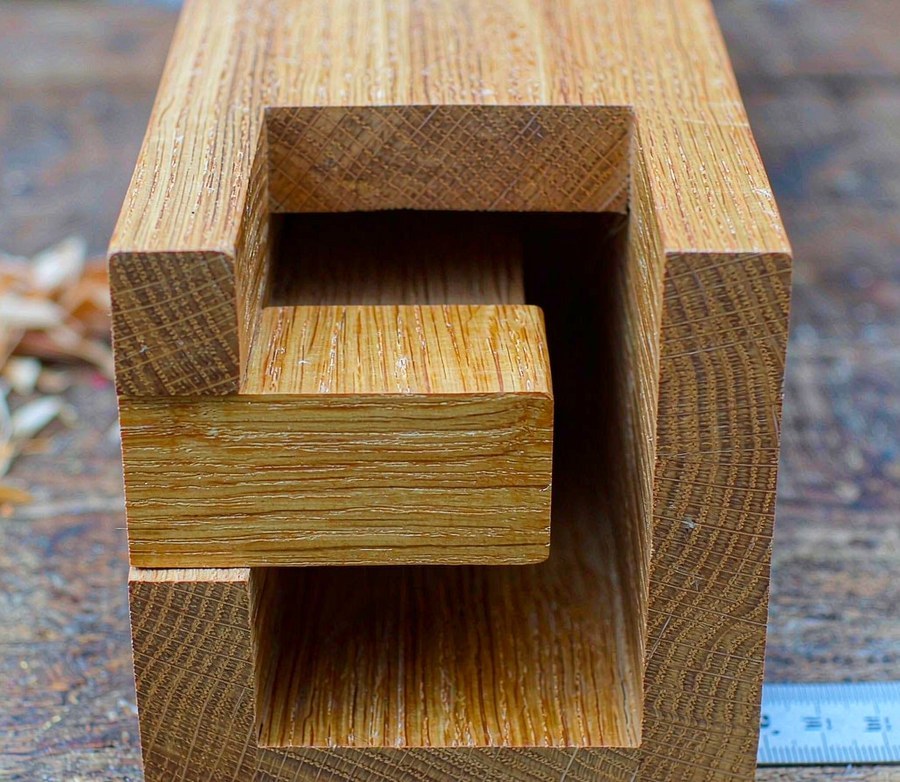
Read a joint the way a factory reads a sample. The tenon is cut slightly proud of the shoulders so the shoulder faces — not the glue line — take the clamping load. The cheeks run along the grain, so the tenon is strongest in the direction it will be pulled. The fit is snug enough that a mallet seat, not a shim, closes it, and a thin, even glue line squeezes out along the shoulder instead of pooling inside the mortise, where a thick hidden glue mass would crack as the wood moves.
Wedged through tenons add a second mechanical lock: the wedge expands the tenon as it is driven in, so the joint cannot be withdrawn even before the glue is counted. Draw-bored joints go further — an offset pin pulled tight by a wooden peg, the principle boat builders have used for centuries. Both are visible proof that the frame was designed to stay tight without relying on metal.
Why weak joints fail outdoors — and what that costs
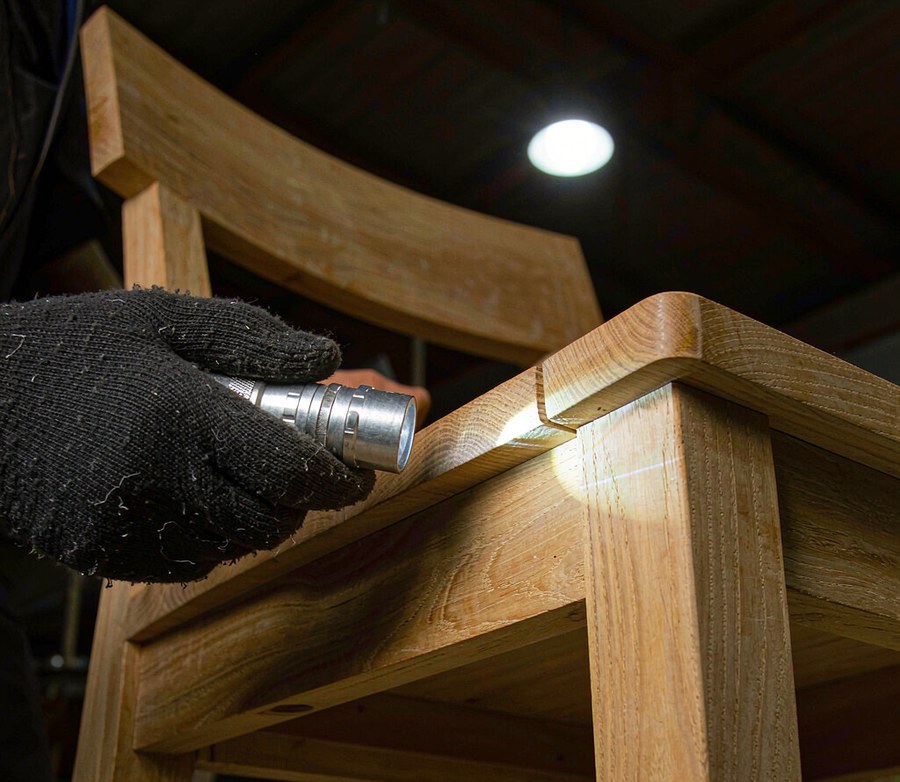
The cheap way to build a teak-looking frame skips the joinery: corner blocks, filler and adhesive, with the load left to grip rather than to geometry. It photographs beautifully on delivery day. Then the seasons start.
Weak, fastener-dependent joints fail outdoors for three reasons, and all three are visible on a two-year-old terrace set:
- Wood movement opens a poorly fitted joint. Timber expands and contracts with humidity; a joint cut loose in a dry workshop is gaping by the following wet season, and a connection that relied on grip rather than geometry has almost nothing left to hold after a few cycles.
- Teak's chemistry punishes poor preparation. Teak is rich in natural oils and tannins. Where a joint is filled rather than fitted, the filler and surface preparation fail first and dark streaks appear along the seam. A properly joined, glued and oiled joint keeps the grain clean because there is no metal or filler for the chemistry to attack.
- Load spreads through the timber. A corner block carries the whole guest load through a small, isolated connection; a mortise and tenon spreads it through the full section of the timber, so no single point carries the whole load.
The remedy is joinery done properly: a tight, glued, wood-to-wood joint that needs no metal to carry load. Where a factory adds any small detail hardware at all — a pivot, a concealed clip — the only acceptable grade is 316 or 316L stainless, countersunk and confirmed in writing. The same material discipline runs through our teak vs aluminium guide.
Where a little metal is acceptable
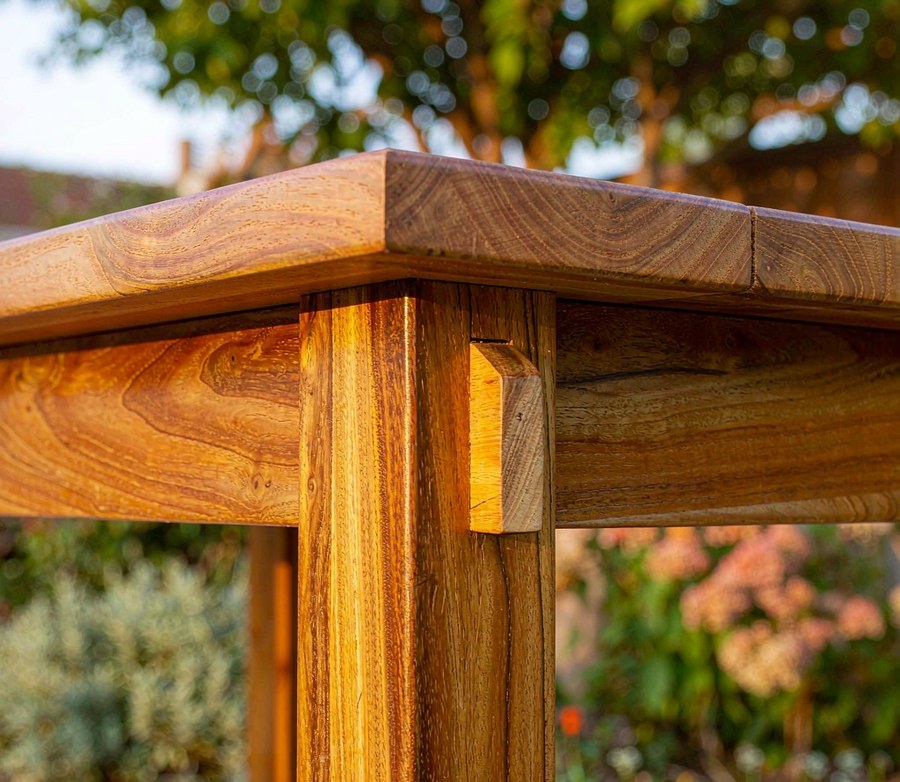
Joinery-first does not mean metal never appears. A few places where a small, concealed metal detail is the correct engineering answer:
- Knockdown frames. Flat-pack furniture ships flat for a reason — cube efficiency. The right knockdown teak frame keeps the joints wood-to-wood and uses only concealed 316 connectors at defined points; the wrong one makes the connector the joint. The container loading guide explains the trade-off.
- High-stress corners and folding mechanisms. Hinges, pivots and recliner mechanisms are metal by definition. Specify the grade, and specify serviceability — a folding lounger whose pivot cannot be taken apart for storage or repair is a two-season product.
- Tabletops that must move. A wide teak top expands and contracts across its width, so breadboard ends and aprons use slotted clips or tenons in slotted mortises. A top fixed rigid to its apron cracks in its second wet season.
- Reinforcement at wear points. On the heaviest commercial pieces a small concealed stainless pin through the tenon can supplement the glue line. As a supplement to joinery this is good practice; as a replacement, it is a cost cut with a delay fuse.
What joinery means in commercial use
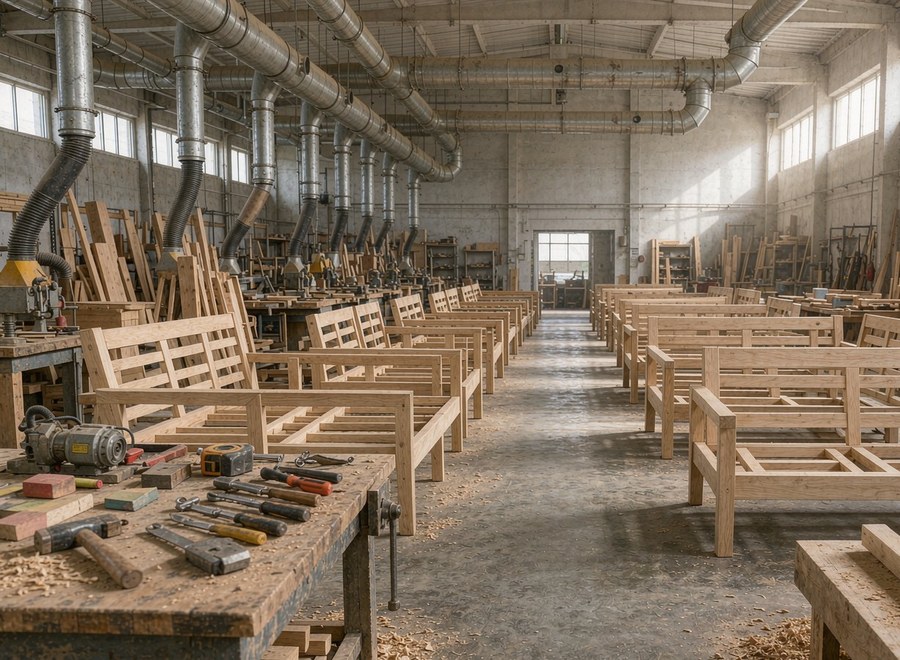
The commercial case is a duty-cycle case. A residential chair is sat on a few times a week; a resort lounger carries dozens of guests a day, gets dragged across a pool deck, and is stacked and stored on a schedule. That cycle attacks joints three ways: impact loads, racking when a piece is dragged rather than lifted, and the slow loosening of any connection that relies on grip.
A joined frame answers all three: the joint tightens rather than loosens under racking load, there is no thread to lose its bite, and a damaged joint is repaired by replacing a member — not the set. For hospitality buyers the comparison is not construction cost per unit but replacement cost per season, which is why the joint question belongs beside wood grade in the hotel procurement guide. The commercial maintenance schedule treats joints as the first inspection point of the season.
How to inspect a joint before you commit
- Turn the piece over. Undersides tell the truth — examine every joint from below, where finishing and filler cannot hide the construction.
- Look at how the frame is built. Joinery at every joint, with at most a few concealed 316-grade details at defined stress points, is the specification you want. Pervasive metal at every joint is the sign of a frame that depends on fasteners rather than joinery.
- Check the shoulders. A tenon shoulder should sit flush with no visible gap line; a gap means the fit was open and the glue line is carrying load it should not.
- Look for glue squeeze-out. A thin, even bead is evidence of a clamped, glued joint; none on a supposedly "joined" frame can mean a dry-fit, unglued joint.
- Rock test. Rock the piece at each joint; any click or movement is a joint that is already open.
- Ask for joint photographs. A factory that joins its frames has close-ups of them; one that cannot produce them has either not joined them or would rather you did not look.
Working from a factory sample, the joint checks sit inside the full protocol in our sample evaluation guide — the sample is the one piece you can turn over, rock and measure before the container exists.
What to ask a factory
- Which joints are used in the frames of this model — blind mortise and tenon, through tenon, or a fastener-dependent build?
- What adhesive is used at frame joints, and is it rated for exterior wet-dry cycling?
- What grade is every metal component — 316 or 316L stainless — and is that grade stated on the specification sheet?
- Are knockdown joints joined wood-to-wood with connectors only at defined points, or is the connector doing the structural work?
- Can you send close-up photographs of frame joints on the actual model, including the undersides?
- If a joint fails in service, is the member replaceable, and at what lead time?
Buyer checklist
- Frame construction confirmed as mortise and tenon joinery, not a fastener-dependent build
- Adhesive specified as exterior-grade (epoxy or resorcinol), with surface-oil preparation before assembly
- All metal hardware 316/316L stainless, countersunk flush, grade confirmed in writing
- Tabletops attached with movement allowance — slotted clips or slotted mortises
- Joint photographs, including undersides, reviewed before deposit
- Sample or master frame rock-tested at every joint
If you are specifying teak furniture for a project — a hotel terrace, a resort refresh, or a range for your own market — send us the brief. We will walk through frame construction, joint details and hardware grades against your drawings, and put samples and technical files in front of you before you commit.